Why Do Dogs Roll in Poop? The Real Reasons and How to Stop It
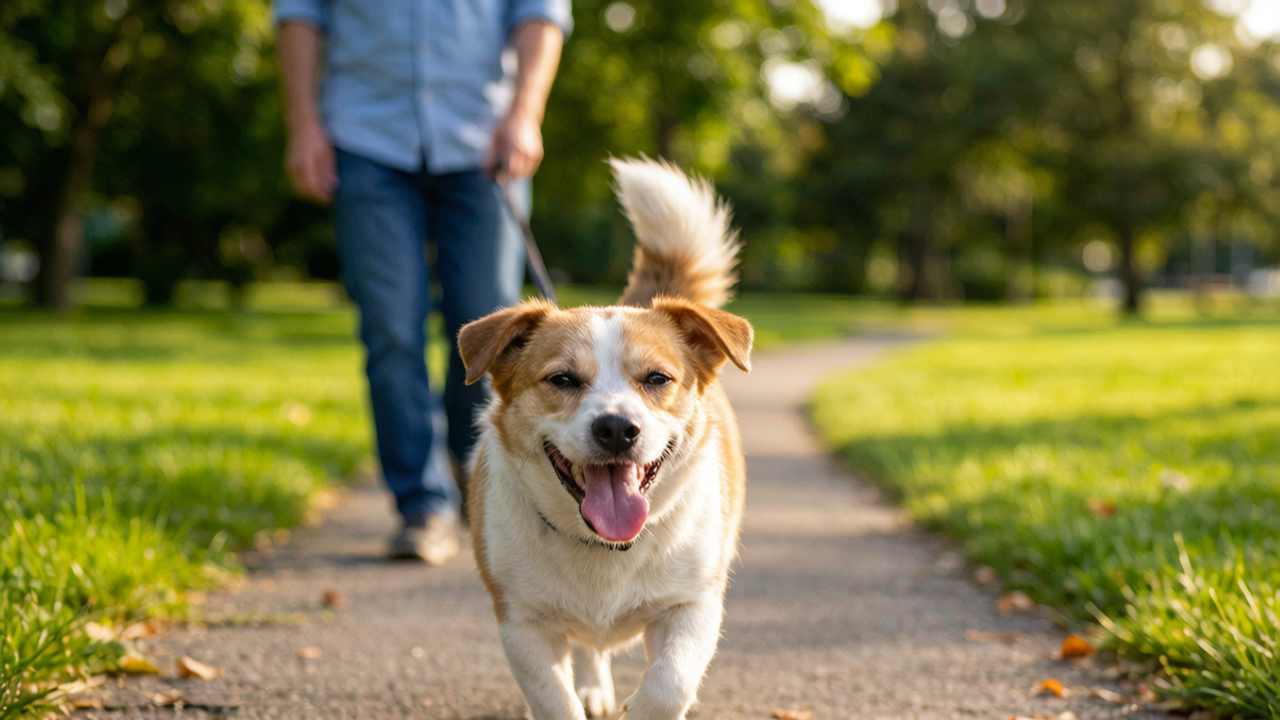
You're on a perfectly pleasant walk, the dog trots a few feet ahead, and then it happens. He stops, drops one shoulder, and drags the entire side of his body across something you can smell from three feet away. By the time you close the distance, it's already too late. The walk is over, the bath has officially begun, and you're standing there wondering why a creature you feed premium food and let sleep in your bed would voluntarily coat himself in filth.
If you've lived through this, you're not doing anything wrong, and neither is your dog. This is one of those behaviors that feels baffling to us but makes total sense to them.
Why Dogs Do It (It's Not to Spite You)
Nobody can ask a dog why he dives into a mess, so experts work from a handful of well-supported theories. The honest answer is probably "all of the above, depending on the dog and the day."
It's a leftover hunting instinct. Your dog's wild relatives rolled in strong smells to hide their own scent, which made it easier to get close to prey without being noticed. A dog who smells like a carcass doesn't smell like a predator. This is the theory you'll see cited most often, and it's the easiest one to picture when your couch-potato companion suddenly turns into a wilderness survivalist over a patch of goose droppings.
It's a way of bringing news home. Wolves have been observed rolling in a scent, then carrying it back to the pack so the others can follow the trail to whatever was interesting. Your dog may be doing a version of the same thing, minus the pack and minus the useful news. He found something amazing, and now he wants to show you — unfortunately, the medium is the message.
It might be about leaving his own mark. Just like marking territory, rolling in a smell can be a way of saying "I was here, and I investigated this." It's less about what the smell is and more about the fact that it's interesting enough to share.
Sometimes it just smells good to him. This is the hard one for us to accept, but a dog's sense of smell is wired differently from ours. A scent we'd cross the street to avoid can read as rich and fascinating to a dog. What looks like "gross" to you is just "very interesting" to him.
None of these reasons make the behavior fun to clean up, but they do explain why scolding usually doesn't help. Your dog isn't doing anything wrong by his own rules — he's doing exactly what generations of instinct are telling him to do.
Is It Dangerous?
Mostly, rolling in something smelly is gross but not harmful. That said, it's not completely risk-free, and it's worth keeping a few things in mind:
- Parasites and bacteria. Poop and decaying matter can carry intestinal parasites and bacteria. A dog who rolls in it and then licks his own coat can pick something up. Regular parasite prevention (the kind you already talk to your vet about) is your best safeguard here.
- Fleas and ticks. Long grass and undergrowth are prime tick and flea territory, and a dog who's rolling around in the weeds is giving them a ride. Check him over after a good roll.
- Irritants and toxins. Some things that smell interesting — certain plants, chemicals, or very old, rotting material — can irritate skin or worse. If the "smelly thing" is something unidentified, don't let him keep at it.
- Eating it. Rolling and eating are two different problems. If your dog is eating the poop instead of just rolling in it, that's a separate issue (coprophagia) with its own set of causes and fixes, and it's worth bringing up with a vet.
The short version: an occasional roll in the park is a laundry problem, not a health crisis. It becomes worth closer attention if it's constant, if your dog is rolling in something you can't identify, or if it comes with skin irritation afterward.
How to Stop It (or at Least Slow It Down)
You probably won't erase an instinct, but you can absolutely shrink the number of times it turns into an emergency bath. Here's what actually helps.
Manage the environment first. Pick up poop in your own yard promptly, so the "amazing smell" isn't sitting right outside your door. Secure the trash cans. Scan the usual walk route for the spots your dog always targets — the patch of dead grass, the bushes near the creek — and steer around them or keep him on a shorter leash through those zones.
Supervise on walks. A dog on a long, loose leash can find trouble a dog on a six-foot leash can't. When you're in an area with a known rolling spot, keep him close enough that you can redirect before he commits. The shoulder-drop that starts a roll gives you a beat to act — use it.
Teach a solid "leave it." This is the single most useful command for this problem, because it works before the roll starts. It takes patience, but it's worth it:
- Hold a treat in a closed fist and let your dog sniff and paw at it. Say nothing yet.
- The moment he backs off or stops trying — even for a second — mark it and give him the treat from your other hand.
- Once he reliably ignores the closed fist, add the words "leave it" right before he disengages.
- Slowly make it harder: a treat on the floor covered by your hand, then an uncovered treat, then real-world objects on walks.
The goal isn't to scold him away from the smell — it's to build a habit where "leave it" means "there's something better coming from you." A dog who has a reliable "leave it" is a dog you can call off a mess before he's in it.
Build a strong recall, too. If he's already trotting toward something foul, a dependable "come" is your backup plan. Reward recalls heavily and randomly, not just when you're calling him away from fun, or he'll learn that coming when called means the fun ends.
Give him something better to do. A dog who dives into every smell he finds is often a dog who's a little bored or under-stimulated. More playtime, longer sniff-walks, puzzle toys, and even scattering his meals in the grass can scratch that "hunt and investigate" itch in a way that doesn't end in a bath.
When It's Already Happened
Sometimes you look up and the roll is already done. Now it's damage control:
- Don't punish. Yelling after the fact doesn't connect with the behavior — the moment has passed, and all he learns is that you're scary. A calm, matter-of-fact cleanup works better and keeps the next walk pleasant.
- Rinse or bathe. A bath with a dog-safe shampoo is the straightforward fix. Avoid human shampoo, which can irritate skin.
- Neutralize the smell. For a stubborn odor, a rinse made from baking soda, hydrogen peroxide, and a little mild dish soap is a widely shared trick for breaking down the smell. Keep it off his face and out of his eyes, rinse thoroughly, and if you're unsure about putting anything on his skin, check with your vet first.
When to Talk to a Vet
A once-in-a-while roll is normal. Give a vet a call if the rolling becomes obsessive or compulsive, if it's paired with constant licking or scratching, if his skin looks red or sore afterward, or if he's eating the poop rather than just wearing it. Any sudden, out-of-character change in behavior is also worth a check — sometimes a behavior shift has a medical explanation behind it.
The Bottom Line
Dogs roll in smelly things because instinct tells them it's a good idea, not because they're trying to ruin your day. You probably won't train the instinct out of them entirely, but a clean yard, a little supervision, and a reliable "leave it" will turn a weekly emergency bath into a rare, shrug-it-off event. The rest of the time, it's just one of the less glamorous parts of loving a dog — and honestly, it makes for a good story later.
This guide is written by experienced pet owners for pet owners and reflects general pet-care guidance, not medical advice. If you're ever unsure about something your dog got into, or about a change in his behavior or skin, a veterinary professional is the person to ask.
What's the worst thing your dog has ever rolled in, and how long did it take to get the smell out? Drop it in the comments — I want to know I'm not the only one who's driven home with the windows down.
---
If you found this helpful, you might also like:
- Why dogs eat poop (and how to stop it)
- Teaching a reliable "come when called" recall
- 7 basic commands every dog should know
- How to stop leash pulling (real solutions)
This article is for informational purposes only and is not a substitute for professional veterinary advice, diagnosis, or treatment. Always consult a licensed veterinarian if your pet shows signs of illness, injury, or distress. If you believe your pet is experiencing a medical emergency, contact your veterinarian or the nearest emergency animal hospital immediately.
🐾 Enjoyed This Article?
Save it for later, share with a fellow pet parent, or check out more tips on our homepage!
📩 Never Miss a Tip
Get our best pet care hacks delivered straight to your inbox. No spam, unsubscribe anytime.
Shop dog supplies on Amazon & Chewy
Comparing prices before you buy? Check current deals and read reviews from other pet owners.