My Dog Humped My Mother-in-Law's Leg at Thanksgiving Dinner — Here's What I Learned About Why Dogs Do This (and How to Stop It)
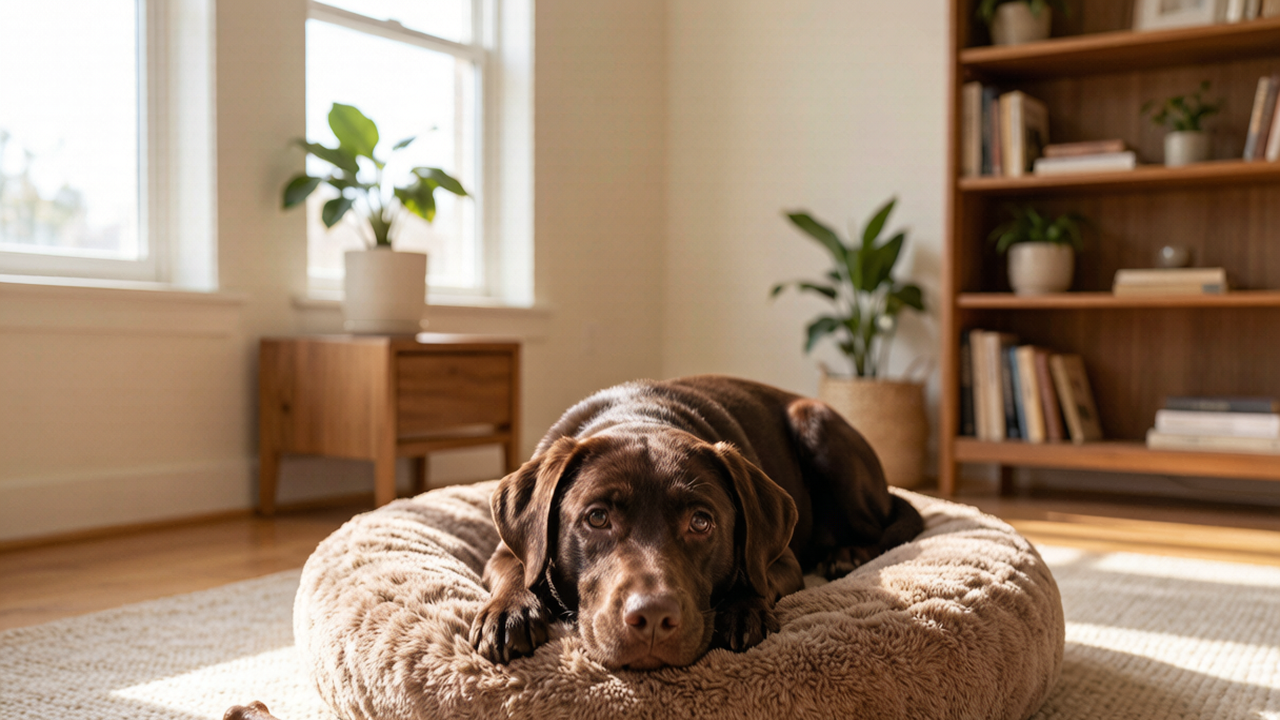
I have never wanted the floor to open up and swallow me more than that moment.
My chocolate Lab, Cooper, was about 18 months old. We were hosting Thanksgiving. Twelve people around the table, candles lit, my mother-in-law in her brand-new cream-colored pants. Cooper walked over, sniffed her leg, and then — with the confidence of a dog who had absolutely no shame — started going to town.
My wife dropped her fork. My brother-in-law choked on his wine. And I sat there frozen, trying to figure out if it was socially acceptable to simply leave the country and start a new life under a fake name.
After the dinner (which, remarkably, my mother-in-law handled with more grace than I deserved), I went down a research rabbit hole. What I found changed how I understood this behavior completely. And once I actually understood why Cooper was doing it, stopping it became about a thousand times easier.
The Thing Nobody Tells You: Humping Usually Isn't About Sex
I used to think dog humping was simple — the dog was, well, "in the mood," and the solution was getting them fixed. But Cooper was already neutered. Had been for eight months. So what was going on?
Turns out, humping — or "mounting behavior," as vets and trainers call it — is way more complicated than most people think. Dr. Lisa Radosta, a board-certified veterinary behaviorist, has pointed out that mounting in dogs is rarely sexual, especially in neutered dogs. It's more often about one of these things:
Overexcitement. This was Cooper's issue. He wasn't aroused in a sexual way — he was overstimulated. Twelve people in the house, cooking smells, the doorbell ringing every 15 minutes, kids running around. His brain was flooded with cortisol and adrenaline, and humping was basically a pressure-release valve. He wasn't being "bad." His nervous system was maxed out.
Stress or anxiety. Same root, different flavor. Some dogs hump when they're anxious — at the vet, during thunderstorms, when left alone too long. It's a self-soothing behavior, kind of like a kid sucking their thumb.
Attention-seeking. If your dog humps and you react — yelling, pushing them off, chasing them — you've just given them attention. And for some dogs, negative attention is better than no attention. They learn fast: "When I do this thing, everyone looks at me."
Play. Watch dogs at a dog park. Puppies and young dogs mount each other during play all the time. It's often just part of roughhousing, not dominance or aggression. It only becomes a problem when the other dog doesn't appreciate it — or when the human在旁边 is mortified.
Compulsive behavior. In some cases, humping becomes a habit so ingrained that the dog does it without any obvious trigger. This can be a sign of an underlying anxiety disorder and may need a vet behaviorist.
Medical issues. This is the one people skip, and it matters. Urinary tract infections, skin allergies (especially around the groin), prostate problems in intact males, and even priapism can cause humping. If the behavior starts suddenly, a vet visit is step one. Don't be the person who spends three months training a UTI.
What I Tried That Did Absolutely Nothing
When I first tackled this, I made every mistake in the book:
Yelling "NO" or "OFF." Cooper would stop for maybe two seconds, then go right back to it. Or he'd redirect onto a pillow. The yelling just added more chaos to his already overstimulated brain.
Pushing him off physically. This one backfired spectacularly. For Cooper, physical contact during a humping episode just escalated the excitement. It was like trying to put out a fire with gasoline.
Putting him in time-out after the fact. By the time I dragged him to another room, he had zero connection between the punishment and the behavior from 30 seconds ago. He just thought I was randomly being mean.
Spray bottle. He learned to avoid the spray bottle. He did not learn to stop humping. He'd just check if I was holding it first, then go back to business.
After about two months of zero progress and one more deeply awkward incident (this time with a throw pillow while my boss was visiting), I finally called a trainer who specialized in impulse-control behaviors. She laughed — not at me, but at how common this was — and gave me a framework that actually made sense.
What Finally Worked: The Four-Part System
Part 1: Figure Out the Trigger (Keep a Humping Log)
This sounds obsessive, I know. But for two weeks, every time Cooper humped something, I wrote down: what happened right before, who was around, what time of day, where we were.
The pattern jumped out immediately: it happened almost exclusively when we had more than three people in the house, or when I came home from work and made a big excited fuss over him. The trigger was overstimulation, 100% of the time.
Part 2: Interrupt, Don't Punish
Instead of yelling, I taught a "find it" cue. I'd toss a handful of kibble on the floor and say "find it!" The moment Cooper disengaged from the humping to sniff for food, the behavior chain was broken. No drama, no confrontation — just redirection.
The key was catching it early. Humping has a wind-up phase — the dog starts getting worked up, maybe pacing, maybe panting. If I redirected during that wind-up, I could prevent the humping entirely. If I waited until he was already mounted, it was ten times harder.
Part 3: Manage the Environment Proactively
Once I knew the trigger, I could prevent most episodes before they started:
- Guests arriving? Cooper went to his crate with a frozen Kong 10 minutes before the doorbell rang. By the time I let him out to greet people, the initial chaos had settled.
- Coming home from work? I stopped doing the excited "WHO'S A GOOD BOY" routine. Calm entry, ignored him for the first two minutes, then a quiet hello once he'd settled.
- Dog park? I learned to read his arousal level. When his play started getting too revved up — hackles slightly raised, play-bowing getting frantic — we took a two-minute break on leash before rejoining.
Part 4: Teach an Incompatible Behavior
This was the game changer. You can't hump and lie on a mat at the same time. I taught Cooper a rock-solid "place" command — go to your bed and stay there until released. We built it up gradually: 30 seconds, then a minute, then five minutes, then 20. High-value treats for staying, zero attention for leaving.
Once "place" was reliable, I could use it proactively. Guests ring the bell → "Cooper, place" → he trots to his bed → I answer the door → everyone's calm → I release him to say hello. No humping opportunity, no embarrassment, no conflict.
It took about six weeks of consistent practice. Not overnight. But the Thanksgiving incident was two years ago, and Cooper hasn't humped a guest — or a pillow, or another dog — since.
When to Actually Worry (and Call the Vet)
Most humping is behavioral and manageable. But here's when you should get a professional involved:
- Sudden onset in an older dog. If your 7-year-old who's never humped anything suddenly starts, rule out medical causes first — UTI, prostate issues, skin irritation.
- It's causing fights with other dogs. Some dogs tolerate being mounted; others will correct it with teeth. If your dog is mounting dogs who clearly aren't okay with it, stop letting them practice the behavior at the dog park.
- It's compulsive. If your dog humps for hours, humps the air, humps nothing in particular, or can't be redirected no matter what you try — that may be an OCD-spectrum issue that needs medication and a behaviorist, not just training.
- Self-injury. I've seen dogs hump objects so obsessively they cause penile irritation or even wounds. That's a vet visit, not a training problem.
What I'd Do Differently If I Could Go Back
I'd stop being embarrassed about it. I spent two months trying to hide Cooper's humping instead of dealing with it. I didn't tell the trainer because I was mortified. I didn't mention it to the vet because I assumed it was "just a behavior thing."
Humping isn't a moral failing. It's not a sign you're a bad dog owner. It's a behavior with causes, and those causes have solutions. The sooner you treat it like any other training issue — identify the trigger, manage the environment, teach an alternative, be consistent — the sooner it stops.
Cooper is six years old now. He greets guests with a wagging tail and four paws on the floor. My mother-in-law still comes to Thanksgiving. She even bought him a new bed last year.
But she wears dark pants now. Just in case.
---
What's the most embarrassing thing your dog has ever done in front of guests? Drop it in the comments — I promise whatever it is, Cooper has done worse.
🐾 Enjoyed This Article?
Save it for later, share with a fellow pet parent, or check out more tips on our homepage!