How to Calm Your Dog During Fireworks and Thunderstorms (What Works for Real Dogs)
Some dogs try to climb inside your shirt the first time they hear fireworks. Not onto your lap — inside your shirt, shaking hard enough that you can feel the heartbeat through the fabric. Noise phobia can keep an otherwise steady dog panting and pacing for hours, and it leaves most owners feeling completely helpless.
If your dog loses their mind during fireworks or thunderstorms, you’re not alone. Studies estimate that around one-third of dogs show significant fear responses to loud noises. Some hide. Some destroy things. Some bolt. Nearly every product, trick, and old wives’ tale on the market has been sold as the fix. Most are disappointing. A few genuinely help. Here’s what actually works.
📋 Table of Contents
- 1. Create a Safe Space Before the Noise Starts
- 2. White Noise or Brown Noise Actually Helps
- 3. Thundershirt: Worth Trying, but Not Magic
- 4. Don’t Coddle, But Don’t Ignore Either
- 5. Distraction with Long-Lasting Treats
- 6. CBD and Calming Supplements
- 7. Prescription Medication for Severe Cases
- 8. Exercise Earlier in the Day
- 9. Close Curtains and Stay Indoors
- 10. Desensitization Training During the Off-Season
- What Usually Doesn’t Work
- A Quick Emergency Plan
- Final Thought
1. Create a Safe Space Before the Noise Starts
>
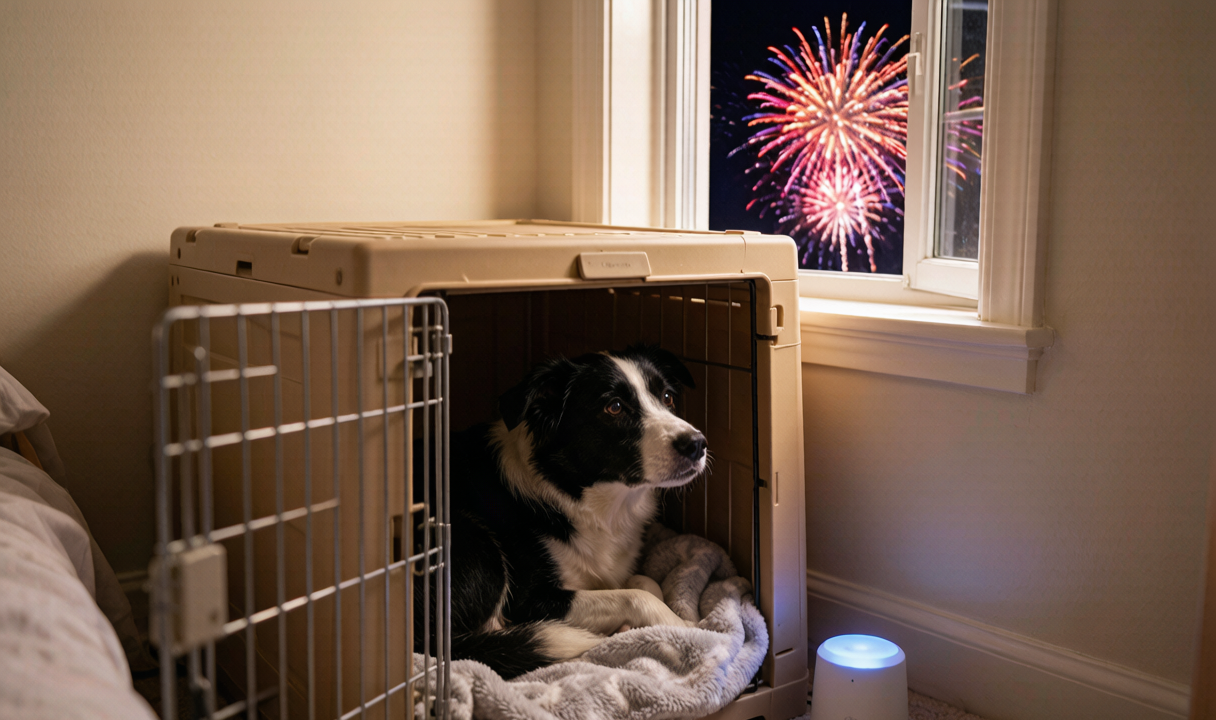
This is the single change that makes the biggest difference for most dogs. Set up a corner of a quiet interior room with your dog’s crate, a heavy blanket draped over the top, and a fan running for white noise. The idea is to block out light and muffle sound. Add a favorite toy and a piece of worn clothing that smells like you. When the fireworks start, guide your dog there instead of letting them panic-pace around the house.
It won’t fix everything, but it gives your dog a place to land. Within a few storms, many dogs start going there on their own.
2. White Noise or Brown Noise Actually Helps
Playing music is a common first attempt, and it usually isn’t enough. Fireworks and thunder are low-frequency booms that cut straight through most music. What works better is steady white noise or brown noise. A small white noise machine costs around $25 and can sit right outside the crate. The deep, constant rumble of brown noise masks sudden cracks and booms far better than classical music does.
3. Thundershirt: Worth Trying, but Not Magic
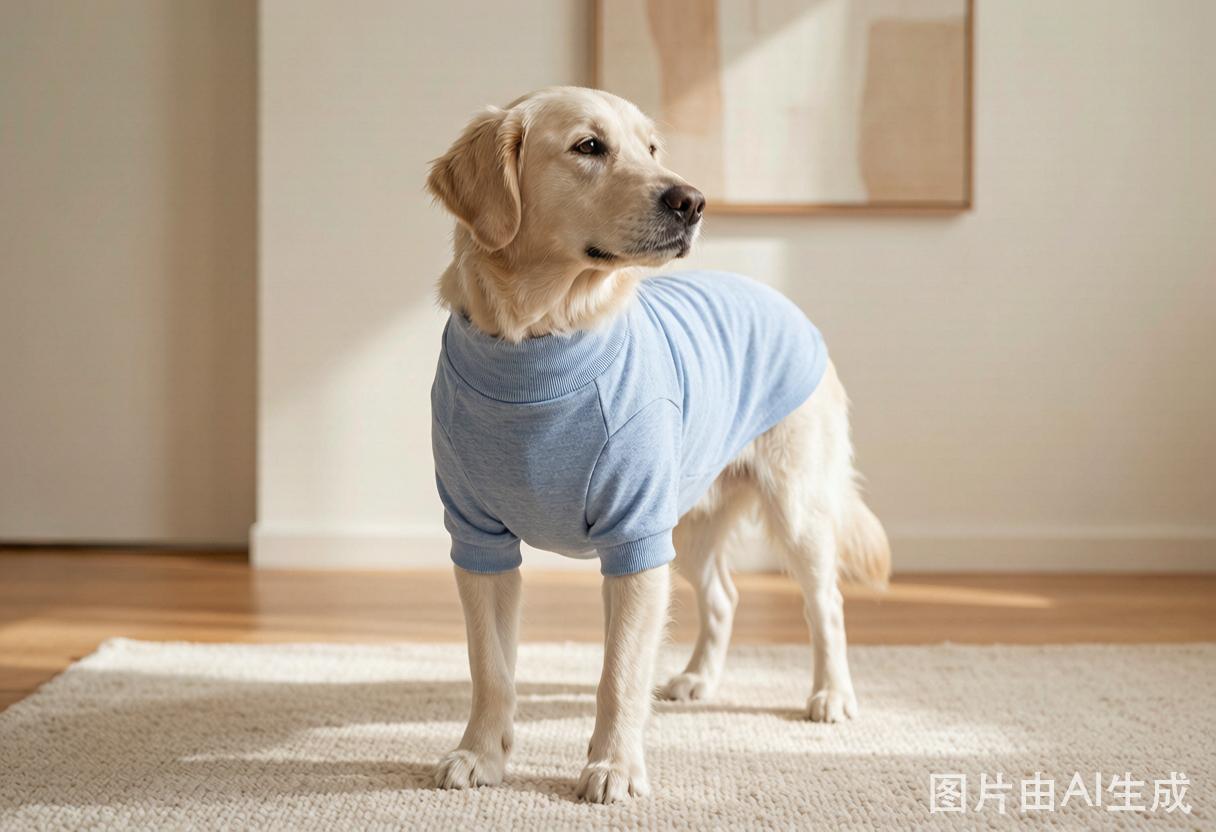
A tight wrap that calms a dog sounds like a gimmick, and plenty of owners are skeptical going in. In practice, a lot of dogs stand still for a moment the first time the wrap goes on, then let out a long sigh. Most are still anxious during fireworks, but the pacing tends to slow down.
It’s not a cure. For maybe 30% of dogs, it does very little. But for the dogs it suits, it takes the edge off enough that other tools can start working. It’s worth the $40 if your dog is medium to high anxiety.
4. Don’t Coddle, But Don’t Ignore Either
The most common mistake is fussing over a dog every time they shake. “It’s okay, baby, you’re fine,” in a high-pitched voice. That usually makes a dog more nervous, because they can hear that you’re worried. Swinging to the other extreme and ignoring them completely doesn’t work either.
What works is staying calm and ordinary. Sit nearby, read a book, and offer an occasional quiet pat. No baby talk. No panic. Dogs read our energy. If you act like the world is ending, they’ll believe it.
5. Distraction with Long-Lasting Treats
For mild to moderate anxiety, a frozen Kong stuffed with peanut butter and banana can buy you 20 minutes of peace. Hand it over before the fireworks begin, while your dog is still calm. It gives them something to focus on besides the noise. This tactic works best for distant fireworks, not when the booms are right overhead.
6. CBD and Calming Supplements
A vet-informed hemp calming chew given about an hour before a predicted storm tends to have a subtle effect. Dogs don’t go zombie-like, but many are noticeably less reactive to the first few booms. Chews built around L-theanine and tryptophan can also take the edge off on milder nights.
Important: talk to your vet before starting any supplement. Some ingredients can interact with medications, and dosing matters. Don’t just grab the first bottle on the pet store shelf.
7. Prescription Medication for Severe Cases
When a dog scratches at a door until their paws bleed, the situation has moved past home remedies. In cases like that, a vet may prescribe a mild sedative for high-risk events. It isn’t meant for every storm—only for nights when fireworks are guaranteed, like the Fourth or New Year’s Eve. For severely phobic dogs, it can mean real relief and a night of actual sleep for everyone in the house.
If your dog’s anxiety is severe, please talk to your vet. There is no shame in medication. Fear is suffering, and no dog has to be left to suffer through it.
8. Exercise Earlier in the Day
There’s a consistent pattern here: a dog who gets a long walk and some fetch time before an evening storm handles it better. A tired dog has less nervous energy to burn. On fireworks nights, take your dog out early, before the noise starts, and keep them leashed the entire time. Scared dogs bolt, and the last thing you want is your dog running into traffic because a firework went off.
9. Close Curtains and Stay Indoors
This one sounds obvious, but it’s the step most households skip. Closing the blinds blocks the flashing lights of fireworks, which can be just as triggering as the sound. Staying inside, away from windows, reduces both noise and visual stimulation. Turning on all the lights in the safe room also makes the flashes far less obvious.
10. Desensitization Training During the Off-Season
The best long-term solution is gradual desensitization. Find a free fireworks sound track online and play it at very low volume while your dog eats dinner or plays. Over weeks, slowly increase the volume. The goal isn’t to scare them—it’s to make the sound boring and predictable.
This takes months, not days. But by the following summer, many dogs go from full panic to mild alertness. Done patiently, it’s the most effective intervention on this list.
What Usually Doesn’t Work
Not every product lives up to the hype. Adaptil diffusers show no visible effect in plenty of homes. Calming sprays smell pleasant but rarely change behavior. Essential oils are a hard no—many are toxic to dogs. And letting a dog “tough it out” tends to make the fear worse over time, not better.
A Quick Emergency Plan
If fireworks are already starting and you’re not prepared, here’s the short version: move your dog to the most interior room, close the blinds, turn on a fan or white noise, put on a Thundershirt if you have one, and stay calm. If your dog wants to hide, let them hide. Never force them out. Their safety spot is their choice.
Final Thought
Noise anxiety doesn’t have a one-size-fits-all fix. What works for most dogs is a combination: a safe space, white noise, an anxiety wrap, and—when the fear is severe—medication. The key point is to stop waiting for a miracle product and start building a system.
Your dog is scared. They’re not being dramatic, and they’re not trying to ruin your night. They need you to be their calm. Once you accept that, the rest gets easier.
Put the pieces in place before the next storm season rather than during it. A safe room, a sound machine, and a slow desensitization plan started in the quiet months will do more than anything you can buy on the day of the fireworks.
Shop dog anxiety vest thunder on Amazon & Chewy
Comparing prices before you buy? Check current deals and read reviews from other pet owners.
🐾 Written by the PetHomeHacks editorial team — researched, tested, and reviewed for accuracy.