Stopping Leash Pulling: A Front-Clip Harness and Two Training Games That Work
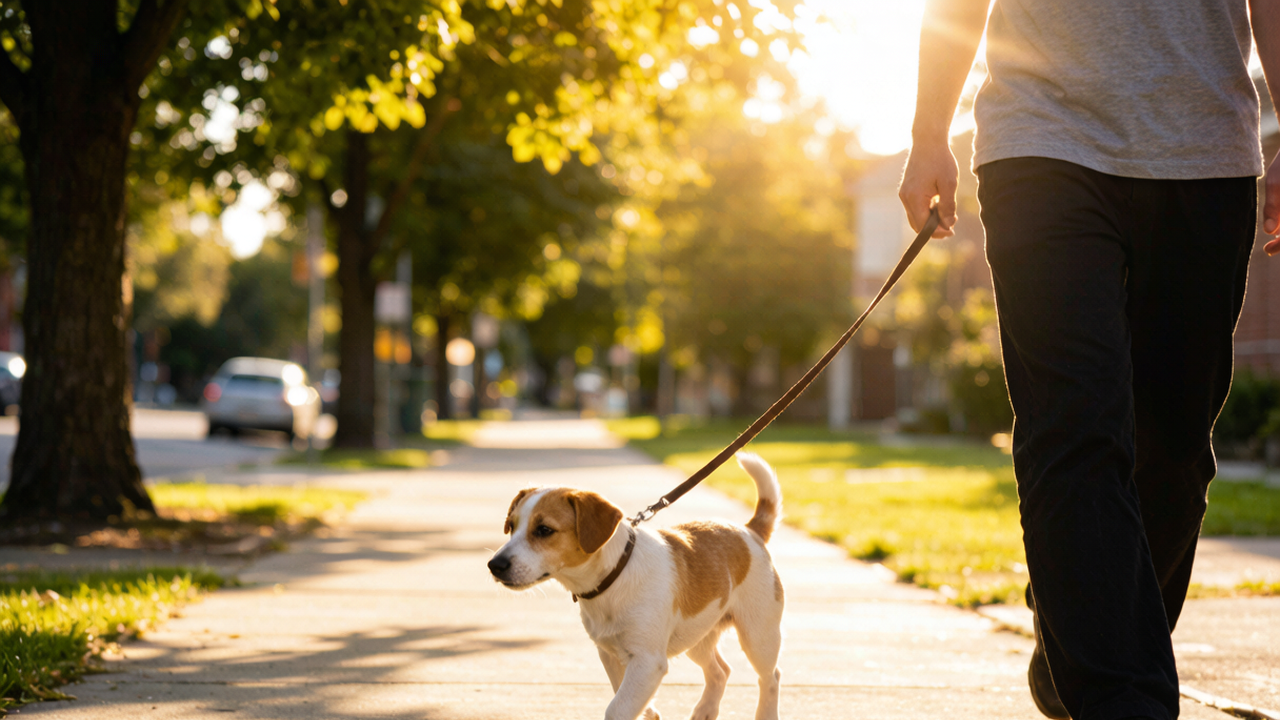
Leash pulling is the single most common complaint among dog owners, and it is easy to see why. A dog that lunges toward every squirrel, greets every bush, and drags its handler down the sidewalk turns a walk into a wrestling match. The frustration is real, but the behavior is normal — and fixable.
Most owners try the obvious fixes first: stop-and-go walking, turning around at every pull, swapping collars and harnesses, or a head halter. Many also spend hours watching training videos whose demonstrator dogs appear pre-programmed to walk politely. Those methods often fail not because the dog is stubborn, but because pulling has been accidentally rewarded, and the dog never learned what "walk nicely" actually means.
The shift that resolves pulling is reframing it as a communication problem rather than a mechanical one. A dog does not pull to defy you; the dog has simply learned that tension on the leash leads to forward movement — the most rewarding outcome in its world. Teaching an alternative is straightforward once that mechanism is understood. The American Kennel Club publishes a step-by-step loose-leash guide that aligns with the approach below (AKC).
Why Dogs Pull (It's Not Stubbornness)
Dogs naturally walk about twice as fast as humans do. Their resting pace is our brisk power-walk. So right from the start, we're asking them to do something unnatural — slow down to half their preferred speed. That's the first thing.
The second thing is that pulling works. Every time a dog pulls and the handler takes a step forward, the pulling is reinforced. In the dog's brain, the equation is simple: tension on leash equals forward movement. Dogs don't know you're trying to stop them; they think leash tension is just part of how walking works.
This is why the "stop and be a tree" method often stalls. The handler stops, the dog keeps pulling for 15 seconds, then turns and looks confused about why the walk ended. Walking resumes, and the dog immediately lunges forward again. The cycle repeats for 20 minutes, covering 40 feet of sidewalk, and both parties end up frustrated.
The missing piece: just stopping isn't enough. The dog needs to understand what you want them to do instead.
A Front-Clip Harness Plus Two Games: The System That Works
The combination below reliably changes the behavior because it corrects both the mechanics of pulling and the dog's underlying motivation:
Step 1: Switch to a front-clip harness.
Harnesses are gentler on the neck than collars, which is good — but a back-clip harness on a dog that pulls functions like a sled-dog rig. It spreads pulling power across the chest and shoulders, making pulling more comfortable, not less. A dog can lean into a back-clip harness with full body weight and barely feel it.
A front-clip harness changes the physics. When the dog pulls, the chest attachment point redirects them sideways instead of forward, so they cannot pull straight ahead. Examples include the PetSafe Easy Walk and similar designs. The harness is a training tool, not a permanent crutch — but it removes the physical battle so the behavioral work can begin.
Step 2: Reward check-ins instead of just "exercising" the dog.
Walks are often treated as the dog's chance to burn energy — go fast, cover distance, get tired. But a walk where the dog scans for squirrels, pulls toward every bush, and ignores the handler is overstimulation, not exercise, and an overstimulated dog cannot learn. The goal shifts from "tire the dog out" to "earn twenty check-ins per walk."
The check-in game works like this: every time the dog glances back at the handler — even for a split second — mark it ("yes!") and deliver a small treat such as kibble. For the first few days, do nothing else: no corrections for pulling, no controlling the walk, just reward every instance of voluntary eye contact. Within about five days most dogs check in every 10–15 seconds on their own, having learned that attention pays better than pulling.
Step 3: Make sniffing a reward, not a default.
The walk is the dog's paycheck, and the handler is the payroll department. Dogs take in the world through scent — it is their primary way of gathering information — so cutting off sniffing is like blindfolding a person in a museum. Sniffing should be earned, not treated as a constant free-for-all.
The structure: the dog walks at the handler's side with a loose leash for 30–40 seconds, then receives a release cue ("go sniff") to explore for a minute or two, then returns to loose-leash walking. This creates loose-leash walking → sniff reward → recall → loose-leash walking. The dog gets the sniffing it needs; the handler gets a walk without being dragged.
A Quick Guide to Common Walking Equipment
The main options, and where each fits:
- Flat collar: Provides essentially no pulling control; a dog that pulls will choke itself and keep going.
- Martingale collar: Slightly better for dogs that slip out of flat collars, but does little for pulling.
- Back-clip harness: Makes pulling easier (as explained above). Good for dogs that already walk nicely; unhelpful for training.
- Head halter (e.g., Gentle Leader): Works on undeniable physics — where the head goes, the body follows. Some dogs accept it; others spend the first ten minutes trying to paw it off, creating a new problem while solving the old one.
- Front-clip harness: The sweet spot for training. Enough physical redirection to break the pulling habit, without being so aversive that the dog fights the equipment all walk.
A practical setup is a front-clip harness, a 6-foot standard leash (avoid retractable leashes, which teach that pulling produces more leash — the opposite of the goal), and a small treat pouch with the dog's regular kibble (AKC harness guide).
How Long the Process Takes
Any video promising "loose-leash walking in 3 days" is either exaggerating or working with a puppy that has never pulled. A realistic timeline for a full-grown, committed puller looks like this:
Weeks 1–2: Front-clip harness introduced. Pulling power drops immediately thanks to physics, but the dog is still trying. Walks are chaotic, with zigzagging as the dog hits the end of the leash and is redirected sideways.
Weeks 3–4: The check-in game takes hold. The dog looks at the handler more often. Rewarding heavily — 30–40 pieces of kibble per 20-minute walk, with dinner portions reduced to compensate — is normal and worthwhile.
Weeks 5–8: The sniffing-reward structure is in place. Walks become predictable: walk nicely, get released, sniff, get called back, walk nicely. Squirrel lunges still happen but recovery is faster.
Month 3: The turning point, where loose-leash walking becomes the dog's default rather than something it fights. Squirrel pulls become a quick lunge-and-recover instead of a sustained drag.
Month 6: The dog can pass another dog on the same sidewalk without erupting. A major milestone.
After a year, many dogs walk nicely the large majority of the time, with the remaining lapses reserved for squirrels, rabbits, and irresistible smells. Making peace with "mostly reliable" is a reasonable outcome.
The Physical Toll Owners Often Overlook
Walking a dog that pulls is physically exhausting in a way non-owners don't expect. Shoulders ache, hands cramp, and a "relaxing walk" ends more stressful than it began. Owners then feel guilty, because walking the dog is supposed to be enjoyable — isn't that the point of having one?
If you are in that place: this is fixable. Not overnight, and not perfectly, but you can reach a point where walks feel good again and are something to look forward to rather than dread.
Start with a front-clip harness, which buys the breathing room to do the actual training. Then play the check-in game on every walk for two weeks. Don't correct pulling during those two weeks — just reward the check-ins. Let the harness handle the physical work while you build the mental habit. Even after progress, the occasional rabbit will still trigger a lunge; the difference is that the dog now recovers in seconds rather than minutes.
This article is for informational purposes only and is not a substitute for professional veterinary advice, diagnosis, or treatment. Always consult a licensed veterinarian if your pet shows signs of illness, injury, or distress. If you believe your pet is experiencing a medical emergency, contact your veterinarian or the nearest emergency animal hospital immediately.
🐾 Enjoyed This Article?
Save it for later, share with a fellow pet parent, or check out more tips on our homepage!
📩 Never Miss a Tip
Get our best pet care hacks delivered straight to your inbox. No spam, unsubscribe anytime.
Shop a front-clip no-pull harness on Amazon & Chewy
Comparing prices before you buy? Check current deals and read reviews from other pet owners.