Why Do Cats Eat Grass? Is It Normal and When to Worry
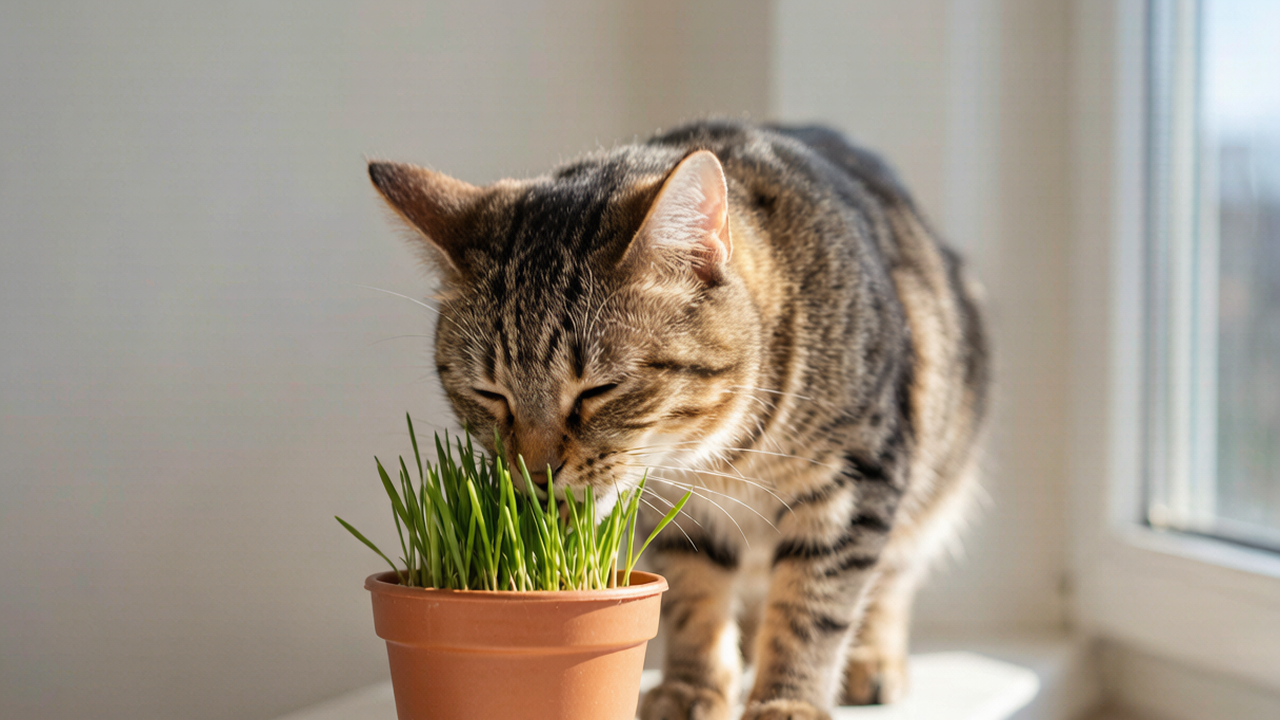
You glance out the window and there's your cat, methodically chewing a blade of grass like she's reviewing it for a fine-dining blog. Then — sometimes — comes the part every cat owner knows: a few minutes later, a damp little pile of green on the rug. It's one of those behaviors that looks alarming if you don't know what you're looking at, and mildly amusing once you do.
The short answer: grass-eating is normal, and most of the time it's nothing to worry about. But like a lot of "normal" cat behavior, there's a version of it that's worth paying attention to, and the difference mostly comes down to how much, how often, and what else is going on.
Yes, It's Normal — and Really Common
If your cat nibbles grass, she's in the vast majority. In one large survey of cat owners, researchers found that about seven in ten cats were caught eating plants, and the behavior showed up in cats who were otherwise perfectly healthy. It's not a sign your cat is sick or starving.
It's also not something domestic cats invented. Lions, leopards, and cheetahs have all been observed eating grass, which suggests the behavior is an old, hard-wired instinct rather than a quirk of house cats with nothing better to do. Your cat curled on the windowsill shares a habit with her wild, distant relatives — which is kind of nice to know the next time she's treating your lawn like a salad bar.
Why They Do It
Nobody can point to one single reason with certainty, and honest experts will tell you it's probably a mix of a few things. The main theories:
An ancient instinct to purge. The leading idea is that grass-eating helps a cat clear out things her body can't easily digest — fur, bones, feathers, and whatever else came with a wild meal. Grass irritates the digestive tract and nudges it to move things along. A house cat may not have a stomach full of feathers, but the instinct itself stuck around.
Hairball help. Cats swallow a surprising amount of their own fur just by grooming. Grass adds fiber that can help move that fur through, and in some cases the blades trigger a gag reflex that brings a hairball up. If your long-haired cat eats grass and then produces a hairball, the connection is probably real.
A little fiber and folic acid. Grass contains folic acid, a B vitamin that plays a role in oxygen transport and cell growth. Some experts think cats may seek out grass as a tiny nutritional top-up. For a cat eating a complete commercial diet this is less critical, but the drive may still be there.
Curiosity and enjoyment. Sometimes the simplest answer is the right one. Grass moves in the breeze, it smells interesting, and some cats just seem to like the taste and texture. Not every nibble has a deep biological motive.
The Vomit Question Everyone Asks
"Doesn't eating grass make cats throw up?" is the question that scares owners the most. The reassuring part: most grass-eating cats don't vomit. In that same survey of cat owners, only about a quarter of the cats who ate grass were reported to throw up afterward. So the popular image — cat eats grass, cat immediately vomits — is the exception, not the rule.
And even when a cat does bring grass back up, an occasional grass-triggered vomit in an otherwise healthy, happy cat isn't a medical emergency. It's just a cat doing cat things. The alarm bell only rings when the vomiting becomes a pattern.
When Grass-Eating Is Worth a Closer Look
Here's where "normal" turns into "call the vet." Watch for:
- Vomiting that's frequent or not tied to grass. If your cat is throwing up more than occasionally regardless of whether grass is involved, that points to something else — a digestive issue, food sensitivity, or another problem worth investigating.
- A sudden jump in grass-eating. If a cat who never touched grass suddenly can't get enough, or is also chewing on other weird things like fabric or plastic, it can signal an underlying issue or even a condition like pica. That's worth a vet conversation.
- Grass-eating plus other signs of illness. Lethargy, weight loss, a drop in appetite, diarrhea, or a dull coat alongside the grass habit all push this into "get it checked" territory.
- Eating the wrong plants. This is the real danger, and it's easy to overlook. The act of chewing grass is harmless; the plant being chewed absolutely can be harmful.
The Actual Risk Isn't the Grass — It's What's On and Near It
Two things turn a harmless habit into a problem:
Chemicals. Grass treated with pesticides, herbicides, or fertilizer isn't safe for a cat to eat. If your cat has outdoor access, be aware of what's been sprayed on your own lawn and on any shared or communal green space. A chemically treated lawn is a "no grazing" zone.
Toxic plants that look like grass-adjacent greens. Cats aren't great at telling safe grass from dangerous plants. True lilies are the one every owner should know cold: all parts of a true lily can cause acute kidney failure in a cat, and even a small nibble is an emergency. Beyond lilies, common houseplants and garden plants like pothos, sago palm, oleander, and azaleas are all toxic to cats. If your cat is a plant-chewer, it's worth going through every plant in your home and yard against a reliable toxic-plant list and removing anything risky.
How to Give a Grass-Loving Cat a Safe Outlet
The best way to protect a plant-chewing cat isn't to fight the instinct — it's to give her a safe version of what she wants:
- Grow cat grass indoors. "Cat grass" is usually wheatgrass, oat, barley, or rye grown in a small pot, and it's easy to sprout from seed. Growing your own means you know it's pesticide-free.
- Place it where she already hangs out. Put the pot near a favorite window or nap spot, and most cats will investigate and use it on their own.
- Redirect from the bad stuff. A cat with her own grass pot is often less interested in your houseplants. It satisfies the same urge without the danger.
None of this requires anything fancy — a small pot, some seeds, and a sunny spot get the job done.
The Bottom Line
A cat eating a little grass is, most of the time, a perfectly healthy cat following an instinct that's older than the couch she naps on. Watch for the patterns that matter: frequent vomiting, a sudden obsession, or grazing on plants and lawns that could be toxic. Give her a safe grass pot, keep the dangerous plants out of reach, and you can let her enjoy her greens without the worry. And when the occasional green pile shows up on the rug — well, that's just part of the deal.
This guide is written by experienced pet owners for pet owners and reflects general pet-care guidance, not medical advice. It doesn't replace an exam from a veterinary professional. If your cat is vomiting frequently, losing weight, or has eaten a known toxic plant — especially any kind of lily — get veterinary help right away.
Does your cat eat grass? Indoor pot or backyard salad bar — and does she ever throw it up? I'd love to hear what your cat's grass habit looks like.
---
If you found this helpful, you might also like:
- Why your dog eats grass (and whether it's harmless)
- Toxic houseplants for cats and dogs
- Cat hairballs: remedies and prevention
- Why does my cat eat plastic? Pica explained
This article is for informational purposes only and is not a substitute for professional veterinary advice, diagnosis, or treatment. Always consult a licensed veterinarian if your pet shows signs of illness, injury, or distress. If you believe your pet is experiencing a medical emergency, contact your veterinarian or the nearest emergency animal hospital immediately.
🐾 Enjoyed This Article?
Save it for later, share with a fellow pet parent, or check out more tips on our homepage!
📩 Never Miss a Tip
Get our best pet care hacks delivered straight to your inbox. No spam, unsubscribe anytime.
Shop pet supplies on Amazon & Chewy
Comparing prices before you buy? Check current deals and read reviews from other pet owners.