Toxic Houseplants for Cats and Dogs: What I Learned From a $340 Peace Lily
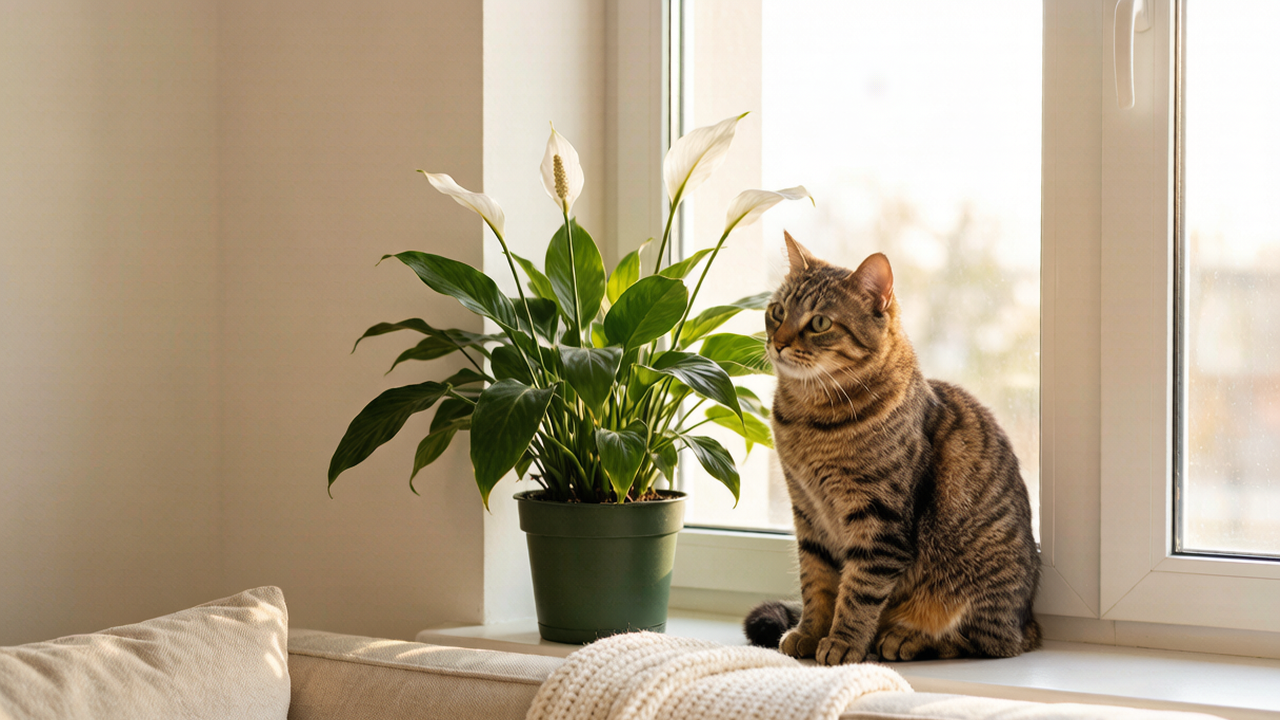
The day Maya started drooling like a leaky faucet, I spent forty minutes convincing myself she'd just licked something gross before I finally picked up the phone. She was sitting on the windowsill, pawing at her mouth, with long strings of drool hanging off her chin. The plant I'd brought home two days earlier — a peace lily I bought because someone told me it cleans the air — had a leaf chewed down to the stem.
What I didn't know then: a peace lily is full of microscopic calcium oxalate crystals. When a cat bites into it, those needle-sharp crystals fire into the mouth and throat like a mouthful of tiny splinters. It's agonizing. It causes instant drooling, pawing at the face, and often vomiting.
Three hours and $340 later, Maya was fine. The vet flushed her mouth, gave her something to settle her stomach, and sent us home with a very clear message: we got lucky. A peace lily hurts, but it rarely kills. The same can't be said for a lot of other plants sitting in perfectly ordinary living rooms.
That afternoon I went home and pulled every plant out of reach, then spent an evening researching which ones actually deserved to stay in the house. Here's everything I wish I'd known before I ever bought that peace lily.
The Plants That Can Actually Kill
Before the peace lily incident, I lumped all "toxic plants" into one bucket. That's a mistake, and it matters, because the response is different.
There are two groups. The first is the genuinely dangerous one — the plants that cause organ failure and can be fatal. The second (which includes my peace lily) is painful and messy but almost never deadly. You need to know which is which, because a cat that chews a true lily is a real emergency, while a cat that chews a pothos needs a mouth rinse and a call to the vet.
Lilies are the big one. Not peace lilies — actual lilies, like Easter lilies, tiger lilies, daylilies, and Asiatic lilies. Every part of a true lily is toxic to cats, and this is where it gets scary: even a few grains of pollen on the fur, or a sip of the water from the vase, can cause acute kidney failure. A cat that grooms lily pollen off its own coat can go into kidney failure within days. If you have a cat, lilies simply don't belong in your home, period. There's no "just keep it up high" with these.
Sago palm. This one looks like a cute little palm for the corner of the room, but every part of it is toxic to both dogs and cats, and the seeds (the "nuts" in the center) are the worst. Sago palm causes severe liver failure. Symptoms can be delayed by up to 12 hours, and by the time they show up, the damage is often already done. I've met two people whose dogs chewed on one, and both ended up in emergency care for days.
Azaleas and rhododendrons. Common in backyards, and toxic to both dogs and cats. Even a small amount can cause drooling, vomiting, and in more serious cases, heart rhythm problems and coma.
Oleander. It's a landscaping plant in a lot of places, but it's genuinely dangerous. Oleander contains compounds that affect the heart, and it's toxic to both dogs and cats in surprisingly small amounts.
Tulip and daffodil bulbs. The flowers are a mild irritant, but the bulbs are the real problem. If a dog digs up a bulb and chews it — which happens a lot in spring — it can cause intense stomach upset, drooling, and heart issues in large amounts.
Autumn crocus. Not to be confused with the harmless spring crocus. This one causes severe vomiting, bloody diarrhea, and organ failure. It's one of the most dangerous plants on this list.
The Plants That Hurt but Rarely Kill
This is the group my peace lily belongs to, and it's a much bigger list. These plants contain calcium oxalate crystals — the same needle-like splinters Maya got a mouthful of. The symptoms are immediate and unpleasant: drooling, pawing at the mouth, vomiting, and sometimes swelling that makes it hard to swallow. They're almost never fatal, but you should still call your vet or poison control, because the dose and the animal matter.
The common ones to watch for:
- Pothos (also called devil's ivy) — probably the most common houseplant in America, and it's an irritant to both dogs and cats.
- Philodendron — same deal, and just as common.
- Dieffenbachia (dumb cane) — the irritation can be severe enough to swell the mouth and throat.
- Monstera — those trendy split leaves are loaded with the same crystals.
- Peace lily — the one that got Maya.
- Snake plant (sansevieria) — an irritant, and a common target for cats that like to nibble strappy leaves.
- Aloe vera — good for your sunburn, bad for your cat's stomach.
- Jade plant — mild toxicity, mostly stomach upset.
- English ivy — an irritant, and it can also cause vomiting.
- Caladium (elephant ear) — another calcium oxalate plant.
The point isn't to panic and throw all of these out. It's to know that if your pet chews one, you're dealing with a painful mouth and a mess, not an automatic trip to the emergency room.
What "I Think He Ate a Plant" Actually Looks Like
Different plants cause different symptoms, but here's what I've learned to watch for across the board:
- Drooling or foaming at the mouth
- Pawing at the face or mouth
- Vomiting
- Trouble swallowing or refusing food
- Lethargy
- In more serious cases (lily, sago palm, oleander): tremors, seizures, collapse, or a sudden drop in appetite
The timeline matters. Calcium oxalate plants cause symptoms within minutes. Sago palm and lily symptoms can be delayed by hours or even a day — which is exactly why you shouldn't "wait and see" if you know or suspect your pet got into one.
If you think your pet ate something toxic, here's what I do now, in order:
- Get the pet away from the plant and check their mouth for chewed leaves or residue.
- Take a photo of the plant (or grab a leaf to bring with you). "It was a green plant with spiky leaves" is useless to a vet. A photo of an actual sago palm is not.
- Call your vet or poison control immediately. The ASPCA Animal Poison Control Center is 888-426-4435 and it's staffed 24/7. There may be a consultation fee, but it's nothing compared to an emergency visit.
- Don't induce vomiting on your own. With some toxins, throwing up makes it worse, and with sharp plant material it can cause more damage on the way up. Let a professional tell you what to do.
The guidance here is Vet-Informed — it reflects what poison control and veterinary sources agree on — but it doesn't replace calling your own vet about your specific animal.
The Plants That Are Actually Safe
If you have pets and you still want greenery — which I do, because my apartment looks sad without it — here are the ones I've confirmed are safe to keep around cats and dogs:
- Spider plant — safe, and cats sometimes love to bat at the little plantlets.
- Boston fern — safe, and great in a hanging basket.
- Areca palm — safe, and a nice replacement if you wanted a sago palm.
- Parlor palm — another safe palm.
- Calathea (prayer plant family) — safe and pretty.
- Peperomia — a big family of safe, compact plants.
- African violet — safe and easy to keep alive.
- Christmas cactus — safe (unlike a lot of other holiday plants, like poinsettia and holly, which are worth keeping away).
- Orchids — safe, and surprisingly forgiving.
The rule I follow now: before I bring any plant home, I look it up by name. It takes thirty seconds, and it's saved me more than once.
How I Keep Plants and Pets in the Same House
You don't have to choose between having plants and having pets. You just have to be deliberate about it. Here's what actually works for me:
- Hang the tempting ones. Pothos and philodendron go in hanging baskets well out of reach. If a cat can't get to it, the crystal problem is a non-issue.
- Give the cat her own grass. I keep a pot of cat grass on the floor specifically so Maya has something she's allowed to chew. A cat that has an approved nibble target is a lot less interested in my monstera.
- Watch the dog too. Cooper is a plant chewer when he's bored. The day I caught him with a mouthful of hosta in the yard, I learned that even the garden isn't safe — hosta is an irritant too.
- Keep the ASPCA lists bookmarked. Their toxic and non-toxic plant lists are searchable and free. I've put the poison control number above; the list is one search away.
The peace lily taught me the biggest lesson: the danger isn't just the plant — it's not knowing which plants are dangerous. Once I knew the difference between a lily and a spider plant, the fear mostly went away, and the house got a lot safer for both my pets.
What's the closest call you've had with a plant and your pet? Drop it in the comments — especially if it's one I didn't list, because I'm always updating my own "never again" list.
---
If you found this helpful, you might also like:
- BBQ foods that are dangerous for dogs
- 25 human foods your dog can actually eat safely
- Build a DIY pet first-aid kit for emergencies
- Why grass seeds (foxtails) are a sneaky summer danger for dogs
This article is for informational purposes only and is not a substitute for professional veterinary advice, diagnosis, or treatment. Always consult a licensed veterinarian if your pet shows signs of illness, injury, or distress. If you believe your pet is experiencing a medical emergency, contact your veterinarian or the nearest emergency animal hospital immediately.
🐾 Enjoyed This Article?
Save it for later, share with a fellow pet parent, or check out more tips on our homepage!
📩 Never Miss a Tip
Get our best pet care hacks delivered straight to your inbox. No spam, unsubscribe anytime.
Shop dog supplies on Amazon & Chewy
Comparing prices before you buy? Check current deals and read reviews from other pet owners.