Multi-Cat Household Fights: Causes and Solutions
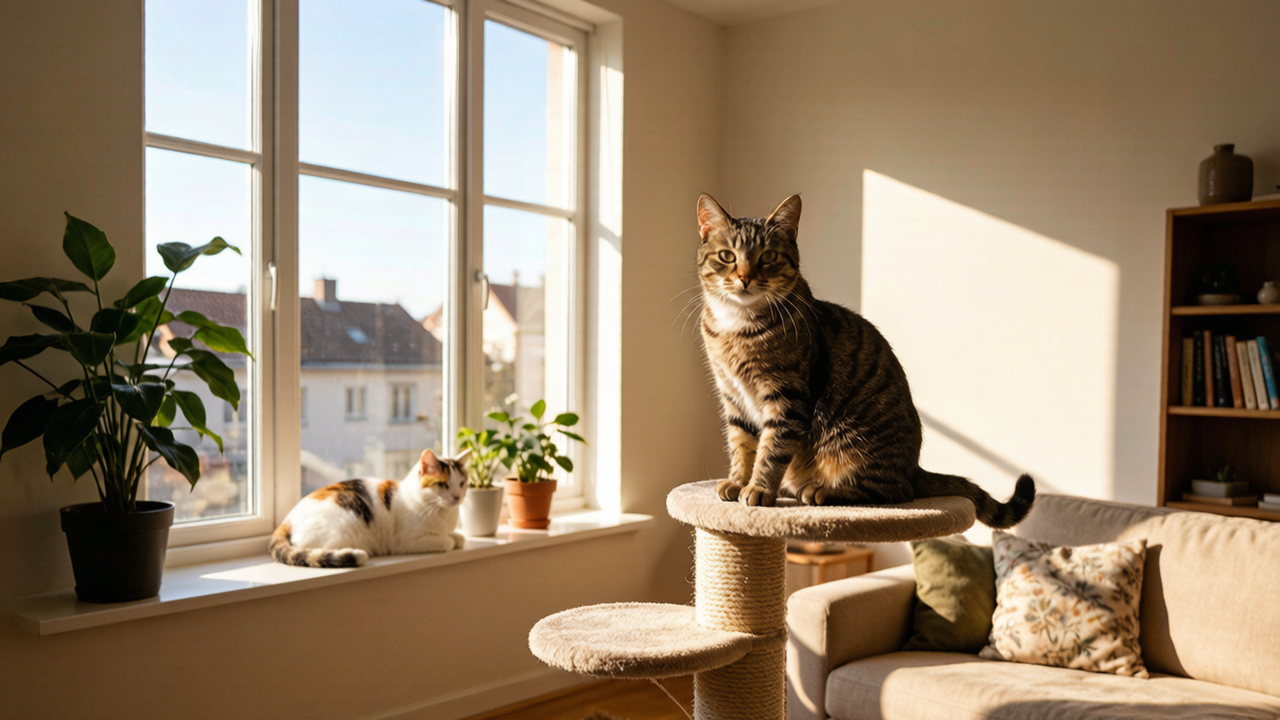
The first time I heard it, I thought someone was murdering a baby in my living room. It was 2am. I stumbled out of bed, heart pounding, and found Maya — my three-year-old tabby — backed into a corner behind the TV stand, ears flattened, fur puffed up like a dandelion. Six feet away, crouched low with dilated pupils, was Juno, the sweet little calico I'd adopted from the shelter three months earlier.
The same cats who'd been grooming each other on the windowsill two days ago. The same cats who'd curl up together in the same cat tree, a tangle of orange and calico fur, looking like a Renaissance painting of feline harmony.
I did what any panicked pet owner does at 2am: I yelled "HEY!" and clapped my hands. Both cats scattered. Maya hid under the bed for six hours. Juno peed on the bathmat. I sat on the bathroom floor at 3am with an enzymatic cleaner and a growing sense that I had absolutely no idea what I was doing.
The Mistake I Kept Making (And You Probably Are Too)
For the first two weeks of the war, I tried to "correct" the fighting. I'd separate them when they hissed. I'd pick up the aggressor and move them to another room. I'd scold whichever cat I thought "started it."
Here's what I didn't understand: breaking up cat fights by physically intervening doesn't solve anything. It adds stress. It makes both cats more anxious. And worst of all, it can redirect aggression onto you — I have a two-inch scar on my forearm from the time I tried to grab Maya mid-fight and she didn't register that my arm wasn't Juno.
Cats don't "start fights" the way humans do. They're not being petty or holding grudges (well, okay, they're cats — maybe a little). What looks like sudden aggression is usually a slow-building resource conflict that finally boiled over. The fight I witnessed at 2am wasn't the beginning of the problem. It was the end of a problem that had been simmering for weeks, and I'd missed every warning sign.
What Actually Caused the War
After spending hours watching old phone videos of my cats interacting — yes, I became that person — I spotted the pattern I'd been blind to.
Maya had always been an only cat. For three years, every windowsill, every cat tree perch, every sunny spot on the carpet, every lap — they were all hers. Then Juno arrived, and I thought I was being smart. I did the slow introduction. Separate rooms for two weeks. Scent swapping with blankets. Eating on opposite sides of a door. The textbook stuff.
What I didn't do was increase my resources. I had one cat tree. One windowsill perch. Two litter boxes (which is fine for one cat, massively inadequate for two). One water fountain. I essentially doubled my cat population without doubling my cat infrastructure. Maya wasn't fighting Juno because she hated her. She was fighting because she felt like her entire territory was being colonized and she had nowhere safe to retreat.
The breaking point, looking back, was when I moved the cat tree to vacuum one day and put it back in a slightly different spot. Maya had lost her primary vertical safe zone, and in a house with another cat, losing your vertical territory is like having your front door kicked in.
The Fix: How I Rebuilt Peace
Rule 1: Every resource needs N+1 copies
The formula I learned from a feline behaviorist: number of cats plus one. Two cats = three litter boxes. Three water stations. Four scratching surfaces (at minimum). Multiple high perches that can't be guarded by a single cat sitting in one spot.
I added a second cat tree ($65 on Chewy — the 72-inch one with three platforms), put a window perch in the bedroom (Maya's preferred room), and added a third litter box in the hallway. I also bought a second water fountain and put it on the opposite end of the house. Within three days, the ambush attacks near the water bowl stopped completely. Juno had been getting hissed at every time she tried to drink, and I'd somehow never noticed because it happened while I was at work.
Rule 2: Cats need "escape routes," not just hiding spots
A hiding spot is where a cat goes when they're already scared. An escape route is what lets them avoid getting scared in the first place. The difference matters.
In my living room, the cat tree was against a wall with only one approach — meaning one cat could trap the other up there. I moved it to a corner where a cat could jump off in two different directions. I also added a cheap IKEA shelf mounted on the wall above the couch ($15, rated for 20 pounds) that created a "highway" from the cat tree to the bookshelf to the windowsill. Now when Maya gets overwhelmed by Juno's kitten energy, she can simply walk away via the elevated route instead of hissing.
Rule 3: Play with them together, but feed them apart
This one was counterintuitive. I thought feeding them together would teach them to get along. Nope. Food is the highest-stakes resource for most cats, and forcing them to eat side by side when there's tension is like asking two people in the middle of an argument to share a dinner table.
I started feeding Maya in the bedroom and Juno in the kitchen, doors closed. No competition, no stress. After each meal, I'd do a joint play session with a wand toy — one cat chases, the other watches, then they switch. The key was ending the session before anyone got overstimulated. Three minutes of joint play, then separate treats, then done. Short and positive, every time.
Play is the closest thing cats have to a shared language. When they chase the same toy in the same space without conflict, their brains are learning "the other cat is not a threat." Do this enough times and it rewires their association.
Rule 4: Scent is everything, and I'd been erasing it
This one made me feel genuinely stupid when I learned it. For weeks, I'd been cleaning the house aggressively — thinking a cleaner environment would reduce tension. I was vacuuming daily, washing blankets weekly, using scented air fresheners. I was literally erasing the cats' communal scent profile.
Cats navigate their world through smell. When a space smells like "us" — a blend of both cats' facial pheromones, deposited when they rub their cheeks on furniture — they feel safe. When I kept scrubbing everything clean, I was resetting the scent landscape to zero, forcing the cats to re-establish territory every single time.
I stopped over-cleaning. I left their favorite blankets unwashed for longer stretches. I rubbed a soft cloth on each cat's cheeks and wiped it on doorframes and furniture corners. Within a week, I noticed both cats rubbing their faces on the same couch armrest — not at the same time, but on the same object, layering their scents over each other. That's cat diplomacy. That's progress.
Rule 5: Feliway isn't magic, but it takes the edge off
I was skeptical about pheromone diffusers. The Feliway Optimum plug-in ($25 for the starter kit, $18 for refills) sounds like the kind of thing that only works because you want it to work. But I was desperate, so I plugged one in near the living room — the main conflict zone.
Did it instantly turn my warring cats into best friends? No. What it did was lower the baseline tension enough that my other interventions had a chance to land. Instead of Maya hissing the second Juno entered the room, she'd give her 30 seconds before reacting. Those 30 seconds were everything — they gave Juno time to walk away calmly instead of being chased, which meant fewer negative interactions, which meant less reinforcement of the "enemy" association.
If you try this, know that Feliway takes about a week to reach full effect. Plug it in and forget about it. Don't check for results daily.
The Timeline No One Posts on Instagram
Nobody posts the ugly middle part of multi-cat rehab. They post the "before" of cats hissing and the "after" of cats cuddling, and they skip the six weeks in between where progress is invisible and you're questioning every decision you've ever made.
Here's what my timeline actually looked like:
- Days 1-3 after the 2am fight: Full separation. Maya in bedroom, Juno in living room. Swapped their blankets daily so they could smell each other without seeing each other.
- Days 4-7: Visual contact through a baby gate covered with a towel. Started with 10 minutes a day, towel slightly lifted so they could see each other's paws but not full body. Fed treats on both sides of the gate.
- Week 2: Removed the towel. Fed meals on opposite sides of the gate. Maya hissed twice. Juno backed away. I didn't intervene. Juno learning to walk away from conflict is more valuable than me breaking it up.
- Week 3: Gate removed for supervised sessions. Wand toy play together, 3-5 minutes max. Lots of treats when they were in the same room without reacting. Separate feeding continued.
- Week 4: First time they both fell asleep in the same room — Maya on the cat tree, Juno on the couch. Not touching, but coexisting. I texted my partner a photo like I'd just won a Nobel Prize.
- Week 6: Juno tried to groom Maya. Maya hissed but didn't swat. Juno backed off. This is actually a good sign — they're negotiating boundaries instead of immediately fighting.
- Month 2: They started sharing the windowsill again. Not cuddling. Just... parallel existing. For multi-cat households, parallel existing is a victory.
Are they back to grooming each other like those first two months? Occasionally. It's not the same. Maya is a more guarded cat now, and Juno has learned to give her more space. But there are no more 2am screaming matches. There's no more hiding under the bed for six hours. They can pass each other in the hallway without drama. And honestly? For two cats who genuinely hated each other for a solid two weeks, that feels like a miracle.
When You Need a Vet, Not an Article
Here's the line I almost crossed and you shouldn't: if your cats are drawing blood, if one cat stops eating, or if either cat is hiding so much they're not using the litter box — you need a veterinarian. Not a behaviorist, not another blog post, a vet. Sudden aggression in cats can be triggered by pain. A cat with a urinary tract infection, dental disease, or arthritis may lash out because they're hurting, not because they're aggressive. I had Maya checked for a UTI around week three (she was fine, just stressed), and I'm glad I did.
---
Have your cats ever gone from friends to enemies overnight? What finally worked — or are you still in the trenches? I read every comment, and honestly, I could use the solidarity.
This article is for informational purposes only and is not a substitute for professional veterinary advice, diagnosis, or treatment. Always consult a licensed veterinarian if your pet shows signs of illness, injury, or distress. If you believe your pet is experiencing a medical emergency, contact your veterinarian or the nearest emergency animal hospital immediately.
🐾 Enjoyed This Article?
Save it for later, share with a fellow pet parent, or check out more tips on our homepage!
📩 Never Miss a Tip
Get our best pet care hacks delivered straight to your inbox. No spam, unsubscribe anytime.
Shop cat supplies on Amazon & Chewy
Comparing prices before you buy? Check current deals and read reviews from other pet owners.