My Cat Woke Me Up at 3 AM by Vomiting a Hairball Directly Onto My Pillow — Here's What Finally Stopped It
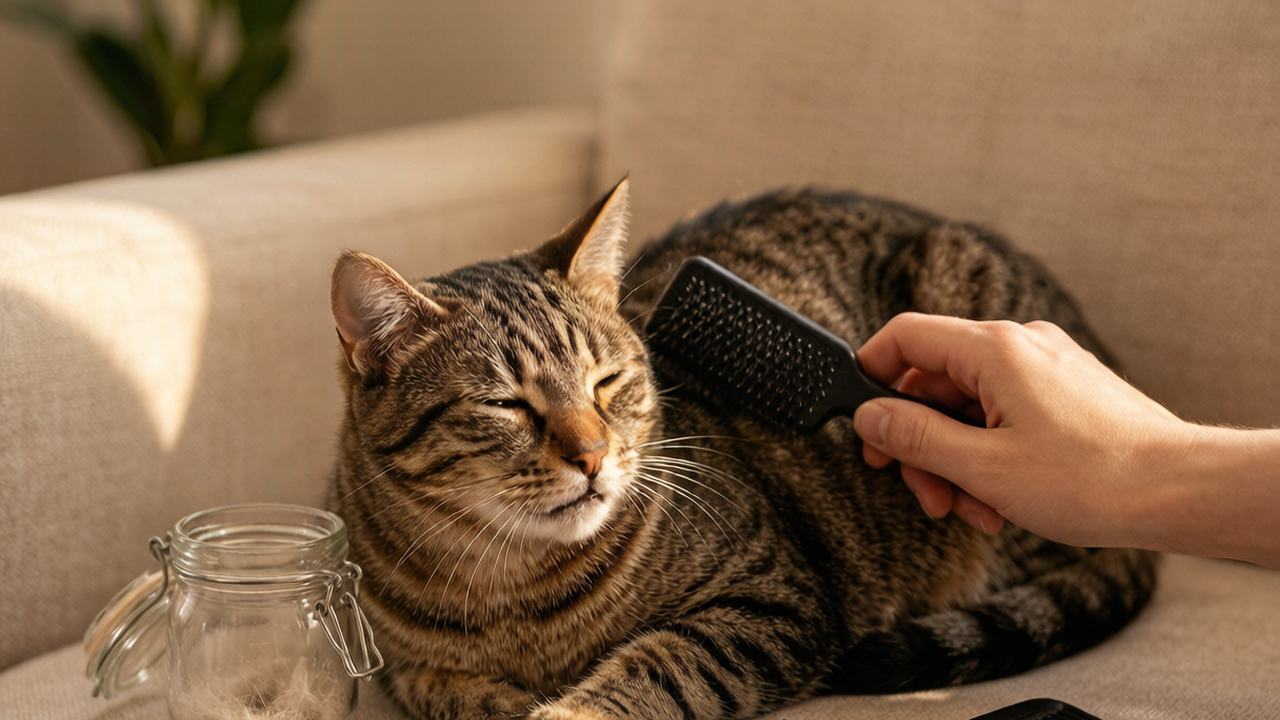
I wish I were exaggerating. Mochi, my six-year-old tabby, chose the exact center of my pillow — while my head was still on it — to deposit what looked like a compacted fur cigar mixed with stomach bile. It was 3:07 AM on a Tuesday. I had a presentation at 9 AM.
That was my wake-up call, literally and figuratively. Mochi had been hacking up hairballs once or twice a week for months, and I'd been treating it like background noise. Oh, the cat threw up again, grab a paper towel, move on. I didn't realize until that pillow incident that this wasn't just gross — it was a sign that something was off.
Here's the thing about hairballs that nobody told me: they're not actually normal. Yeah, I said it. A cat hacking up a hairball every couple of months? Fine. Once or twice a week? That's your cat telling you their digestive system is struggling. Mochi was basically waving a little flag saying "HELP" and I'd been ignoring it because I thought all cats barf up hair all the time.
After six months of trial and error — during which I tried three different hairball gels, four types of cat food, and one very expensive vet visit that revealed Mochi was perfectly healthy, just extremely fluffy — we got it down from weekly hairballs to maybe one every three months. Here's the full story.
Why Your Cat Is Producing So Many Hairballs Right Now
I always assumed hairballs were just an inevitable side effect of cats being cats. They groom, they swallow fur, fur comes back up. Simple, right?
Turns out I was only half right. Cat tongues have these tiny backward-facing hooks called papillae that act like a built-in comb. Every grooming session pulls loose fur into their mouth, and since cats can't exactly spit it out, they swallow it. In a healthy cat, most of that fur passes through the digestive system and comes out the other end without drama. A hairball only forms when fur gets stuck in the stomach instead of moving through.
Mochi's problem wasn't that she was grooming too much — it was that the fur wasn't making it past her stomach. Two factors were working against her:
First, she's a shorthair tabby who sheds like a longhair Maine Coon during summer. From May through August, I could brush her for ten minutes, turn around, and find another handful of loose fur on the couch. All that loose fur was going straight into her stomach every time she groomed.
Second, her diet was too low in fiber. I was feeding her a high-protein grain-free kibble that a boutique pet store employee talked me into. Great for her muscles, terrible for moving fur through her intestines. Without enough insoluble fiber to bulk up and push things along, the swallowed fur was just sitting in her stomach, accumulating into those dense little torpedoes she'd eventually hack onto my carpet.
The Vet Visit That Changed Everything
When I finally took Mochi to the vet after a particularly bad week (three hairballs in five days), I was convinced she had some kind of blockage. The vet did a physical exam, felt her abdomen, and asked a series of questions that made me feel progressively worse about my cat parenting:
"How often do you brush her?"
"Uh… when I remember. Maybe once a week?"
"What are you feeding her?"
So I told her about the expensive grain-free food. The vet nodded in a way that told me she'd heard this exact story about a thousand times before.
Mochi was fine — no blockage, no inflammation, healthy weight, clean bloodwork. The vet explained that Mochi was a classic "hairball-prone cat with a diet mismatch." The grain-free food was perfectly good food, but it wasn't doing anything to help move swallowed fur through her system. Combine that with my lazy brushing schedule during peak shedding season, and of course she was producing a hairball every few days.
The vet gave me a plan. Not a single magic pill, but a system. I'm sharing it exactly as she laid it out, because it's what finally worked.
The Four Things That Actually Stopped Mochi's Hairballs
1. I Started Brushing Her Every Single Day — But Only for Two Minutes
This was the simplest change with the biggest impact. I bought a $12 slicker brush and a $6 flea comb, and I committed to two minutes of brushing every evening while we watched TV together. Two minutes. That's it.
The amount of fur that comes off a shorthair cat in two minutes during July is genuinely alarming. I started keeping the fur in a little jar just to track it — by day five, I had enough to make a third cat.
Here's what I learned about brushing technique: the slicker brush gets the loose top fur, but the flea comb is the real hero. Run it through after the slicker brush and it catches all the fine undercoat the slicker missed. Those fine undercoat hairs are the ones that mat together in the stomach most easily.
The side benefit I didn't expect: Mochi now associates brushing with evening cuddle time and purrs through the whole thing. She used to tolerate it for about thirty seconds before walking away. The consistency made it a ritual she actually looks forward to. Two minutes a day. That's less time than I spend scrolling Instagram while waiting for coffee to brew.
2. I Switched to a Hairball-Control Formula Cat Food
The vet recommended I transition Mochi to a food specifically formulated for hairball control. These formulas aren't magic — they just have higher insoluble fiber content (usually from cellulose, beet pulp, or psyllium husk) that helps bulk up the stomach contents and push everything through rather than letting it sit and compact.
I switched gradually over ten days, mixing the new food with the old in increasing proportions. Mochi, who has the palate of a tiny furry food critic, was suspicious for approximately thirty-six hours and then decided the new kibble was acceptable.
Within about three weeks of the food switch combined with daily brushing, Mochi went from two hairballs a week to one every other week. Progress, but not solved yet.
3. I Added a Hairball Gel — But I Tried Three Before Finding One She'd Actually Eat
Hairball gels are basically edible lubricants. They coat the swallowed fur and help it slide through the digestive tract instead of balling up in the stomach. Most contain some combination of petrolatum, mineral oil, or vegetable oils.
The problem: cats hate them. At least, Mochi hated the first two I tried.
Gel #1 was a malt-flavored paste in a tube. I squeezed it onto my finger and offered it to Mochi. She sniffed it, looked at me with undisguised contempt, and walked away. I tried wiping it on her paw so she'd lick it off. She shook her paw like I'd dipped it in acid, then glared at me from across the room for an hour.
Gel #2 was a fish-flavored version. Better reaction — she licked it off my finger exactly once. The second time, she recognized the tube and hid under the bed.
Gel #3 was the winner: a maple-flavored gel that I mixed into a teaspoon of wet food. The wet food masked the texture, and the maple flavor apparently didn't offend her feline sensibilities. I gave her a pea-sized amount every other day for the first month, then tapered down to twice a week as maintenance.
4. I Added a Water Fountain and Noticed a Difference I Didn't Expect
This one was actually an accident. I bought a $30 ceramic cat water fountain because Mochi had started drinking from the bathroom sink and I was tired of finding cat hair in my toothbrush cup. I wasn't thinking about hairballs at all.
Within about ten days of the fountain being set up, I noticed Mochi was drinking significantly more water. Cats are notoriously bad at staying hydrated — they evolved from desert animals and have a low thirst drive. But the moving water triggered her instinct to drink.
Here's why this matters for hairballs: dehydration slows down everything in the digestive tract. When a cat is even mildly dehydrated, food and fur move through more slowly, giving hair more time to clump together in the stomach. Better hydration = faster transit time = less opportunity for hairballs to form.
I can't prove the fountain alone reduced Mochi's hairballs, but the timeline lines up. Combined with the brushing, food switch, and gel, we went from weekly hairballs to maybe one every two to three months.
What I Wish Someone Had Told Me on Day One
I wasted months trying random fixes individually — a new brush here, a different food there — instead of throwing all four pieces at the problem at once. Hairballs are a multi-factor problem and they need a multi-factor solution. Brushing alone won't fix a low-fiber diet. A food switch won't help if you're only brushing once a week. The gel works better when the cat is well-hydrated. Everything supports everything else.
Also: if your cat is hacking but not producing a hairball, if they're lethargic, refusing food, or constipated, stop reading articles and go to the vet. A hairball that can't come up or pass through can cause a life-threatening intestinal blockage. Mochi's vet told me she's seen cats need surgery for this. I'm not trying to scare you, but hairballs aren't always just gross — they can be dangerous.
Now Mochi gets brushed for two minutes every night, eats hairball-control kibble with a maple-gel topper twice a week, and drinks from her ridiculous $30 fountain like she's at a spa. She still grooms herself obsessively — she's a cat, that's not changing — but the fur actually goes where it's supposed to instead of ending up on my pillow at 3 AM.
How often is your cat hacking up hairballs? Have you found a gel they'll actually eat, or are you still in the "wipe it on the paw" stage of desperation? Let me know — I have strong opinions about hairball gels and I'm genuinely curious what's worked for other people.
🐾 Enjoyed This Article?
Save it for later, share with a fellow pet parent, or check out more tips on our homepage!