Why Does My Cat Eat Plastic? Understanding Pica and How to Stop It
You walk into the room and find your cat with a corner of a plastic grocery bag half chewed off, or you catch him gnawing on the edge of a storage bin for the third time this week. It's weird, it's a little annoying, and it's also genuinely scary — because plastic doesn't digest. Once you've seen a cat go after a bag, you start seeing hazards everywhere.
What's Actually Going On
Eating things that aren't food has a name: pica. In cats, the most common targets are plastic bags and wrappers, followed by fabric, wool, cardboard, and rubber bands. Some cats just mouth or lick the plastic; others bite off and swallow real pieces. The licking is annoying, but the swallowing is the part that can turn dangerous.
This isn't a cat being naughty or spiteful. Cats don't eat plastic to get back at you. There's almost always a reason underneath it, and figuring out that reason is the whole game.
Why Cats Do It
There's no single cause, and a lot of cats have more than one thing going on. The usual suspects:
It smells or tastes interesting. Plastic bags often carry the scent of whatever was in them — groceries, takeout, lunch meat — and a cat's nose is far sharper than ours. Some plastics are even made with plant-based materials that break down into a smell a curious cat finds appealing. To a cat, a crinkly bag can smell like food and sound like prey all at once.
It feels good to chew. The texture and the crinkle can be satisfying on their own. For some cats, chewing plastic is a soothing, almost self-comforting habit, a bit like a person chewing a pen cap.
Boredom or under-stimulation. A cat with not enough to do — no hunting games, no puzzle feeders, no window to watch — will invent its own entertainment. A plastic bag is loud, shiny, and interactive in a way an empty afternoon isn't.
Stress or anxiety. Some cats chew more when they're stressed, the same way people bite their nails. A new pet, a move, a schedule change, or too little quiet space can all push a cat toward a chewing habit.
Early weaning or wool-sucking. Kittens weaned very young sometimes carry a suckling or chewing habit into adulthood. In some breeds — Siamese and Burmese are the classic examples — a tendency to suck and chew on fabric and soft materials is well documented.
A medical cause. This is the one you can't rule out by watching. Certain conditions — anemia, dental pain, gastrointestinal problems, and some hormonal issues — are linked to pica. A cat in discomfort may chew on non-food items as a way of responding to that discomfort.
Why It's Genuinely Dangerous
A cat licking a bag is a weird quirk. A cat swallowing plastic is a medical risk, and the risks are real:
Plastic doesn't break down. Small bits can pass through, but larger or sharper pieces can lodge in the stomach or intestines and cause a blockage. A blockage is a surgical emergency.
Linear foreign bodies are the worst. String, yarn, ribbon, and the drawstrings or handles from bags are especially dangerous. One end can anchor in the stomach while the rest moves into the intestine, which then bunches up like an accordion and can tear. This is one of the most serious emergencies a cat can have.
Rubber bands and hair ties. These are swallowed all the time and are a classic cause of blockages in cats.
Chemicals and dyes. The plastic itself, plus anything printed on it, is not meant to be eaten.
What to Do First
Before you start rearranging your whole house, rule out the medical piece.
See the vet. A check-up, and possibly some basic blood work, can catch the underlying conditions that make cats chew. If a medical issue is driving it, no amount of hiding the plastic will fix the habit — and the longer it goes untreated, the more it can progress.
If the vet gives your cat a clean bill of health, you're dealing with a behavioral habit, and that's where the real work begins.
How to Stop It: Block Access First
Management comes before training. You can't redirect a cat away from a bag if the bag is still sitting right there.
Store bags out of reach. Keep plastic bags in a drawer or cabinet, not in a holder the cat can reach. If you use bags as trash liners, choose a bin with a lid.
Hide the small stuff. Rubber bands, hair ties, twist ties, bread clips, and string go in a closed container, not on the counter.
Cover or tuck cords. Some cats chew cables and charging cords the way others chew bags. Cord covers or routing cords out of reach removes the temptation.
Do a sweep of the cat's space. Get down at cat level and look for anything soft, crinkly, or stringy within reach: gift wrap, tape, adhesive strips, dryer sheets, dental floss. If a cat can reach it, a determined cat will eventually chew it.
Give Them Something Better to Chew
You're not just taking away — you're replacing. A cat needs somewhere to put that chewing and hunting energy.
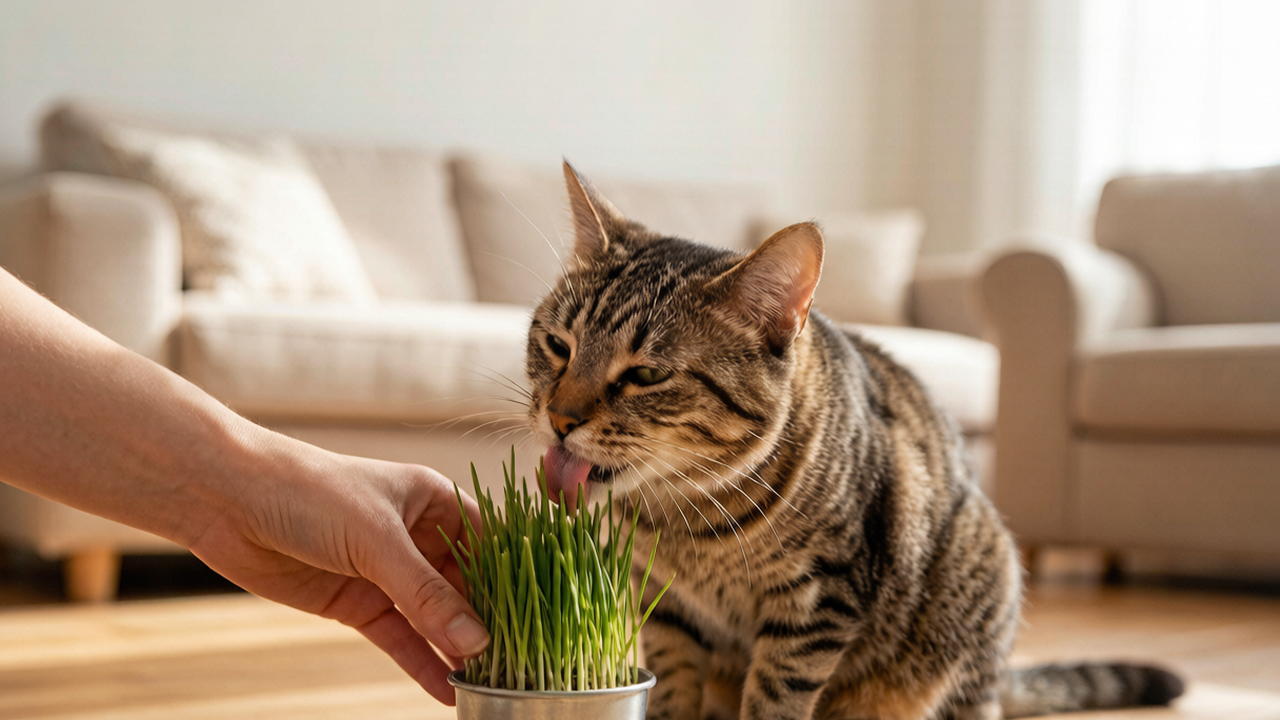
Offer cat grass. A safe, chewable plant gives a cat the "I'm eating something green" experience without the plastic. Many cats will happily redirect from a bag to a pot of grass.
Try safe chew toys. Durable chew toys, dental treats, and silvervine or catnip sticks give a cat something legitimate to gnaw on.
Use puzzle feeders. Making your cat work a little for meals and treats burns mental energy and satisfies the hunt-eat cycle, which reduces boredom-driven chewing.
Add real play. Two or three short, interactive play sessions a day with a wand toy — ending with a "catch" and a small meal or treat — mimics a natural hunt and leaves a cat calmer. A tired, satisfied cat chews less.
Reduce stress. Make sure there's a quiet spot to retreat to, a clean litter box, and a predictable routine. If a big change set off the habit, give the cat extra stability while it settles.
When It's an Emergency
If your cat has actually swallowed plastic, string, or a rubber band — or you strongly suspect they have — treat it as urgent, not wait-and-see. Watch for:
- Vomiting, especially repeated vomiting
- Refusing to eat
- Lethargy or hiding
- Straining in the litter box or no stool passing
- A painful or swollen belly
Never try to pull a string or ribbon out of a cat yourself — if it's trailing from the mouth or rear, pulling can cause serious internal damage. Leave it alone and get veterinary help immediately.
A Note on Consistency
Pica usually doesn't disappear overnight. It took time for the habit to form, and it takes time to redirect. The combination that works is boringly consistent: remove the plastic, add real enrichment, keep the routine steady, and loop in your vet if anything changes. Most cats chew less once the environment does the heavy lifting for them.
This guide is written by pet owners for pet owners and reflects general pet-care guidance, not medical advice. If your cat has swallowed something they shouldn't have, or if the chewing habit starts suddenly or comes with other symptoms, get a veterinary professional involved right away.
Does your cat have a thing for plastic bags or hair ties, and what finally got them to knock it off? Drop your best tip in the comments — the weirder the better.
---
If you found this helpful, you might also like:
- Signs your cat is stressed (and how to help)
- Indoor cat enrichment and boredom busters
- Why is my cat vomiting? What the color means
- Toxic houseplants for cats and dogs
This article is for informational purposes only and is not a substitute for professional veterinary advice, diagnosis, or treatment. Always consult a licensed veterinarian if your pet shows signs of illness, injury, or distress. If you believe your pet is experiencing a medical emergency, contact your veterinarian or the nearest emergency animal hospital immediately.
🐾 Enjoyed This Article?
Save it for later, share with a fellow pet parent, or check out more tips on our homepage!
📩 Never Miss a Tip
Get our best pet care hacks delivered straight to your inbox. No spam, unsubscribe anytime.
Shop pet slow feeder bowl on Amazon & Chewy
Comparing prices before you buy? Check current deals and read reviews from other pet owners.