How to Get a Rescue Dog to Trust You
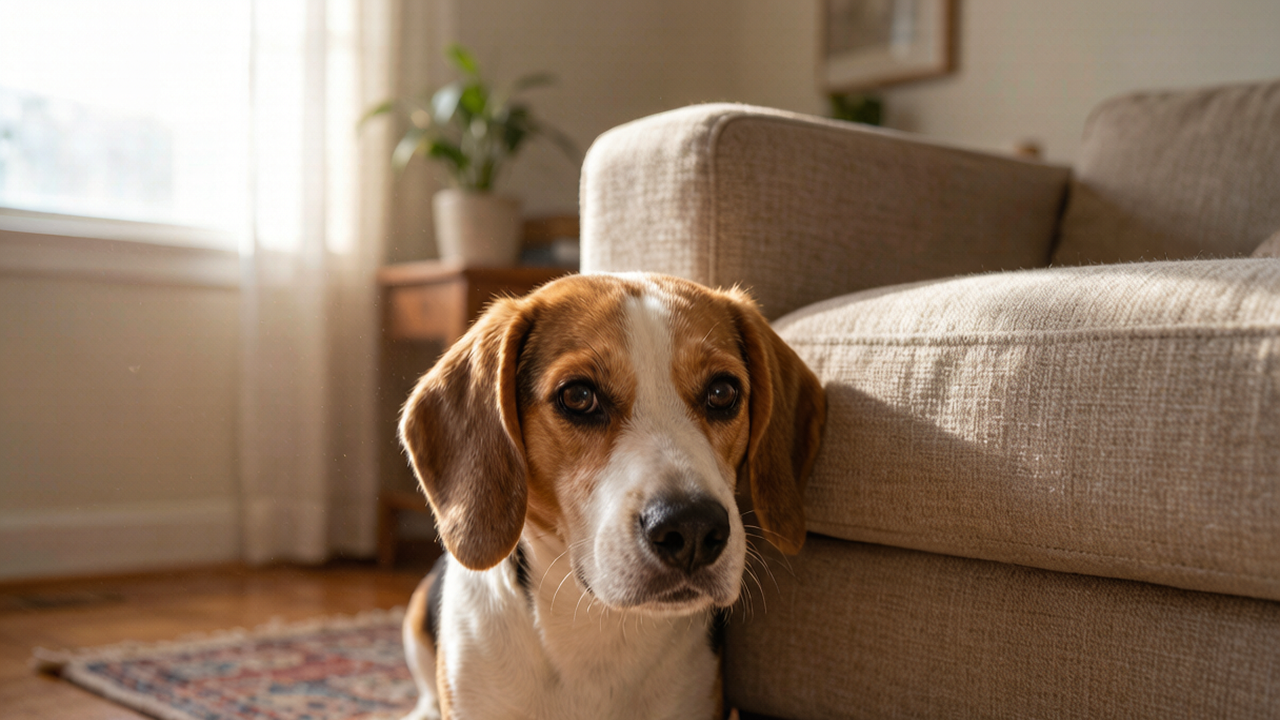
Building trust with a rescue dog is rarely instant. Many new adopters find themselves googling "my rescue dog won't come near me" within the first 48 hours, while a frightened dog stares from behind the couch as though they've met a villain in a horror movie.
Shelters often label a dog "a little shy," but that undersells it. A newly rehomed dog may not eat for two days, won't take a single step toward you, wedges herself behind the sofa, and won't make eye contact. The instinct to try too hard — sitting inches from her, putting treats next to your hand, using that high-pitched "it's okay baby" voice — almost always makes things worse.
The breakthrough comes when you stop trying. Sit on the floor 8 feet away, face the opposite direction, and read a book out loud to no one. Twenty minutes in, you may hear a tiny shuffle behind you. Within a few days, she may take a treat from your palm for the first time — a quiet milestone worth celebrating on your own.
Your job isn't to make them love you
A rescue coordinator told me: "Your job is to prove you're not a threat. Nothing else matters." That reframed everything. Decompression for a traumatized dog doesn't look like relaxing. It looks like hiding. It looks like not eating. Their nervous system is flooded with cortisol and their brain runs a single program: don't draw attention.
The 3-3-3 rule is a compass, not a countdown. Some rescue dogs take 6 weeks just to leave their spot, 4 months before they'll let you pet them without flinching, and nearly a year before they approach strangers. Others need longer still. The timeline isn't about your effort — it's about what they've been through.
What actually worked
Become aggressively predictable. Keep the same schedule every day for three weeks. Narrate your movements out loud — "going to the kitchen now" — so nothing surprises her. Consistency is the first form of safety a frightened dog recognizes.
Let her choose every interaction. Never walk toward her to pet her. Sit at a distance and wait. If she approaches, offer a flat hand at nose level. If she leans in, scratch under the chin — never the top of the head. If she pulls away, stop immediately. The first time she rests her head in your lap, you may have been reading for 45 minutes with numb legs — and the right move is to stay perfectly still.
Food as relationship tool, not bribe. Early on, place high-value treats next to you — she'll stretch her neck to snatch them without moving her body. What works better: drop treats behind you as you walk away. No eye contact. No expectations. "Delicious things appear when that human leaves." Eventually she'll start following.
No-human zone. Put a thick bed behind the couch, drape a blanket over it, and make it law: nobody goes near her there. Giving a fearful dog a sanctuary humans never violate is one of the fastest trust-builders.
Find her obsession. Many dogs have a toy they can't resist — for some, it's a tennis ball. Carry one in your pocket, set it near you, and ignore it. She'll creep over, sniff it, take it back. Weeks later she may bring it to you voluntarily — not to play, just to show you. That's the moment trust clicks.
What I'd do differently
Skip visitors for the first two weeks. A single well-meaning guest can send a shy dog into regression for days. Hold off on the cute collar for the first month — anything that requires reaching over their head can wait until trust is established. And manage your own expectations — the hardest part is the gap between what you imagined and what it actually is. If you're in that place right now: you haven't made a mistake. You're just in the hard part. The hard part ends.
A dog who once hid may eventually sleep at your feet. She'll follow you room to room. She may still slip behind the couch when the doorbell rings, but come out in minutes instead of hours. Trust isn't built in big moments. It's built in the seconds you let pass without reaching out, the treats dropped without conditions, the times you walk past their spot without even glancing.
🐾 Enjoyed This Article?
Save it for later, share with a fellow pet parent, or check out more tips on our homepage!
The First 72 Hours Look Nothing Like the Videos
When your rescue dog first comes home, the internet says "boundaries and routine." True — but the part nobody shows is how still you have to be. Don't reach for him, don't loom over him, don't make eye contact he didn't start. For three days he may eat in the corner and watch you. On day four he might sleep where you can see him. That "boring" approach builds more trust than any treat bribe would, because it tells him the scary new human isn't a threat. New owners underestimate how much a rescue needs the same foundation as a puppy — the survival guide covers the setup worth reading first.
What Built Trust Faster Than Treats
Treats helped, but the real accelerant was predictability: same wake time, same walk route, same spot for meals, a crate he could hide in and knew was his. Rescue dogs often come from chaos; your job is to be the opposite. The crate especially — the crate training guide is written for puppies but the "safe space" logic is identical for a scared adult dog. Keep your voice low and your movements slow for the first two weeks; it costs nothing and signals safety.
Shop high value dog treats on Amazon & Chewy
Comparing prices before you buy? Check current deals and read reviews from other pet owners.
Frequently Asked Questions
How long does it take a rescue dog to trust you?
It varies widely, from a few weeks for confident dogs to several months for those with a hard history. Trust is built in small, predictable moments, not on a timeline. Go at the dog's pace.
What should I NOT do?
Do not force interaction, do not punish fear, and do not overwhelm them with new people, loud noises, or tight spaces. Pushing a nervous dog only confirms that the world is scary.
What actually builds trust?
A calm routine, a soft voice, hand-feeding, and giving them a safe space they control. Let the dog choose to approach you.
Trust-Building Steps
- Keep a predictable daily schedule for meals and walks.
- Sit near them doing nothing; let them come to you.
- Hand-feed high-value treats to pair you with good things.
- Respect their crate or bed as a no-touch zone.
Common Mistakes to Avoid
- Do not force affection - corners a scared dog and confirms people are unsafe.
- Do not change the routine daily - predictability is what builds confidence.
- Do not yell at fear - punishment of a fear response makes the fear worse.