How to Crate Train Your Puppy at Night: A Step-by-Step Guide to Peaceful Sleep
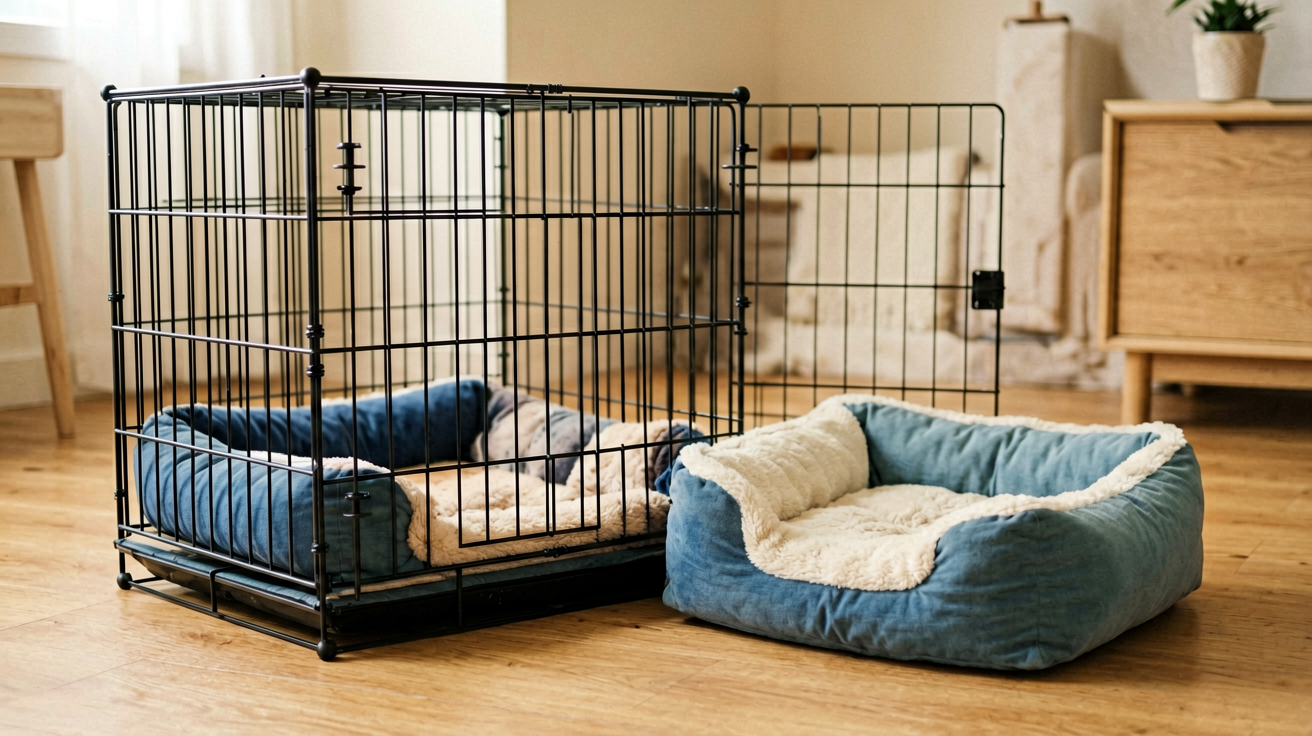
You bring home that adorable ball of fluff, set up the crate with a cozy bed, and by 2 AM, the crying starts. You're exhausted. The puppy is confused. And you're wondering if you made a huge mistake. Most new puppy owners have been there—bleary-eyed at 3 AM, second-guessing everything. But here's the truth: learning how to crate train your puppy at night is the single best thing you can do for both of you. It creates a safe den, speeds up potty training, and yes, gets you your sleep back.
So, how do you crate train a puppy at night without the drama? It's simpler than you think. In this guide, you'll get the exact process we use with the puppies we train, so that by morning you'll have a plan that works.
📋 Table of Contents
- The Quick Answer: How to Crate Train Your Puppy at Night
- Why Nighttime Crate Training Matters (And Why It's Hard)
- Step 1: Set Up Your Crate for Nighttime Success
- Step 2: The Pre-Bedtime Routine (This Is Crucial)
- Step 3: Handling the Middle-of-the-Night Crying
- Common Crate Training Mistakes to Avoid
- Real-Life Example: A Stubborn Terrier Mix
- Product Picks
- Frequently Asked Questions
The Quick Answer: How to Crate Train Your Puppy at Night
Start by making the crate a happy place during the day. Feed meals inside, toss treats in, and let your puppy explore it on their own. At night, place the crate in your bedroom so your pup can hear and smell you. Take them out for a potty break right before bed (and set an alarm for a middle-of-the-night break if they're under 4 months old). When they cry, wait a few minutes to see if they settle—but if the crying escalates, take them out for a quick potty trip only, then straight back in. No playtime, no cuddles. Consistency is everything.
Why Nighttime Crate Training Matters (And Why It's Hard)
Puppies are born with a natural instinct to keep their sleeping area clean. That's the golden ticket. When you use a properly sized crate, your puppy will avoid soiling it, which makes crate training your puppy at night a powerful potty training tool. But here's the catch: puppies have tiny bladders. A 10-week-old pup can only hold it for about 2-3 hours. Expecting them to sleep through the night without a potty break is setting everyone up for failure.
The real challenge is the crying. Your puppy has spent their entire life snuggled with littermates. Now they're alone in a box. That's scary. Your job is to make the crate feel like a safe den, not a punishment. I recommend starting with a MidWest iCrate Double Door Folding Crate ($89.99 on Chewy). It has a divider panel so you can adjust the size as your puppy grows—critical for potty training success.
Step 1: Set Up Your Crate for Nighttime Success
Location matters more than you think. For the first few weeks, keep the crate in your bedroom. Your presence—your breathing, your smell—is the best comfort for a nervous puppy. A small side table next to the bed works well for placing the crate. When the puppy whimpers, you can reach down and talk softly without getting out of bed.
Make the crate cozy but safe. Avoid thick, fluffy bedding that a puppy might chew and ingest. Instead, use a Kuranda Cot with Chew-Proof Fabric ($74.99 from Petco). It's elevated, easy to clean, and virtually indestructible. Add a soft fleece blanket that smells like you (sleep with it for a night first). And never use a crate that's too big—your puppy should be able to stand up, turn around, and lie down, but no extra room to potty in one corner and sleep in another.
Pro tip: Cover the crate with a lightweight blanket on three sides. This creates a cave-like den that reduces visual stimulation and helps your puppy settle. Leave the front open for airflow and so they can see you.
Step 2: The Pre-Bedtime Routine (This Is Crucial)
Your puppy won't settle if they're full of energy and a full bladder. A solid 30-minute wind-down routine is non-negotiable. Here's what works:
- 7:30 PM: Last meal of the day. Remove food bowl after 15 minutes.
- 8:00 PM: Calm playtime—no tug-of-war or fetch that gets them riled up. Try a puzzle toy like the KONG Classic Dog Toy ($14.99 on Amazon). Stuff it with a little peanut butter (xylitol-free!) and freeze it. The licking is soothing and tires their brain.
- 9:00 PM: Potty break. Walk them to their designated spot and say "go potty." Wait up to 5 minutes. If nothing happens, bring them back inside and try again in 10 minutes. Do not let them play.
- 9:30 PM: Quiet time in the crate with a treat. Use a command like "crate" or "kennel." Close the door for 5 minutes while you sit nearby. Gradually increase the time.
- 10:00 PM: Final potty break. Then straight into the crate. Say goodnight calmly, and cover the crate.
Step 3: Handling the Middle-of-the-Night Crying
This is where most owners cave. You hear a whimper, and your heart breaks. Here's the rule: wait 5 minutes before responding. Many puppies will settle on their own. If the crying continues or escalates to barking, it's potty time—not playtime. Get up, take them outside on a leash, and use your potty command. Stay silent otherwise. If they potty, give a quiet "good boy/girl" and go back inside. If they don't potty within 2 minutes, back in the crate. No talking, no treats, no cuddling. This teaches them that nighttime is for sleeping, not partying.
For puppies under 12 weeks, you'll likely need one middle-of-the-night potty break. Set an alarm for 2-3 hours after bedtime. Wake up, take them out (don't wait for them to cry), and follow the same boring routine. By 4-5 months, most puppies can hold it through the night.
What if the crying won't stop? Make sure your puppy isn't too hot, too cold, or uncomfortable. Check that the crate is clean and they don't have an upset stomach. If everything is fine and they're still panicking, you can try a calming aid like the SmartPetLove Snuggle Puppy Heartbeat Toy ($42.99 on Petco). It has a simulated heartbeat and a heat pack that mimics a littermate. It's not a magic wand, but it helps many puppies feel less alone.
Common Crate Training Mistakes to Avoid
Mistake #1: Using the crate as punishment. If you send your puppy to the crate when they've been bad, they'll associate it with negativity. Always use positive reinforcement—treats, toys, praise—to build a good association.
Mistake #2: Letting them out when they cry. It's tempting, but if you let a crying puppy out, you've just taught them that crying works. Wait for a moment of silence, even if it's just 2 seconds, then open the door. They'll learn that quiet gets results.
Mistake #3: Expecting too much too soon. A 8-week-old puppy is a baby. They can't hold it all night, and they don't understand the rules yet. Be patient. Each week will get a little easier. By 6 months, most puppies are sleeping soundly through the night in their crate.
Real-Life Example: A Stubborn Terrier Mix
Take a stubborn terrier mix as an example. Brought home at 9 weeks, this puppy screamed for 45 minutes the first night. The fix was moving the crate right next to the bed, resting a hand near the bars, and applying the 5-minute rule. By night three, the puppy was sleeping 4 hours straight. By night seven, it slept through the night with one potty break. The key was consistency—and understanding that the crying isn't personal. The puppy just needed to learn the crate was safe.
Related: How often should you bathe a dog that sheds? — here's what you need to know if your puppy is also a shedding machine.
Product Picks



Frequently Asked Questions
Should I ignore my puppy crying in the crate at night?
Not entirely. If your puppy is crying, wait 5 minutes to see if they settle. If the crying continues, they likely need a potty break. Take them out calmly, no playtime, then back in the crate. Never let them out while they're crying—wait for a 2-second pause in the noise first. This teaches them that quiet gets results, not crying.
How long can a puppy stay in a crate at night?
A good rule of thumb: a puppy can hold their bladder for roughly one hour per month of age, plus one. So a 2-month-old puppy can stay in the crate for about 3 hours maximum at night. By 4 months, they can usually go 5-6 hours. Most 6-month-old puppies can sleep through the night (8 hours) without a potty break. Always provide a middle-of-the-night break for puppies under 12 weeks.
Should I put a pee pad in the crate at night?
No. Pee pads encourage going potty inside the crate, which defeats the purpose of crate training. Puppies instinctively avoid soiling their sleeping area. Keep the crate just big enough for your puppy to stand, turn around, and lie down. If accidents happen despite correct sizing, remove bedding temporarily until your puppy learns to hold it.
Shop dog crate for puppy on Amazon & Chewy
Comparing prices before you buy? Check current deals and read reviews from other pet owners.