How to Stop Your Dog Pulling on the Leash
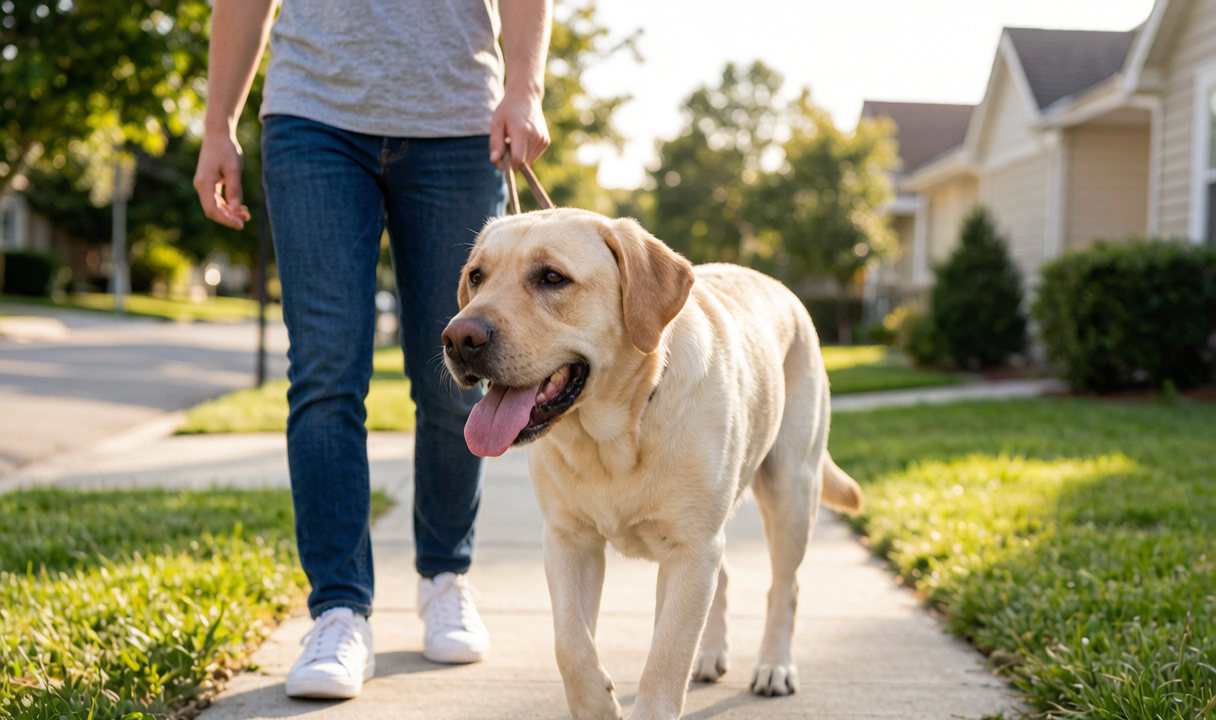
I used to come home from walks looking like I'd lost a tug-of-war match with a freight train. My arms ached, my shoulder clicked, and once—I'm not proud of this—I accidentally let go of the leash in a parking lot because my Labrador, Buster, spotted a squirrel and committed to the chase with the kind of enthusiasm I usually reserve for free pizza.
If you're reading this with one hand in a brace and the other holding a cup of coffee, I get it. Leash pulling is one of those problems that makes you feel like a bad dog parent, even when you're doing everything the books tell you to do. I tried the "be a tree" method. I tried stopping every three steps. I tried those no-pull harnesses that promise miracles. Some helped a little. None of them fixed the root problem: Buster was excited, overstimulated, and had zero idea that walking beside me was even an option.
After about six months of trial, error, and one very embarrassing moment where a neighbor asked if I was walking a kite, I figured out a system that actually stuck. Buster now walks on a loose leash about 90% of the time. The other 10%? We're both still learning.
The Real Problem Is Usually Not the Leash
Here's the thing I wish someone had told me sooner: pulling on the leash isn't really a leash problem. It's an attention problem. Most dogs pull because the world is full of smells, sounds, and squirrels, and their brain is going a hundred miles an hour. The leash becomes the only thing connecting them to you, so they lean into it like they're trying to pull a sled.
When I finally understood that, I stopped trying to punish the pulling and started rewarding the connection. That one shift changed everything.
The first tool I used was simple: high-value treats. I'm not talking about the dry kibble you have in the pantry. I mean the good stuff—small pieces of boiled chicken, cheese, or whatever makes your dog's eyes go soft. For Buster, it's freeze-dried liver. I could probably get him to file my taxes for that stuff.
I started every walk by standing still in the driveway. If Buster looked at me, even for a second, I marked it with a quick "yes!" and gave him a treat. I did this for two minutes before we even moved. It sounds tedious, but it set the tone: walk time starts with focus on me, not the environment.
The Technique That Actually Changed Our Walks
The method that worked best for us is something trainers call the "reward zone" or "loose leash walking." The idea is that the space beside your left leg becomes the best place in the world for your dog. Not ahead of you, not behind you, not zigzagging across the sidewalk. Right beside you.
Here's exactly what I did:
- I picked a consistent side. I chose my left leg because that's what most service dogs are trained to do, and I figured it would make life easier if we ever took a class. Buster doesn't care which side it is, but consistency matters.
- I used a treat magnet. I held a small handful of treats in my left fist, right at his nose level. For the first few walks, he basically glued himself to my leg because that's where the smell was. Every few steps, I fed him one. It looked ridiculous, but it worked.
- I marked the moment he was in position. The second his leash went loose and he was beside me, I said "yes!" and treated. If he surged ahead, the treats disappeared. Not in a dramatic way—I just stopped walking and waited. No pulling, no tension, just a pause.
- I made the world less interesting. This was the hardest part. I started our training walks in the driveway, then moved to the quiet cul-de-sac, then the neighborhood loop. Only after he was solid in low-distraction environments did we try the park with squirrels. Trying to teach leash manners at a dog park is like trying to teach algebra at a carnival.
The Gear That Helped (and What Didn't)
I spent more money than I want to admit on gear that promised to stop pulling. Some of it helped. Most of it didn't.
The front-clip harness was a significant improvement for us in the early days. When Buster pulled, the front clip gently turned his body back toward me instead of letting him lean forward. It didn't train him, but it gave me enough control that I could actually reward good behavior without getting dislocated.
The head halter? He hated it. He rubbed his face on the grass, he walked like he was being punished, and the whole walk became about the halter instead of about walking nicely. I gave it three days and moved on.
The retractable leash went straight back in the closet. Retractable leashes teach dogs that tension equals more freedom. That's the exact opposite of what you want when you're trying to teach loose leash walking. A standard 6-foot leash gave me the control I needed.
The Mistakes I Made Along the Way
What we learned with a dog: Our 70-pound Labrador, a dog, turned every walk into a tug-of-war when he was younger. The shift came when we stopped fighting his forward pull and started rewarding the instant the leash went slack—exactly the technique above. It took about two weeks of consistency, not magic.
I made a lot of mistakes. The biggest one was getting frustrated and pulling back. When Buster lunged, I would tighten the leash and pull him toward me. That just turned the walk into a wrestling match. Dogs don't learn well when they're in a tug-of-war. It took me weeks to realize that the calmer I stayed, the calmer he got.
Another mistake was walking him when I was in a rush. If I only had ten minutes to get around the block, I didn't have time to stop and reward good behavior. I started scheduling his training walks for times when I had at least twenty minutes to spare. That took the pressure off both of us.
I also tried to wean off treats too fast. After one good week, I thought, "Great, he's got it," and left the chicken at home. He promptly forgot everything. Treats are not bribery; they're information. They tell your dog, "Yes, this is what I want." I keep a treat pouch on every walk now, even though I don't use it as much.
What a Good Walk Looks Like Now
These days, our walks look completely different. Buster walks beside me with a loose leash most of the time. When he sees something exciting—a squirrel, another dog, a leaf that looks suspicious—he might surge forward for a step or two. But then he checks in with me. He looks back. That check-in is the goal. That's the moment you know your dog is choosing to stay connected to you instead of being dragged back by force.
I still reward those check-ins. Sometimes it's a treat, sometimes it's just a calm "good boy" and a scratch under the chin. The reward doesn't have to be food every time. It just has to be consistent and genuine.
We also have a release cue: "go sniff." When we're in a safe spot and I want to give him freedom, I say "go sniff" and let him explore on a slightly longer leash. That way, he knows the difference between walking time and sniffing time. It sounds small, but dogs understand rules much better when the rules are predictable.
When to Call in a Professional
I want to be honest: some dogs are harder than others. If your dog is reactive, fearful, or aggressive on leash, no amount of treat tossing is going to fix it by itself. I worked with a trainer for three sessions when Buster started barking at other dogs (check out our guide on stopping excessive barking if that's your situation too), and it was worth every penny. A good trainer can watch your specific dog and your specific habits and spot things you can't see yourself.
If your dog's pulling is causing you physical pain or injury, don't wait. A front-clip harness or a consultation with a certified positive-reinforcement trainer can save you both a lot of misery.
The Bottom Line
Stopping leash pulling isn't about finding the right gadget or yelling the right command. It's about teaching your dog that walking beside you is more rewarding than pulling ahead. It takes time, consistency, and a pocket full of treats. But it works. Buster is proof.
If you're just starting out, try this tomorrow: stand in your driveway with your dog on a regular leash, and reward every single glance in your direction. Do it for five minutes. Then take three steps. Reward. Three more steps. Reward. Build it slow. It will feel silly. It will feel slow. But six months from now, you might actually enjoy your walks again. For more structured help, our complete puppy training resource hub has guides and schedules that work just as well for adult dogs relearning the basics.
What has worked for your dog? Did you find a harness, a trick, or a treat that changed everything? Drop a comment below—I read every single one, and I'm always looking for new ideas to steal.
Frequently Asked Questions
- 1. How do I get started with teaching my dog not to pull?
- Start in the least distracting place you can find — your driveway or a quiet hallway inside your home. Stand still with your dog on a regular 6-foot leash and reward every single glance in your direction. Do this for a few minutes before you even start walking. Once the dog is focused on you, take three steps, reward, then three more steps. Build duration gradually. The key is making the space beside you the most rewarding place your dog can be.
- 2. Are no-pull harnesses actually better than a regular collar?
- Yes, a front-clip no-pull harness is generally better than a flat collar for a dog that pulls hard. A collar puts pressure directly on the dog's throat and trachea, which can cause long-term injury. A front-clip harness redirects your dog's forward momentum by gently turning their body toward you when they pull, which is both safer and more effective for training. That said, a harness is a tool — it won't train the dog by itself. It just gives you enough control to actually reward good walking behavior.
- 3. How long does it take for a dog to learn loose-leash walking?
- With daily 15–20 minute training walks using the reward-zone method, most dogs show significant improvement within one to two weeks. But leash manners are really a lifelong skill that needs ongoing reinforcement — especially in exciting environments like parks or busy streets. Think of it less like teaching a trick and more like building a habit. The more consistent you are in low-distraction settings first, the faster it transfers everywhere else.
Shop no pull dog harness on Amazon & Chewy
Comparing prices before you buy? Check current deals and read reviews from other pet owners.
Shop dog no pull harness on Amazon & Chewy
Comparing prices before you buy? Check current deals and read reviews from other pet owners.