How to Stop a Dog From Jumping on Guests
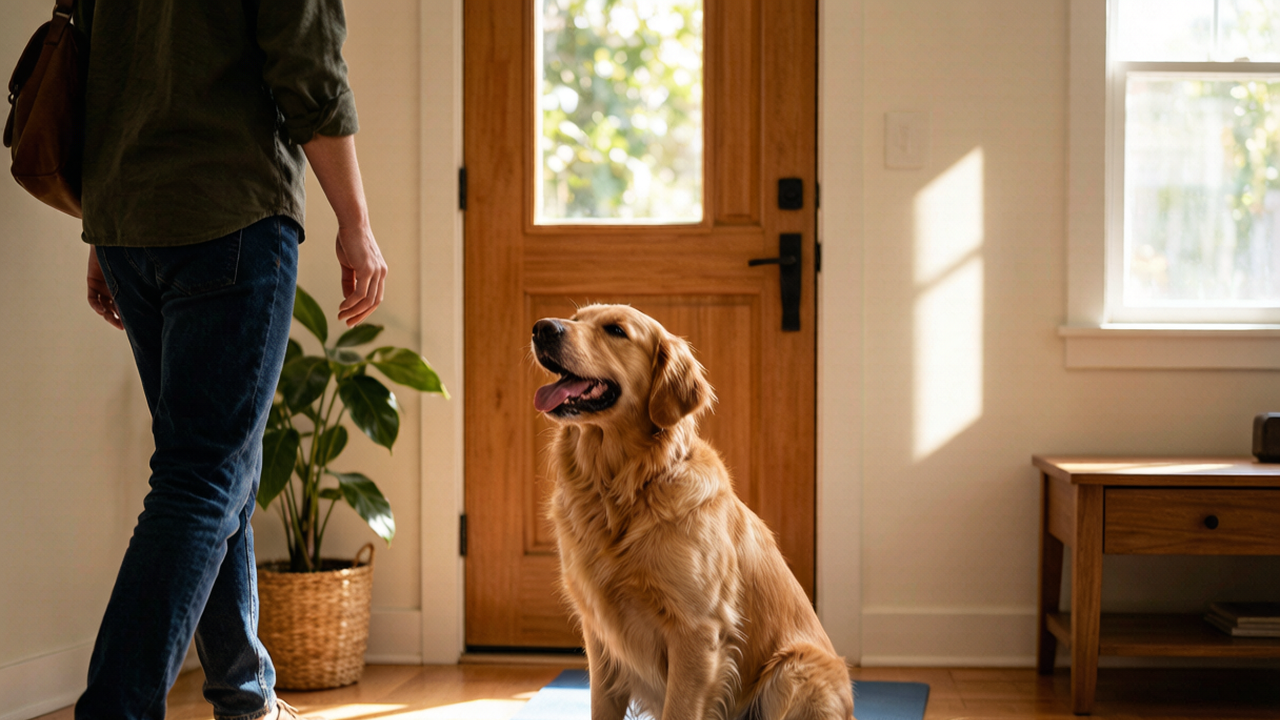
Jumping on guests is one of the most common complaints trainers hear, and it stops being cute quickly when the dog is large. A dog that launches at visitors can knock over a child or an older adult, and once the habit is established it becomes self-reinforcing: any attention — even pushing the dog away — rewards the behavior. [source]
The advice most owners hear first — "just turn your back and ignore it" — is partially right but rarely sufficient on its own. The sections below explain why, and what a more reliable plan looks like.
Why Ignoring the Jump Usually Isn't Enough
The standard tip — turn your back, cross your arms, withhold attention — is sound in principle: jumping that earns no reward should fade. The problem is consistency across every person the dog meets. Delivery drivers, relatives, and children who squeal and pet the dog the moment it jumps undo the training. The dog learns that jumping is a lottery: sometimes it pays off, so it keeps playing. [source]
Ignoring is still useful — but a plan that depends on every stranger cooperating is fragile. A more reliable approach combines management, an alternative behavior, and guest briefing.
Three Approaches That Reduce Jumping
1. Practice "Four on the Floor" Away From the Door
The biggest mistake is trying to teach calm during the most exciting ten seconds of the dog's day — the doorbell, a new person, chaos. The brain is not available for learning then. Instead, practice in a low-distraction space several times a day: approach the dog; if all four paws stay on the floor (or it sits), mark with a calm "yes" and drop a treat at its feet; if it jumps, silently step away and try again. Keep sessions to a few minutes. Use a high-value reward, such as small pieces of cooked chicken, to speed learning.
Once the dog reliably keeps its paws down when approached in calm settings, begin layering in low-level distractions before moving to the real doorway.
2. Teach "Place" Before You Worry About "Don't Jump"
Telling a dog what not to do is harder than giving it a concrete alternative. "Go to your mat and lie down" is actionable. Place a mat within sight of the door, lure the dog onto it with treats, add the cue "place," then build duration and distance (you walking toward the door, touching the handle, opening it). The dog learns the mat is a good spot during greetings — it is not being banished, it is being paid to settle. Position the mat where the dog can still see the door, since dogs jump partly out of curiosity and a desire to be part of the action. [source]
3. Brief Your Guests
This is the awkward but essential step. Ask visitors, before crossing the threshold, not to look at, touch, or talk to the dog until you give the go-ahead — usually about 90 seconds. Most people are relieved to have a plan. Hand them a treat to give once the dog is calm on its mat; guests who know exactly what to do become part of the solution rather than accidentally resetting the training.
Worth Knowing Up Front
Management isn't cheating. For the first weeks, keep the dog behind a baby gate when guests arrive so it can watch but cannot practice jumping. Every repetition — even one that earns a negative reaction — strengthens the habit. A gate prevents hundreds of accidental rewards.
Tired dogs jump less. A dog that has drained its physical energy on a walk or a game of fetch before visitors arrive is far easier to manage than one that has been resting all afternoon.
Your energy at the door matters. Excited, loud greetings from the owner ramp the dog up. A calm voice and relaxed body language keep the dog's arousal lower from the start. [source]
How Long This Actually Takes
With consistency — meaning every person, every guest, every time — meaningful improvement typically appears within two to three weeks. Full reliability with excited visitors usually takes closer to eight weeks, because you are rewiring a deeply practiced habit. Daily consistency moves the needle; expecting overnight results from a years-old habit leads to unnecessary frustration.
For persistent jumping that does not improve with a consistent plan, a certified positive-reinforcement trainer or a veterinary behaviorist can help tailor the approach. [source]
🐾 Enjoyed This Article?
Save it for later, share with a fellow pet parent, or check out more tips on our homepage!
Shop dog jumping training on Amazon & Chewy
Comparing prices before you buy? Check current deals and read reviews from other pet owners.