Your Dog Turns Into a Psycho Every Time You See Another Dog — Here's What Actually Fixes It
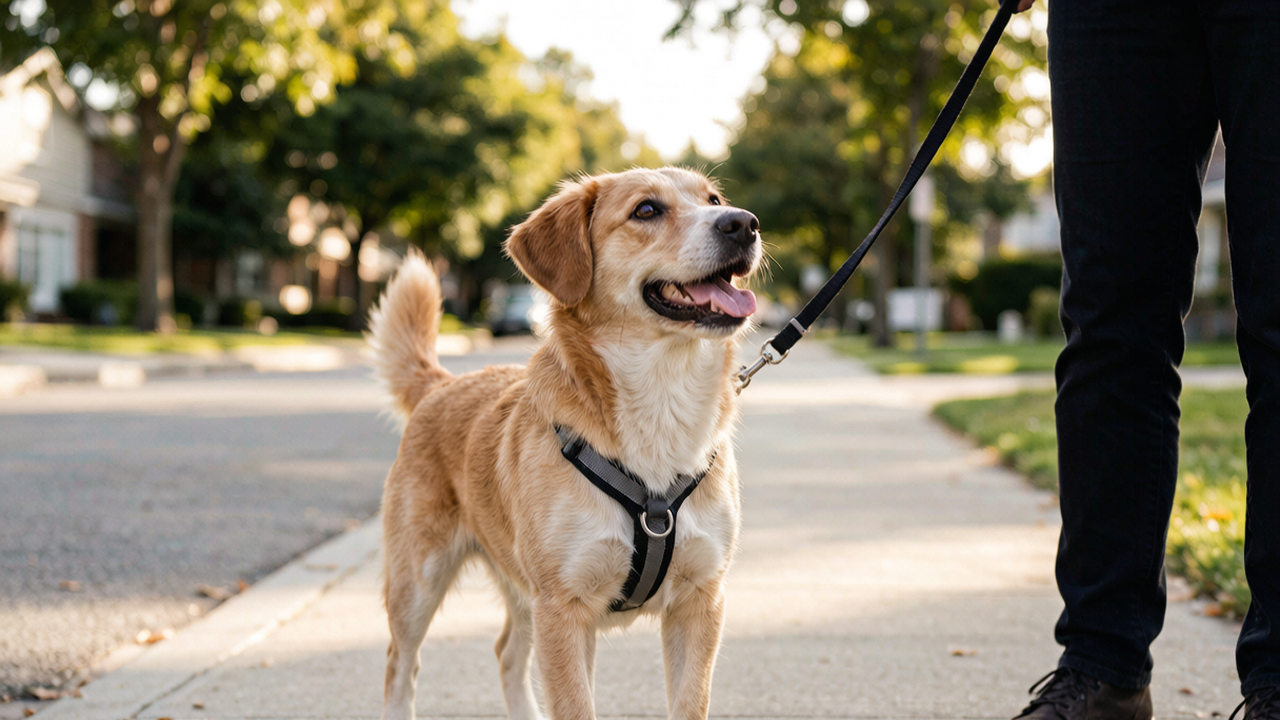
There's a specific kind of dread that comes with being that owner in the neighborhood — the one whose dog lunges and barks while everyone else crosses the street. It's a strange contradiction, too, because the same dog is usually an angel at home. Clip on a leash and walk past another dog, though, and you get a snarling, spinning tornado.
Most owners spend months assuming the dog is simply "aggressive." Usually that's wrong. A reactive dog on leash is far more often terrified. The leash removes the option to retreat, so the brain defaults to the next best strategy: scare the other dog off first.
If you're red-faced from yet another walk that ended in apologies to a stranger: this isn't a bad dog. It's fear. And it's fixable.
What Leash Reactivity Actually Is
Leash reactivity isn't disobedience. Barking and lunging on leash is almost always one of two things: fear-based (trapped and panicking) or frustration-based (desperately wants to greet but can't). Punishment makes both worse. When a dog lunges and gets a collar yank in return, the lesson learned isn't "don't bark" — it's "every time another dog shows up, my neck hurts." The correction quietly confirms the dog's worst assumption about other dogs.
Working Below Threshold
Threshold is the distance where your dog notices the trigger but can still think. The first real step is a two-week break from close encounters entirely. Not one. Cross the street before your dog spots the other dog. Walk at odd hours. The point is to let stress hormones drop back to baseline — two weeks with zero reactions works like a reset on the nervous system, and nothing you teach afterward will stick without it.
The "Look at That" Game
Once your dog has settled, the core exercise is simple: reward them for merely looking at the trigger. Park yourself about 200 feet from a fenced dog park. Your dog spots a dog, you say "Yes!", a piece of hot dog follows. Most dogs work this out fast — within ten minutes they'll spot a dog and immediately swing their head back to you, waiting to be paid. Repeat this over weeks at gradually closer distances and the default response shifts from panic to anticipation.
Emergency U-Turn
Real life doesn't cooperate, so you need an escape hatch. Teach a cue — "this way!" — first in your living room, then on empty streets. Say it in a bright voice, turn 180 degrees, and jog away. Jackpot treats every time your dog follows. Practised enough, it becomes automatic: an off-leash dog comes barrelling down the trail, you call "this way," your dog spins and goes with you, and you put a parked car between the two of them while scattering treats on the ground. The reaction never happens because the situation ended before it started.
What Worked vs. What Didn't
Front-clip harness — game changer. Pulls their shoulders back toward you instead of letting them lunge forward. Treat pouch on your waist — you need treats NOW, not 5 seconds later after fishing in your pocket. High-value treats only — hot dogs, cheese, freeze-dried liver. You're competing with intense emotion. Use the good stuff. Retractable leash — get rid of it. Zero control at exactly the moment you need it. Treating ordinary walks as "training" — that's gambling, not a plan. Structured sessions in environments you control are what actually produce progress. Professional help — even two sessions with a positive-reinforcement trainer will catch handler habits you can't see yourself, the most common being a reflexive tightening of the leash the instant another dog appears. Your dog reads that tension as confirmation that something bad is about to happen.
The Real Timeline
Social media makes this look like a three-day fix. It isn't. Expect first signs of progress at around three weeks, genuine consistency after several months, and something close to reliable somewhere in the six-to-eight-month range for a seriously reactive dog. Occasional bad days never fully disappear. Every reaction-free walk reinforces the pattern you want; every explosion costs you ground. Early on, avoiding reactions matters more than making progress.
The realistic end point is a dog who walks past other dogs without a sideways glance. Your dog may never be the one who play-bows at strangers, and that's fine. What you're building is trust that you'll handle it — and walks you look forward to instead of dread.
🐾 Enjoyed This Article?
Save it for later, share with a fellow pet parent, or check out more tips on our homepage!
Distance Is the Whole Trick
A reactive dog erupts at the end of the leash the moment another dog appears — lunging, barking, the full cortisol dump. The fix isn't a gadget, it's distance. Find the line where your dog notices another dog but stays calm (for many dogs that's around 50 feet), mark that calm with a treat, then close the gap by small increments over weeks. The first session done properly is deeply undramatic, and that's exactly the win you're after. Reactivity is a training problem solved in inches, not a personality flaw. The leash mechanics overlap heavily with the pulling fix, so it's worth reading both.
Why Yelling Made It Worse
The instinctive response is to correct the dog loudly, and it pours fuel on the fire — to your dog, your alarm confirms that the other dog really is dangerous. Switching to a calm, neutral "let's go" and turning away teaches the opposite lesson: the sight of another dog predicts good things rather than a scolding. If the reaction is really separation anxiety wearing a walking costume, the separation solutions are the deeper read. And the foundation for a calm walking partner is in the new dog owner's guide.
Shop dog leash reactive training on Amazon & Chewy
Comparing prices before you buy? Check current deals and read reviews from other pet owners.
Frequently Asked Questions
What causes leash reactivity?
It is usually frustration ("I want to say hi and the leash stops me") or fear, made worse by the leash itself, which removes the option to move away. It is not the same as true aggression.
Can it be fixed?
Often, yes, with counter-conditioning: reward calm looking at another dog from a distance, and gradually close that distance. Progress is slow but real.
What should I avoid?
Do not yank or scold, and do not let the leash go tight, both raise arousal. Also avoid head-on approaches; crossing the street early works better.
Training Steps
- Start at a distance where your dog notices but stays calm.
- Mark and treat the moment they look at another dog.
- Use a "U-turn" to create space before they hit threshold.
- Keep sessions short and end on a win.
Common Mistakes to Avoid
- Do not yank or scold - it spikes arousal and confirms other dogs equal trouble.
- Do not close distance too fast - if the dog reacts, you were past threshold.
- Do not let the leash go tight - tension reads as "I am tense too", which fuels reactivity.