The New Dog Owner's Survival Guide: What I Wish I'd Known Before Cooper Moved In
The night Cooper came home
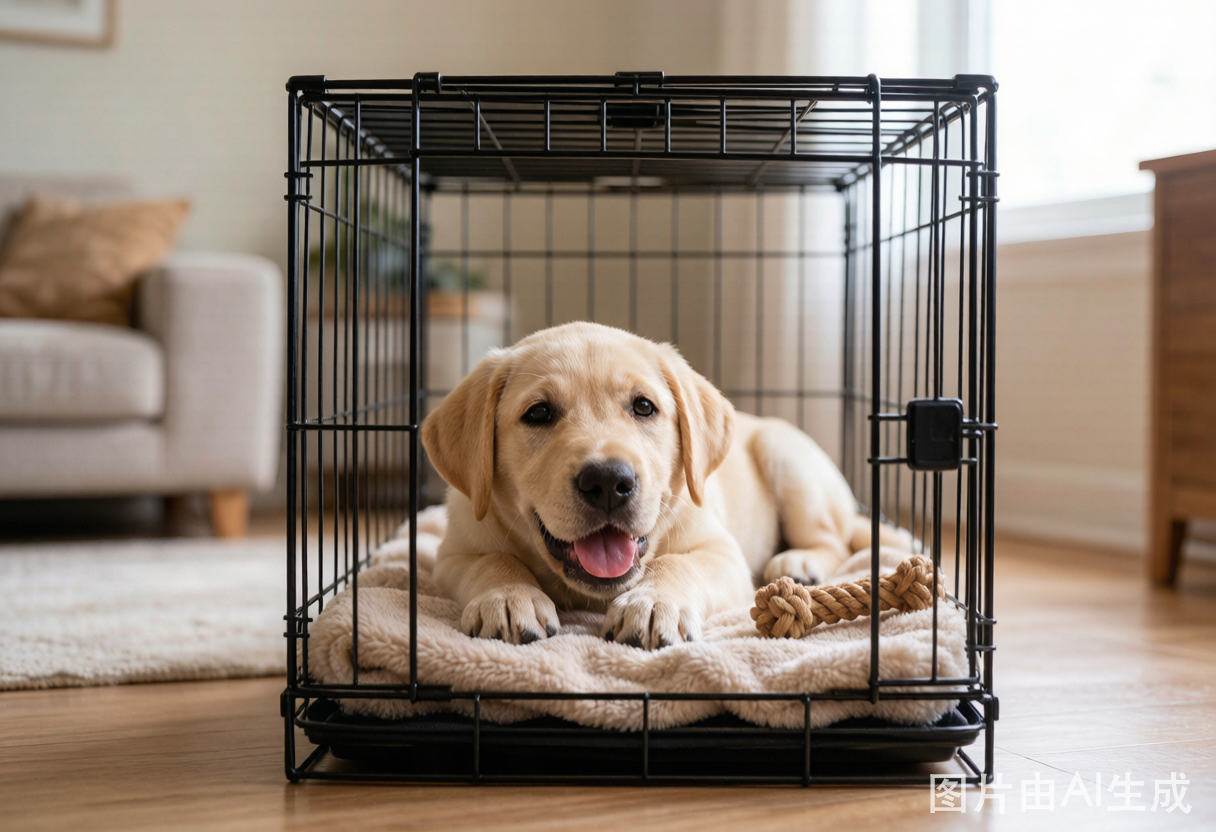
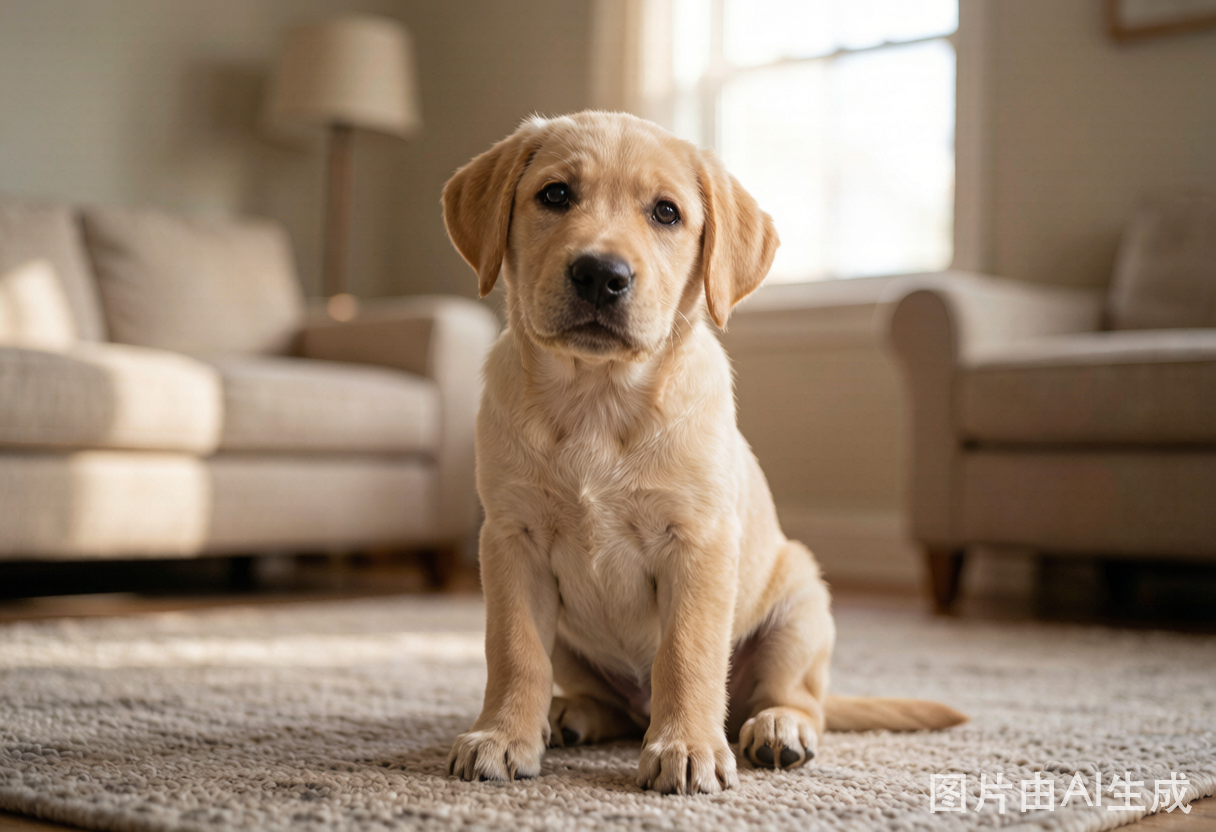
I picked Cooper up on a Tuesday. Eight weeks old, a yellow Labrador with paws too big for his body, and a tail that wagged like he was trying to power a small generator. The breeder handed him over, I drove home grinning, and at 11:47 that night I sat on my kitchen floor wondering if I had made the worst decision of my adult life.
He cried. Not a little. Loud, panicked, I-lost-my-mother crying, for four straight hours. At 3 a.m. he dragged one of my running shoes into the middle of the living room and started shredding the laces. I watched him, exhausted and a little betrayed, and thought: everyone told me this would be cute. Nobody mentioned the part where you question your life choices at 3 a.m. next to a sneaker corpse.
If you're reading this because you just got a dog, or you're about to, or you're three days in and quietly falling apart — this is the guide I wish someone had handed me. Not the polished "puppies are joy" version. The real one.
What nobody tells you about the first ten days
The internet shows you the highlight reel. The sleepy puppy on a blanket, the first trick, the Instagram moment. What it doesn't show is the monotony, and the monotony is most of it.
For the first week, my entire life was: take Cooper out, clean up an accident, redirect him from chewing the couch, take him out again, wonder if he'd ever sleep, take him out at 1 a.m., 3 a.m., 5 a.m. I stopped wearing real pants. I ate standing up. I texted my friend who has a dog a photo of a puddle and asked "is this normal" and she replied "yes and also welcome."
Here's the thing that would have saved me grief: the chaos is not a sign you're bad at this. A puppy is a baby mammal with no bladder control and zero understanding of your hardwood floors. The mess isn't failure. It's Tuesday.
Stuff to buy before the dog (and what I'd skip)
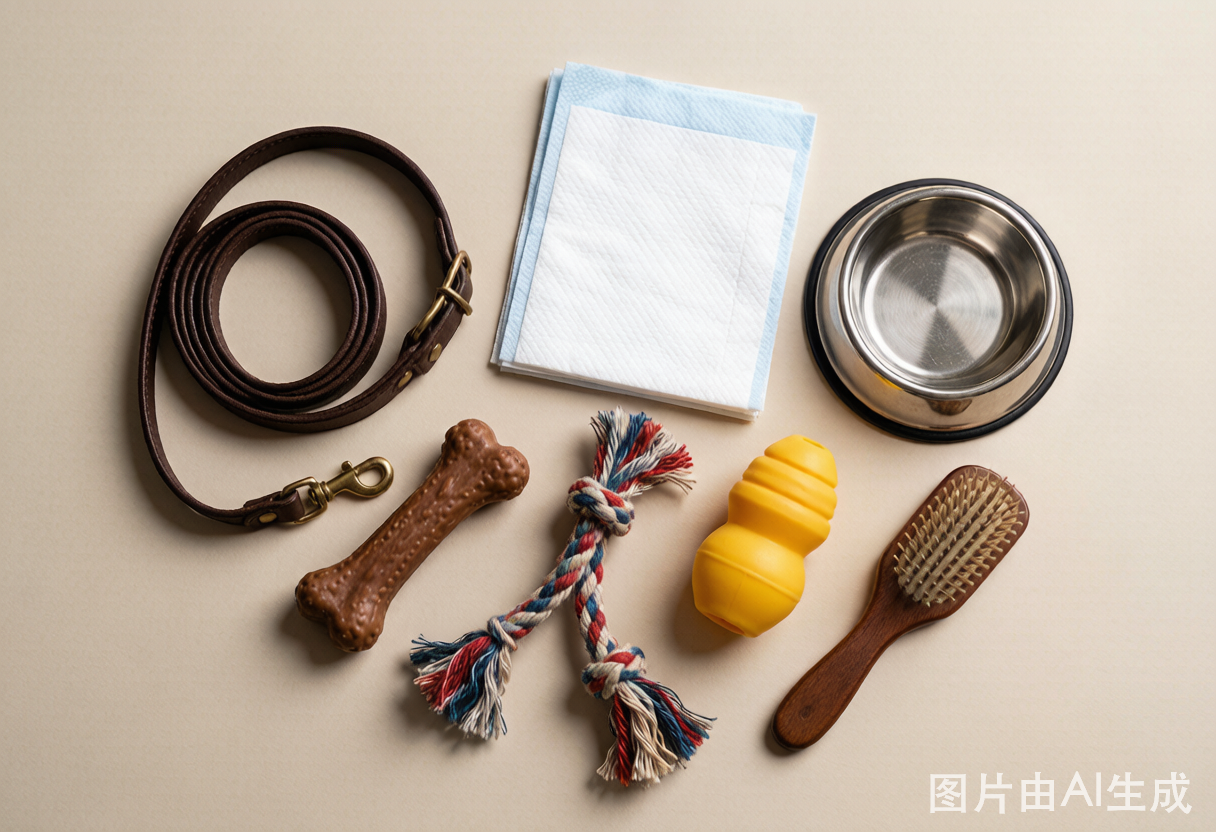
I went down a rabbit hole of "essential puppy starter kits" and spent more than I want to admit. Half of it sits in a closet now. Here's the honest version.
An x-pen, not a crate-only setup. This was my best purchase. A four-panel exercise pen gave Cooper a safe space and gave me my first full night of sleep around week two. I could gate him in the kitchen, leave the room for ten minutes, and not come back to a disaster. If you buy one thing, buy this.
A plain nylon leash, not the $60 reflective tactical one. Cooper chewed through the fancy one in nine days. The cheap $12 nylon one? Also chewed through, but I cared less.
The food the breeder was already feeding. I switched him to a "better" brand the first week because the bag looked premium. Soft poop for seven days. The breeder was right; I should have kept him on the same food for a month and transitioned slowly. Lesson cost me a week of laundry.
Skip the designer memory-foam bed. He destroyed it in week one and ate a chunk of foam. He sleeps on a $25 washable mat now and couldn't care less about thread count.
A Kong, frozen. Smear peanut butter (xylitol-free, check the label — this part matters) inside, freeze it, hand it over when you need twenty quiet minutes. This single item bought me more peace than anything else in the house.
The potty training part that actually worked
Everyone says "take them out every two hours." True, but incomplete. What nobody said: a puppy's bladder at eight weeks holds about as much as a thimble, and excitement peeing is real — Cooper would leak a little when guests arrived, not from naughtiness, just from being a puppy who felt big feelings.
What worked for us, in order of usefulness:
- A fixed schedule with a midnight alarm. I set my phone for 2 a.m. for the first two weeks. Took him out, praised like he'd solved a math theorem, back to bed. Boring, but it worked faster than waiting for accidents to teach him.
- Same door, same spot, every time. Dogs are creatures of routine. The back door became the "we pee here" door and the yard corner by the fence became the spot. Within ten days he'd trot there on his own.
- Catch the pre-potty signs. Sniffing in circles, leaving the room, sudden stillness. Those three seconds are your window. Miss them and you're mopping.
If you're struggling, this 7-day potty training breakdown covers the schedule in more detail than I can fit here.
Training looks nothing like the videos
The "teach your dog 7 commands in one weekend" videos lie a little. They show the highlight, not the 40 repetitions where your dog stares at you like you're speaking Latin.
Cooper learned "sit" in a day. "Stay" took three weeks and several near-quit moments. "Come" is still, at three years old, a work in progress when there's a squirrel involved. That's normal.
What I wish I'd known:
- Five-minute sessions, many times a day, beat one long session. Puppies have the attention span of a goldfish with a deadline. A 5-minute training burst after each potty trip worked better than a 30-minute weekend cram.
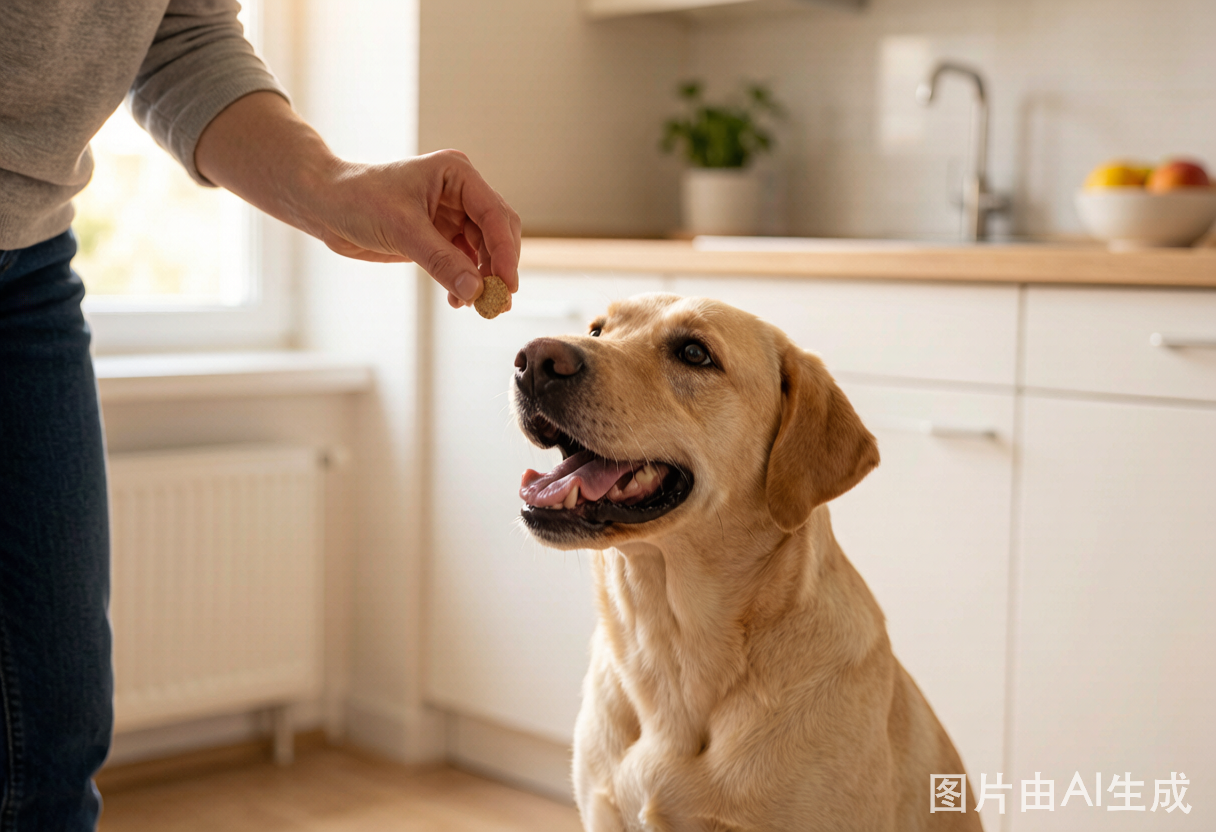
- Food is not cheating. Use it. The "purely praise-based" trainers online are impressive and also not my reality. Cooper will sit, stay, and roll over for a piece of kibble and I have made peace with that.
- I trained when I was frustrated once and it backfired. He felt it. Dogs read your tension like a weather front. If you're annoyed, end the session. A bad five minutes costs more than a skipped one.
For the actual mechanics, our step-by-step on the seven basic commands is the one I keep sending to friends.
The biting phase is not aggression
Around week four, Cooper's needle teeth found my hands, ankles, and the hem of every shirt I owned. I panicked the first time — thought I'd gotten a mean dog.
Turns out puppy mouthing is just how they explore the world, and those baby teeth hurt precisely because they're sharp, not because the dog is angry. Yelping "ow" and immediately handing him a toy redirected most of it. Yelling or pushing made it worse — he got more excited.
The piece that helped me keep my sanity is this no-nonsense guide to stopping puppy biting. Read it before week four hits, not during.
The money part, because it sneaks up
Nobody puts "possible $800 emergency" on the cute puppy Instagram post. Here's my actual early-cost picture so you're not blindsided:
- Food, the decent stuff: roughly $40–60 a month, then and now.
- Basic gear (leash, bowls, pen, toys): about $150 up front, and remember some of it gets destroyed and replaced.
- Vaccines and the first year of vet visits: a few hundred, spread out.
- The $800 one: at nine months, Cooper ate a sock. Not a shirt, a sock. Emergency visit, sedation, removal. Insurance I'd signed up for at month two covered most of it. The $35-a-month policy paid for itself that night.
I'm not saying you must get insurance. I'm saying nine-month-old Cooper ate a sock and I'm glad I had it. Here's the joint-supplement guide if you want to read about the other long-game spending, though that one's more for later.
Mistakes I made so you don't have to
I'm including these because the "perfect dog owner" content online is useless. Here's where I actually messed up:
- I took him to the dog park at ten weeks. Before his vaccines finished. A friend's older dog there was sniffly. Cooper got a mild bug. The vet was kind but firm. Wait until the shots are done — the park will still be there.
- I raised my voice the first time he peed inside. He didn't learn "don't pee inside." He learned "my person is scary when I'm near the rug." Took me a week to undo that with calm redirection.
- I bought eleven toys. He bonded with one sad tennis ball from the gas station. The other ten sit in the closet with the memory-foam bed.
- I skipped crate training and regretted it. When I finally did it at four months, it went fine — but those first sleepless weeks would have been easier with the pen routine from day one.
None of these ruined him. He's a happy, annoying, wonderful dog. But if you're about to repeat them, don't.
When the separation anxiety started
Around five months, Cooper began howling the second I grabbed my keys. Full operatic despair. I'd read that puppies "grow out of it" and ignored it for too long.
What actually helped was treating the keys as no big deal — picking them up and putting them down a dozen times a day so they stopped predicting abandonment — and building alone-time in tiny steps. The separation anxiety training guide is the one I wish I'd opened sooner instead of hoping it would pass.
What I'd tell the 3 a.m. version of me
If I could sit on that kitchen floor next to past-me and the shredded shoe, I'd say: you're not failing, you're beginning. The 3 a.m. crying ends. The accidents slow. One day you'll realize he hasn't chewed anything in weeks and you'll almost miss the chaos a little.
Cooper is three now. He sleeps against my legs, he greets me like I've returned from war even when I've just been to the mailbox, and he is, without question, the best decision I've made as an adult. But the start was hard, and hard does not mean wrong.
You don't need to be a perfect owner. You need to be a consistent, forgiving, slightly tired one. The dog doesn't want a trainer from a video. He wants you, showing up again tomorrow, same back door, same corner of the yard.
That's the whole job. The rest is details.
🐾 Enjoyed This Article?
Save it for later, share with a fellow pet parent, or check out more tips on our homepage!