Dog Eye Discharge and Red Eyes: Causes, Home Care, and When It's Serious
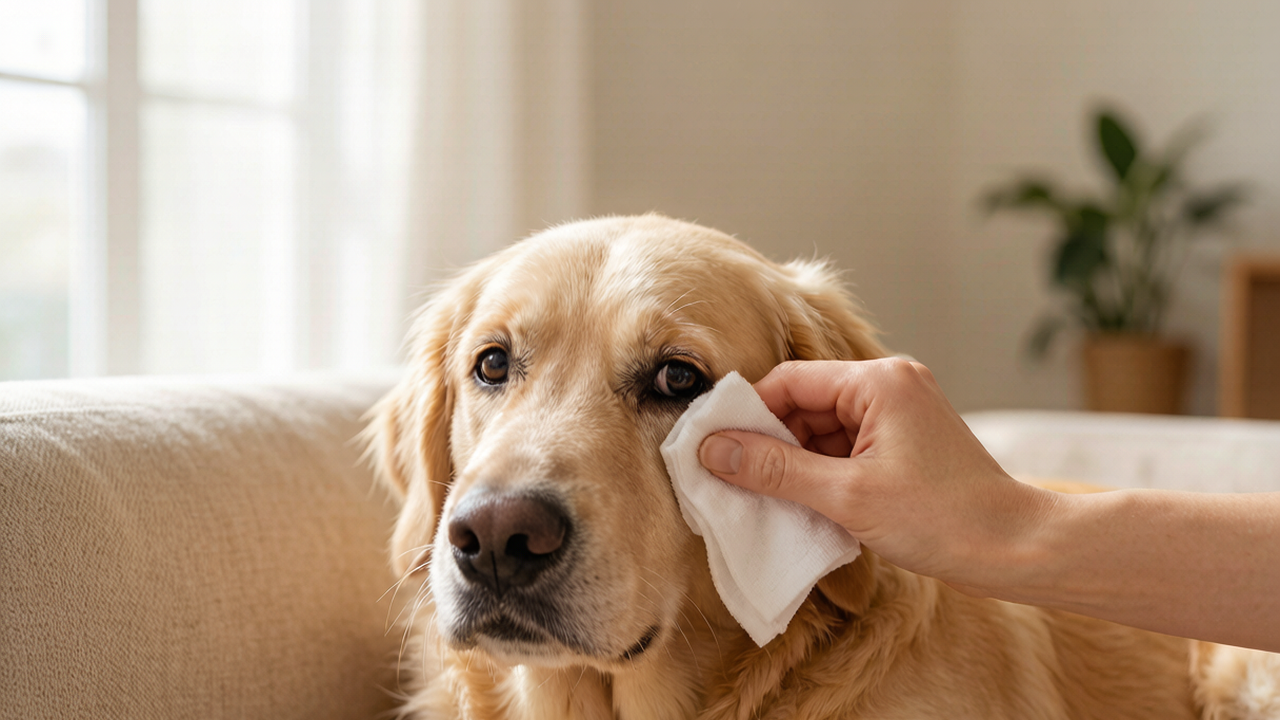
It's a small thing you catch out of the corner of your eye in the morning: you lean down to say hello and one eye is half-squinted, with a crusty streak running from the inner corner down the cheek. Sometimes it's nothing. Sometimes it's your dog quietly telling you something hurts. Telling the difference is the whole game, and it mostly comes down to what you see in that discharge.
What the Discharge Is Telling You
Dog eyes make a little tear film all day, same as ours, and a small amount of clear or slightly gray gunk in the corner is completely normal. It's the body clearing out dust and debris, and it usually wipes away with a damp cloth and never comes back in a hurry. The color and texture of what you're seeing is the first clue to how worried to be.
Clear and watery usually points to irritation or allergies — pollen, dust, a bit of shampoo, a cold draft. If it's happening in late summer when everything is blooming and your dog is also rubbing their face on the carpet, allergy is a solid guess.
White or gray and goopy can be early inflammation or a mild infection starting to brew. Keep an eye on it; if it turns colors or the eye gets red, it's moving in the wrong direction.
Yellow or green and thick is the one that gets my attention. That's usually a sign of an actual infection, and it tends to come with redness, swelling, and a dog who keeps pawing at their face.
Reddish-brown staining in the corners is a different thing entirely. It's not blood — it's a pigment called porphyrin in the tears that oxidizes and stains light fur. It's mostly a cosmetic issue, but it can build up into crust and mild skin irritation if it stays wet all the time. Flat-faced and light-colored dogs are especially prone.
The Common Culprits
Red, weepy eyes in dogs have a handful of usual causes, and they range from "annoying" to "needs a vet today."
Conjunctivitis is just inflammation of the pink lining around the eye — dog pink eye, basically. It can be triggered by allergies, bacteria, or a virus, and it usually shows up as redness, discharge, and some squinting.
A foreign body is more common than people think. A blade of grass, a seed, a bit of sand, or a loose hair can work its way under the eyelid and sit there scraping the surface. If one eye suddenly turns red and weepy after a walk through tall grass, this is high on the list.
A corneal ulcer is a scratch or sore on the clear surface of the eye, and it's the one you really don't want to miss. The telltale signs are squinting, holding the eye partly shut, tearing, and sometimes a cloudy or bluish patch on the surface. These can get worse quickly, so they warrant a same-day vet visit.
Dry eye — properly called keratoconjunctivitis sicca, or KCS — is when the eye doesn't make enough tears. It causes thick, sticky discharge and chronically red, irritated eyes, and certain breeds are more prone to it.
Blocked tear ducts are common in small and flat-faced dogs. Tears can't drain properly, so they spill down the face, stain the fur, and leave that constant damp, crusty streak.
Some breeds just have the cards stacked against them. Dogs with short muzzles and big, prominent eyes — Pugs, French Bulldogs, Bulldogs, Shih Tzus — have shallow eye sockets and less protection, so they're more prone to scratches, ulcers, and dry eye than a dog with a longer, more shielded eye.
What You Can Safely Do at Home
For a mild case — clear discharge, no squinting, no swelling, the eye opens fully and your dog seems comfortable — a little home care can go a long way.
Wipe gently, and always in the right direction. Use a soft cloth or cotton pad dampened with warm water, and wipe from the inner corner outward, away from the eye. Use a fresh pad for each eye so you're not moving anything from one eye to the other.
Flush with sterile saline. Plain sterile saline (the kind made for rinsing eyes) can wash out a little dust or pollen. Skip the contact lens solutions and anything with additives — just the plain stuff.
Check for the obvious. With clean hands, gently pull down the lower lid and look for a seed, a hair, or a bit of debris. If you can see something and it's not embedded, a saline flush might ease it out. If it's stuck or you can't tell, leave it alone and let a professional handle it.
Stop the pawing. If your dog is rubbing at the eye, put a cone on to protect it while you sort out a vet visit. Every rub can turn a small scratch into a bigger one.
Skip the human eye drops. Drops meant for people — especially anything that claims to reduce redness — are not safe for dog eyes. And never reach for a leftover tube of ointment from a previous problem; the wrong medication on the wrong condition can make things worse, not better.
When to Stop and Call the Vet
Some eyes can wait a day; some genuinely can't. Book a visit promptly — within a day or so — if you see:
- Thick yellow or green discharge
- Squinting, or an eye that stays partly or fully shut
- Red, swollen lids or a red, angry conjunctiva
- A cloudy, bluish, or dull-looking cornea
- Pawing at the face or rubbing it on the floor constantly
- A visible red mass in the corner of the eye (this can be "cherry eye")
And treat these as emergencies — same-day, don't wait:
- Sudden vision loss — walking into things, hesitating on stairs
- Blood inside the eye, or a pupil that's a wildly different size from the other
- A bulging or suddenly protruding eye
- Severe pain — crying, snapping when you go near the head, refusing to open the eye
One important note on treatment: if a vet suspects an ulcer, they'll usually do a quick stain test to check the surface before prescribing drops. That matters because some steroid-containing drops can make an ulcer dramatically worse. It's the main reason you don't want to self-treat a red eye with whatever's in the cabinet — the wrong drop on a scratched eye is a fast way to turn a minor problem into a serious one.
Keeping Eyes Healthier in the First Place
- Trim the fur around the eyes if your dog has long facial hair — stray hairs poking the cornea are a common, avoidable irritant.
- Keep the head inside the car window. Wind, dust, and flying debris at highway speed are hard on eyes. If your dog loves the window, consider protective goggles made for dogs.
- Protect eyes during baths and grooming. Ask whoever grooms your dog to keep shampoo out of the eyes, and rinse carefully.
- Watch the late-summer allergens. If your dog's eyes get red and watery around the same time each year, talk to your vet about whether allergies might be the driver rather than chasing each flare-up.
- For seniors, keep up with eye checks. Older dogs benefit from an annual eye exam, especially breeds prone to glaucoma, to catch pressure changes before they cause damage.
This guide is written by pet owners for pet owners, and nothing here replaces a professional exam. It reflects general pet-care guidance, not medical advice. When in doubt — especially with a squinting, cloudy, or painful eye — make the call sooner rather than later. Eyes are one of the few things where a few hours genuinely can make a difference.
Have you ever had a dog come down with a red, weepy eye, and what did it turn out to be? Drop the story in the comments — the more people know what to look for, the fewer eyes get waited on.
---
If you found this helpful, you might also like:
- How to remove dog tear stains
- Grass seeds and foxtails: a summer danger
- Seasonal allergies: how to stop the itch
- Dog reverse sneezing: what that sound means
This article is for informational purposes only and is not a substitute for professional veterinary advice, diagnosis, or treatment. Always consult a licensed veterinarian if your pet shows signs of illness, injury, or distress. If you believe your pet is experiencing a medical emergency, contact your veterinarian or the nearest emergency animal hospital immediately.
🐾 Enjoyed This Article?
Save it for later, share with a fellow pet parent, or check out more tips on our homepage!
📩 Never Miss a Tip
Get our best pet care hacks delivered straight to your inbox. No spam, unsubscribe anytime.
Shop dog supplies on Amazon & Chewy
Comparing prices before you buy? Check current deals and read reviews from other pet owners.