Dog Reverse Sneezing: What That Honking Sound Means and When to Actually Worry
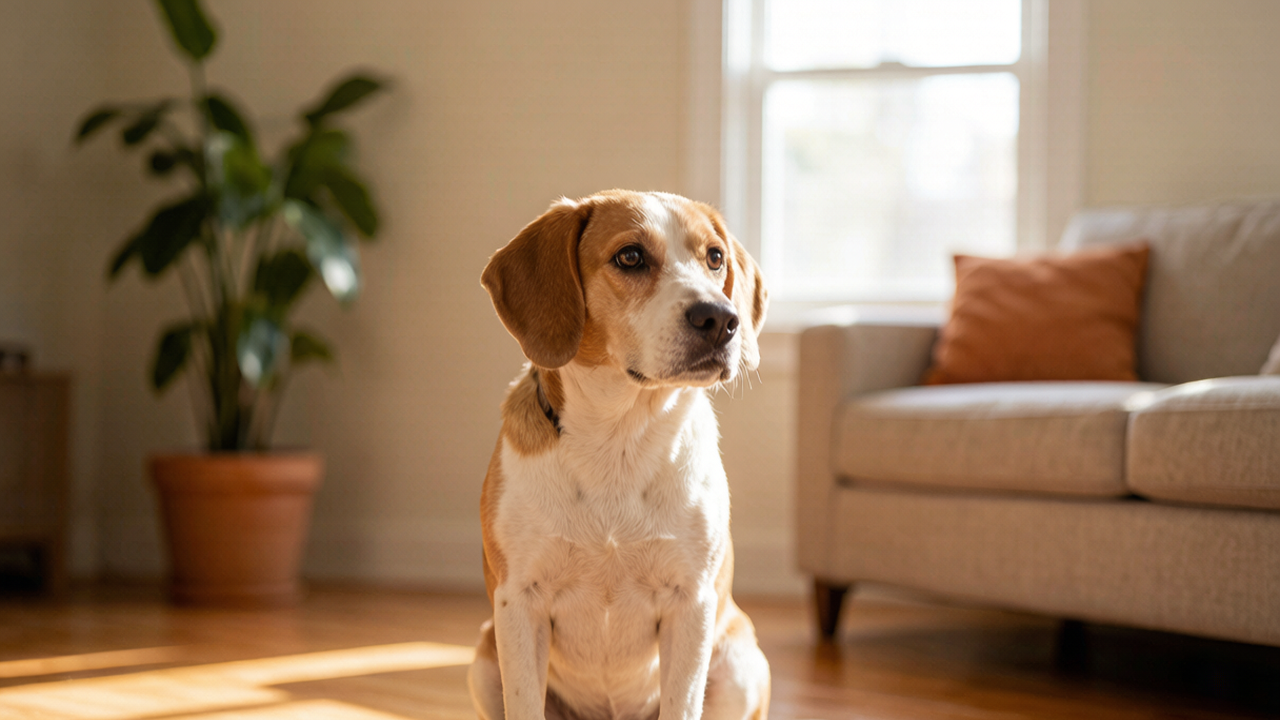
The first time a dog has a reverse sneezing fit can be alarming. Picture a beagle mix suddenly freezing mid-sniff, neck stretched out, elbows wide, making a honking noise that sounds like a goose being strangled. Honk. Honk. Honk-honk-honk. It usually lasts 10–30 seconds, and to a worried owner it looks like the dog can't breathe or is choking.
Here's the key fact: in most cases the dog is fine the whole time. The honking is just reverse sneezing, and once you know what it is, the panic disappears.
Reverse sneezing is common enough that most dog owners witness it eventually. If your dog just made a noise that sent you into a panic — or you'd rather be prepared before it happens — the sections below explain what reverse sneezing is, why it happens, what triggers it, and when it's worth a call to the vet.
What Reverse Sneezing Actually Is (Because the Name Makes No Sense)
The technical term is paroxysmal respiration, or more specifically, a pharyngeal gag reflex. But nobody calls it that.
Here's what's physically happening: your dog's soft palate (the fleshy part at the back of the roof of their mouth) gets irritated. In response, the throat muscles spasm, and the trachea narrows. Your dog then tries to inhale through their nose — but the narrowed airway means the air rushes in fast and loud. That's the honking sound.
It's called "reverse" sneezing because in a normal sneeze, air is pushed out. In this one, air is being pulled in rapidly. Same mechanism triggering it (irritation), opposite direction.
The thing that catches most owners off guard is how dramatic it looks. The dog stands completely still, elbows pointed out, neck extended, chest heaving. Its eyes may bulge slightly. Sometimes a little clear fluid drips from the nose afterward. If you didn't know what you were looking at, it's easy to think the dog is suffocating.
Why It Happens (And Why Summer Makes It Worse)
Episodes often follow a clear seasonal pattern. In many households, June through September is peak season, driven by grass pollen and other summer irritants.
Here's what tends to trigger it:
Environmental irritants. Pollen, dust, grass clippings, household cleaners with strong fragrances, even the stuff they spray on carpets. If it can irritate a human nose, it can trigger a reverse sneeze in a dog — and dog noses are about 40 times more sensitive than ours.
Excitement or exercise. Some dogs reverse sneeze every time they get the zoomies. The rapid breathing pattern seems to set it off in certain dogs.
Pulling on the leash. If a dog wears a collar and pulls hard on walks, the pressure on the throat can trigger an episode almost immediately. Switching to a harness often resolves it.
Anatomy. Flat-faced breeds like Pugs, French Bulldogs, and Boston Terriers are way more prone to this because their soft palates are proportionally longer relative to their airways. But any dog can get it — even a beagle with a perfectly normal snout can have hundreds of episodes.
Nasal mites or foreign objects. Less common, but worth mentioning. If a grass seed or foxtail gets lodged in the nasal passage, it can cause persistent reverse sneezing that doesn't go away on its own.
Allergies. Seasonal allergies are the most common underlying trigger for chronic reverse sneezing in otherwise healthy dogs. A dog allergic to grass pollen, for example, may have frequent episodes that a vet can confirm and treat.
What It Looks Like vs. What It's Not
Let's be clear about the difference, because in the moment it's hard to tell "weird but harmless" from "legitimate emergency."
Reverse sneezing looks like: standing still, neck extended, elbows out, loud snorting/honking sound, lips pulled back slightly, chest and abdomen moving rapidly in an inhaling motion. Episodes usually last 10-30 seconds. When it stops, the dog typically shakes their head or swallows and goes right back to normal like nothing happened.
Choking looks like: pawing at the mouth, drooling excessively, visible distress, blue-tinged gums or tongue, struggling to stand, possible collapse. A choking dog cannot inhale at all — there's no honking, just silent struggle or gagging.
Collapsing trachea looks like: a dry, goose-like cough (especially when excited or after drinking water), often in small breeds like Yorkies and Pomeranians. It's more of a cough sound than a rapid snorting sound.
Kennel cough sounds like: a deep, hacking cough, often followed by a gag or retch at the end. It sounds like the dog is trying to cough something up. It's persistent throughout the day, not just short episodes.
The biggest difference to recognize: reverse sneezing is an inhaling noise, and it stops on its own within a minute. If the dog is making an exhale-based sound (coughing, hacking) or the episode doesn't stop after a couple of minutes, that's when to start worrying.
What to Do When It Happens (And What Actually Helps)
After hundreds of observed episodes across multiple dogs, here's what consistently works:
The throat massage method. Place your fingers gently over your dog's throat, right below the jaw, and massage in small circular motions. This seems to help relax the throat muscles and interrupt the spasm. With most dogs, this stops an episode about 70% of the time within 10 seconds.
Cover the nostrils briefly. Gently place your thumb over one nostril for 2-3 seconds. This makes the dog swallow, which can reset the soft palate and stop the spasm. This tends to work best for short, mild episodes.
Take them outside or to a different room. If an irritant triggered it — air freshener, cooking smoke, dust from vacuuming — simply moving to fresh air often stops it immediately. Burning food or strong kitchen smells can set off a cascade of sneezes in sensitive dogs.
Stay calm. The more you panic, the more your dog panics, and adrenaline makes the spasms worse. Talk to the dog in a normal voice, rub its back, and wait it out. Most episodes are over within seconds.
Switch to a harness. If a dog reverse sneezes on walks when wearing a collar, the collar pressure may be the trigger. A front-clip harness takes the pressure completely off the throat and often makes a noticeable difference.
When You Should Actually Go to the Vet
Most owners hate to dwell on emergencies, but a few specific situations do warrant a vet visit. The vast majority of reverse sneezing episodes are completely harmless. These are the exceptions:
- Episodes that last longer than 1-2 minutes and won't stop. A typical episode wraps up in under 30 seconds. If it's going on and on, something more serious might be happening — a foreign object lodged in the nose, a polyp, or a collapsing trachea episode.
- Blood or colored discharge from the nose after episodes. Clear fluid is normal. Pink, red, yellow, or green discharge is not.
- Frequency that's increasing dramatically. A dog that used to have one episode every two weeks but suddenly has multiple episodes daily should be seen — that spike often points to an underlying cause, such as a grass pollen allergy, that needs treatment.
- Episodes that wake them from sleep. Occasional reverse sneezing during the day is one thing. If it's happening while they're sleeping, that could indicate something more structural, like an elongated soft palate — especially in brachycephalic breeds.
- If your dog is a flat-faced breed and the episodes are frequent. Because their airways are already compromised, even "normal" reverse sneezing can be more of a problem for them.
What the vet might do: examine the nasal passages with a scope, check for nasal mites, rule out infections, evaluate the soft palate, and possibly prescribe antihistamines if allergies are the culprit. A daily antihistamine during allergy season can reduce episodes by as much as 90% in allergic dogs.
The One Thing to Know
Reverse sneezing videos are all over YouTube and TikTok, but most leave out one detail: some dogs have episodes that are completely silent or nearly silent. A pug, for example, might just stand frozen with its neck stretched out and chest heaving, quiet except for a faint wheeze. The first time an owner sees it, it can look like a seizure.
It turns out that "silent reverse sneezing" is a thing, especially in dogs with very narrow airways where the air can't generate enough turbulence to make the honking sound. So if your dog does the "freeze and stretch" pose but without the noise, it's probably the same thing.
Also worth knowing: once a dog has had one episode of reverse sneezing, it tends to be prone to it for life. It's not something that gets "cured" — it's something you learn to manage. A seven-year-old beagle that still does it regularly during pollen season is normal; most owners eventually just reach over, rub the dog's throat a bit, and wait for the honking to stop before the dog goes back to its nap.
The goal is calm confidence: not panic every time the dog makes a weird noise, but the reassurance of knowing what's happening, why it's happening, and exactly what to do about it.
Has your dog ever had a reverse sneezing episode that scared you? Share what triggered it and what helped in the comments below.
🐾 Enjoyed This Article?
Save it for later, share with a fellow pet parent, or check out more tips on our homepage!
Shop dog throat soothing supplement on Amazon & Chewy
Comparing prices before you buy? Check current deals and read reviews from other pet owners.