Canine Cognitive Dysfunction: Signs, Care, and What Senior Dog Owners Should Know
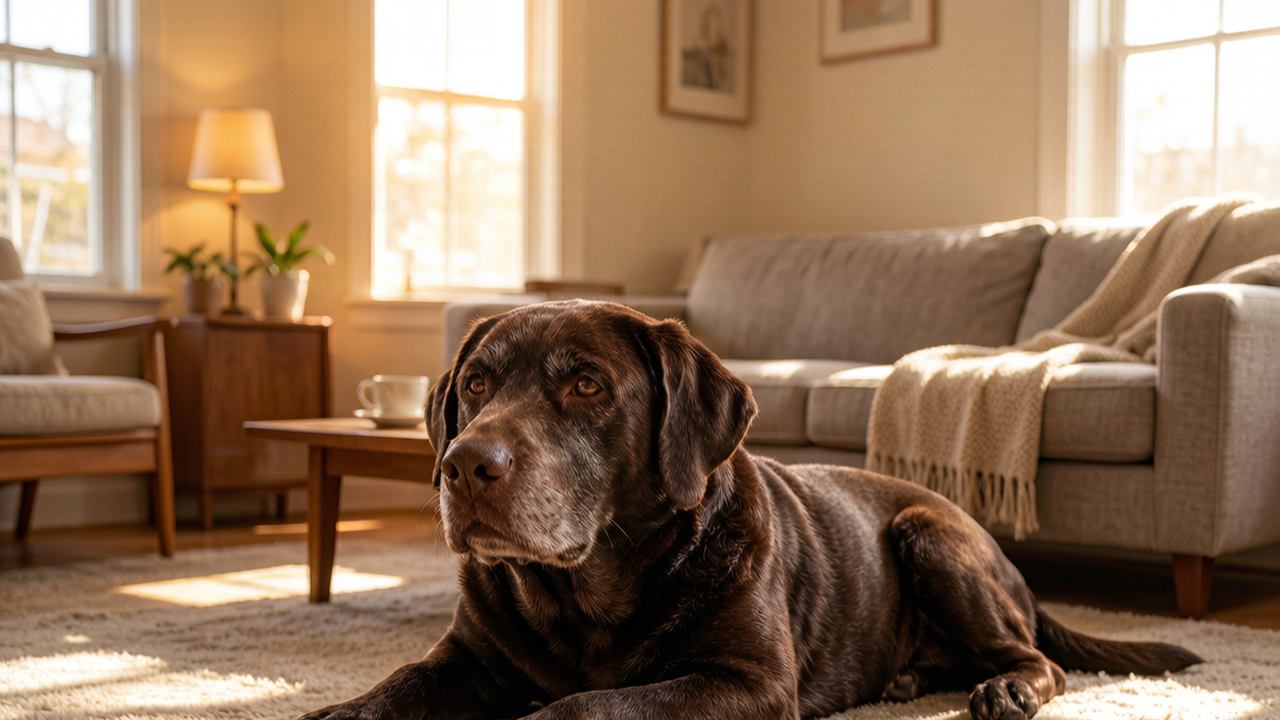
Canine cognitive dysfunction (CCD), sometimes called dog dementia, is a degenerative condition affecting aging dogs. Early signs are easy to dismiss as "just getting old": a dog that paces at night, gets stuck in corners it once navigated easily, or stops greeting owners at the door may be showing neurological change rather than simple aging. [source]
Owners often rationalize these changes for months before a veterinary visit. Recognizing them earlier matters because interventions tend to work better when started sooner. CCD is not a death sentence, but it does require adapting the home and routine to support the dog.
What Canine Cognitive Dysfunction Looks Like
CCD is common in older dogs. Research cited by the American Kennel Club and veterinary behaviorists suggests a substantial share of senior dogs show cognitive decline, with prevalence rising sharply with age. It is not a rare condition, and owners of long-lived dogs are likely to encounter it. [source]
The early signs are easy to dismiss. They commonly include:
Disorientation and confusion. A dog may walk into a room, stop, and stare at a wall for an extended moment before turning away. It may get stuck behind furniture it once navigated easily. These episodes are distinct from ordinary forgetfulness.
Changes in sleep patterns. A dog that sleeps through the night may begin waking to pace, circling the room and resettling repeatedly. The day-night rhythm can flip, with heavy sleeping by day and restlessness between midnight and 4 a.m.
Lost house-training. A dog accident-free for years may urinate indoors without signaling. This is not spite or a UTI in every case; cognitive decline can erase the learned location of the door or the physical cue to ask out. A veterinary check rules out infection first. [source]
Personality and interaction changes. A dog that once shadowed its owner may withdraw, stop greeting visitors, or seem "checked out" in the room. Apparent depression is often a symptom, not the cause.
Anxiety and restlessness at sundown. "Sundowning" — a spike in anxiety as light fades — occurs in dogs as well as people. Affected dogs may pant, pace, or become clingy yet irritable at dusk.
Management Approaches Owners Use
A veterinary diagnosis opens several avenues. The following are commonly used, though each should be guided by a veterinarian.
Medication options a veterinarian may consider
Selegiline (brand name Anipryl) is a prescription MAO-B inhibitor that increases dopamine activity in the brain. It does not cure CCD, but in some dogs it improves symptoms such as sleep, pacing, and engagement. A veterinarian determines whether it is appropriate and monitors the dog. [source]
Dietary support for senior cognition
Veterinarians sometimes recommend senior diets formulated for cognitive support, which may include added antioxidants, medium-chain triglycerides (MCTs), and omega-3 fatty acids. Examples frequently discussed include Purina Pro Plan Bright Mind and Hill's Science Diet Healthy Aging. Any diet change should be discussed with a veterinarian and introduced gradually. [source] [source]
Omega-3 supplements such as fish oil are sometimes added to support brain health, though owners should confirm dosing and product quality with a veterinarian rather than assuming more is better.
Why routine matters
Dogs with CCD respond well to predictability. Fixed walk times, meal times, and a consistent bedtime reduce the cognitive load of navigating the day. A disrupted schedule — travel, visitors, changed routines — often worsens symptoms, which is itself evidence that structure helps. [source]
Night lights and home adjustments
Low light at dusk and through the night can reduce sundowning and the "stuck in corners" episodes that darkness worsens. Practical adjustments include plug-in night lights along the path to the water bowl and door, a baby gate at the top of stairs to prevent falls, and an extra water bowl on each floor to shorten nighttime wandering. [source]
Mental enrichment, scaled down
Complex puzzle toys often frustrate a dog with cognitive decline. Simpler options work better: a snuffle mat with kibble on the surface, a Kong smeared shallowly with peanut butter, or short scent walks at the dog's own pace. The aim is engagement and small successes, not difficulty. [source]
What Tends Not to Help
Not every popular remedy is effective. Some owners report no change from CBD oil after consistent use, though research is still emerging. "Anxiety wraps" (snug garments) are tolerated by some dogs and rejected by others. For pacing, repeatedly calling the dog back to bed tends to frustrate both parties; quietly supervising and gently guiding the dog when it settles is usually kinder. [source]
When to Involve Your Veterinarian
If a senior dog shows a combination of disrupted sleep, disorientation, house-training accidents, personality changes, or sundowning, a veterinary visit should come sooner rather than later. Interventions tend to work better when started early, and a diagnosis helps owners stop taking the behavior personally — the dog is not being "bad," its brain is changing and it needs adapted care. [source]
Caring for a Dog With Cognitive Decline
Supporting a dog with CCD is genuinely hard, in a different way than puppyhood. Puppies grow into competence; CCD involves managing decline. Some days are good, and some days the dog seems not to recognize familiar people for the first moments of an encounter.
Yet the dog is still present. Tail wags, preferred scratch spots, and interest in walks often remain. The dog simply needs more help being a dog than before. Owners in this position are not alone, and a great deal can be done to keep the dog's remaining time comfortable, connected, and filled with the things it still enjoys.
This article is for informational purposes only and is not a substitute for professional veterinary advice, diagnosis, or treatment. Always consult a licensed veterinarian if your pet shows signs of illness, injury, or distress. If you believe your pet is experiencing a medical emergency, contact your veterinarian or the nearest emergency animal hospital immediately.
🐾 Enjoyed This Article?
Save it for later, share with a fellow pet parent, or check out more tips on our homepage!
📩 Never Miss a Tip
Get our best pet care hacks delivered straight to your inbox. No spam, unsubscribe anytime.
Shop senior dog cognitive supplement on Amazon & Chewy
Comparing prices before you buy? Check current deals and read reviews from other pet owners.