I Paid $2,800 for a Blade of Grass. Here's What Every Dog Owner Needs to Know Before Summer Ends
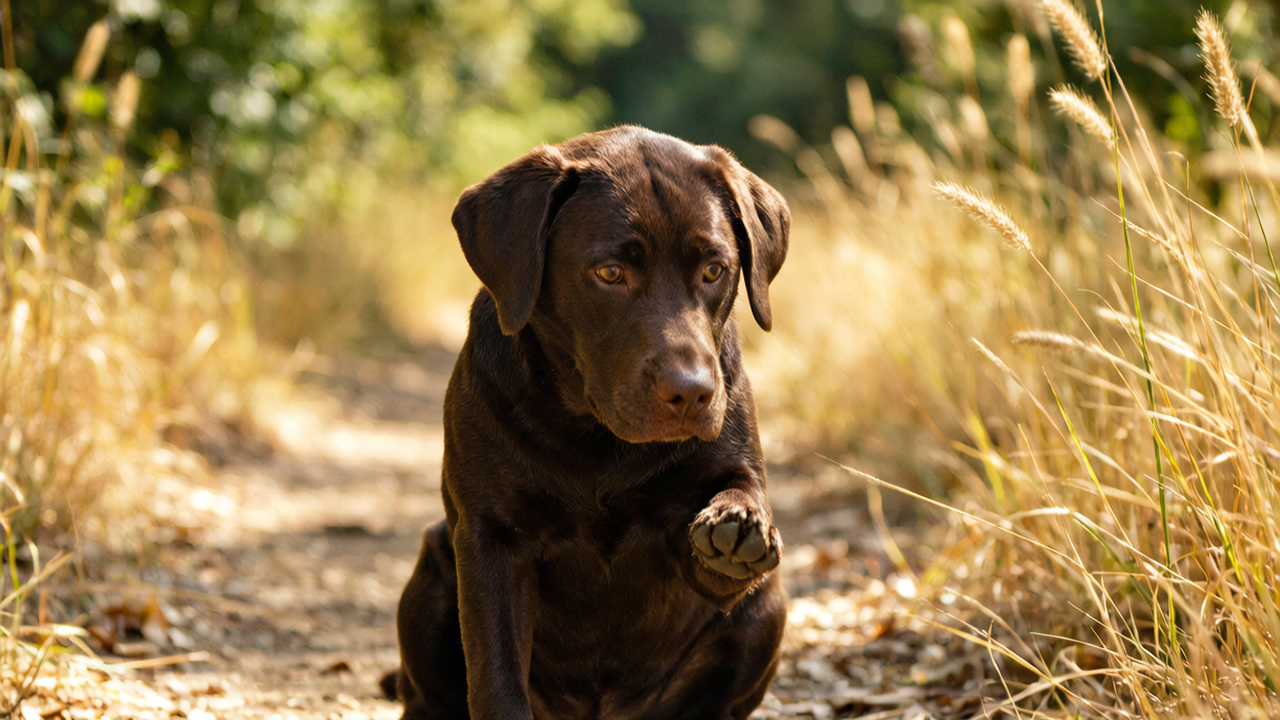
The vet handed me a small plastic bag. Inside was something that looked like a piece of hay with a sharp tip — maybe an inch long. "That," she said, "is what we pulled out from between his toes. It had already traveled two inches up his leg."
I stared at it. This tiny thing had caused Cooper — my chocolate Lab who normally sprints across fields like a maniac — to limp for three days, refuse walks, and eventually develop a swollen, oozing lump between his paw pads that smelled bad enough to make me gag. All from a dried grass seed I never even saw.
That was three summers ago, and I've since learned more about grass seeds than I ever wanted to know. If you walk your dog anywhere with tall grass, weeds, or overgrown trails — which is basically everywhere from July through October — you need to know this stuff too.
What Grass Seeds Actually Are (and Why They're Designed to be Nightmares)
Grass seeds aren't just random bits of plant material. They're nature's little drill bits.
The type that causes the most trouble comes from wild grasses — the kind you see along hiking trails, in unmaintained fields, and even in some people's overgrown backyards. Foxtails are the most notorious, but cheatgrass, wild barley, and spear grass all work the same way.
Each seed has a sharp, arrowhead-shaped tip and microscopic barbs that point backward. The design is actually brilliant from an evolutionary standpoint: when the seed lands on soil, the barbs help it burrow in and plant itself. The problem is that dog fur and skin work just as well as soil.
Once a grass seed hooks onto your dog's coat, it doesn't just sit there. Every movement your dog makes — walking, scratching, shaking — pushes it forward. The barbs mean it can only travel in one direction: deeper. It can pierce skin, burrow through muscle, and in the worst cases, migrate all the way into internal organs.
I didn't know any of this before Cooper's incident. Now I check him like a TSA agent after every walk.
The Five Places Grass Seeds Love to Hide
Through trial and error (mostly error), I've learned the high-risk zones. These are the spots I check every single time we come back from a walk between July and October:
Between the toes. This is ground zero. Cooper's $2,800 seed lodged right in the webbing between his middle toes. The thin, moist skin there is basically an invitation. If your dog suddenly starts licking one paw obsessively, or limps for no obvious reason, check between every toe — spread them apart and look for a tiny dark dot or a red, swollen area.
Inside the ears. After the paw incident, I thought I'd learned my lesson. Then the following August, Cooper started shaking his head like he was trying to launch his ears into orbit. A grass seed had worked its way deep into his ear canal. The vet pulled it out with a long pair of forceps while I held my breath. Signs to watch for: sudden head shaking, pawing at one ear, holding the head tilted to one side, or yelping when you touch near the ear.
Armpits and groin. The skin in these areas is thin and warm — perfect for a seed to settle in. I missed one under Cooper's front leg once because I was only checking his paws and ears. It created a small abscess that eventually burst on its own (gross, but at least it came out). Now I run my hands through his armpits and groin area after every trail walk.
Eyes. This one terrifies me. Grass seeds can get trapped under the eyelid or behind the third eyelid, scratching the cornea every time the dog blinks. A friend's spaniel needed emergency surgery for this. Signs: sudden squinting, tearing, pawing at the eye, or visible redness. Do NOT try to remove it yourself — go straight to the vet.
Nose. Dogs sniff everything, and sometimes they inhale more than they bargained for. A grass seed in the nasal passage causes violent, sudden sneezing — often with blood. Cooper did this once after enthusiastically investigating a patch of dried grass on a hike. The sneezing lasted maybe 30 seconds and nothing stuck, but I've read enough horror stories to know we got lucky. If your dog starts sneezing uncontrollably after a walk and there's even a trace of blood, get to the vet.
What I Do Now After Every Walk (the 3-Minute Check That Saves Thousands)
I'm not going to pretend I spend 20 minutes inspecting my dog after every outing. Nobody has time for that. But I've developed a quick routine that takes about three minutes and has caught three grass seeds before they became problems:
- Paw check (60 seconds). I lift each paw, spread every toe, and look between them. I also feel along the top of each paw and up the leg a few inches. Seeds can start between toes and migrate upward fast. A damp cloth helps wipe away anything that might be clinging to the fur.
- Ear check (30 seconds). Quick peek inside each ear. If we've been in tall grass, I'll also gently wipe the outer ear flap with a damp paper towel. I don't go into the ear canal — that's vet territory.
- Full-body pat-down (60 seconds). I run my hands over his chest, armpits, belly, groin, and down each leg. I'm feeling for any tiny bumps or anything that snags on his fur. Cooper has short hair, which makes this easier — long-haired dogs need more thorough checking.
- Face check (30 seconds). Quick look at both eyes and his nose. No squinting, no unusual discharge, no frantic pawing at the face.
Is this foolproof? No. Seeds can be microscopic or already embedded. But in three summers doing this, I've pulled out seeds stuck in his fur that would have eventually made their way into his skin. That alone makes it worth the three minutes.
When to Skip the Home Check and Go Straight to the Vet
Here's the thing I wish someone had told me: once a grass seed is inside the body, you cannot get it out at home. These barbs make them essentially one-way tickets — they won't back out the way they went in, and you'll just push them deeper if you try.
Go to the vet immediately if you see:
- A swollen, painful lump anywhere on the body (especially between toes)
- An oozing wound that won't heal — grass seeds often create a small drainage hole
- Sudden, intense head shaking or ear-scratching
- Squinting, tearing, or pawing at one eye
- Violent sneezing, especially with blood
- Lethargy, fever, or loss of appetite combined with any of the above
I waited two days with Cooper's paw because I thought it was "just a splinter." The seed migrated further up his leg during that time, which meant a more invasive removal and a bigger bill. Don't be me.
The Stuff That Actually Keeps Grass Seeds Off Your Dog
I've tried a bunch of prevention methods. Here's what's worth it and what's not:
Paw balm before walks. A thin layer of protective balm (I use Musher's Secret, but any thick, wax-based balm works) creates a barrier between the paw webbing and any seeds. It's not 100%, but it helps. Apply before heading out, not after.
Dog booties on trails. I know, I know. Your dog will walk funny for the first five minutes. Cooper looked like he was wearing flippers the first time. But on hikes through overgrown areas, booties are genuinely the best protection. We use Ruffwear Grip Trex — they stay on, they're breathable, and Cooper forgot about them after a few minutes.
Trimming paw fur. Between-toe hair is a magnet for grass seeds. I keep Cooper's paw fur trimmed close, especially between the pads and toes. Groomers will do this for a few extra dollars during a regular visit, or you can use a small pet clipper at home.
The post-walk brush. A quick brushing after a walk through tall grass removes loose seeds before they have time to work into the coat. This takes maybe two minutes and catches way more than you'd expect.
Avoiding the danger zones (when you can). I've learned which trails near me are worst for foxtails — usually the ones with tall, golden, dried-out grass in late summer. I avoid those from August onward and stick to maintained trails with short grass. It's not always possible, but when it is, it's the simplest prevention.
What I Wish I'd Known That First Summer
The first time I heard the term "grass seed" from a vet, I thought it was a joke. A seed? That tiny thing? I'd been walking dogs through tall grass for years and never even thought about it.
The truth is that most grass seed encounters end fine — either the seed falls off before it penetrates, or it causes a minor infection that resolves quickly with treatment. But the ones that go wrong can go really wrong. Seeds have been found in dogs' lungs, spinal columns, and brains — all because they started somewhere innocuous and just kept traveling.
Cooper's $2,800 seed taught me a lesson I won't forget. The three-minute check after walks feels like overkill right up until the moment it saves you an emergency vet visit and a very sad dog in a cone of shame.
If your dog has been in tall grass recently and something seems off — a limp, a head shake, a squint — trust your gut. The earlier you catch a grass seed, the easier (and cheaper) it is to remove.
Has your dog ever had a grass seed incident? What body part did it find? I'm always looking for new hiding spots to add to my checklist — drop a comment and tell me what I'm missing.
🐾 Enjoyed This Article?
Save it for later, share with a fellow pet parent, or check out more tips on our homepage!