Dog Seasonal Allergies: Why August Itching Happens and How to Relieve It
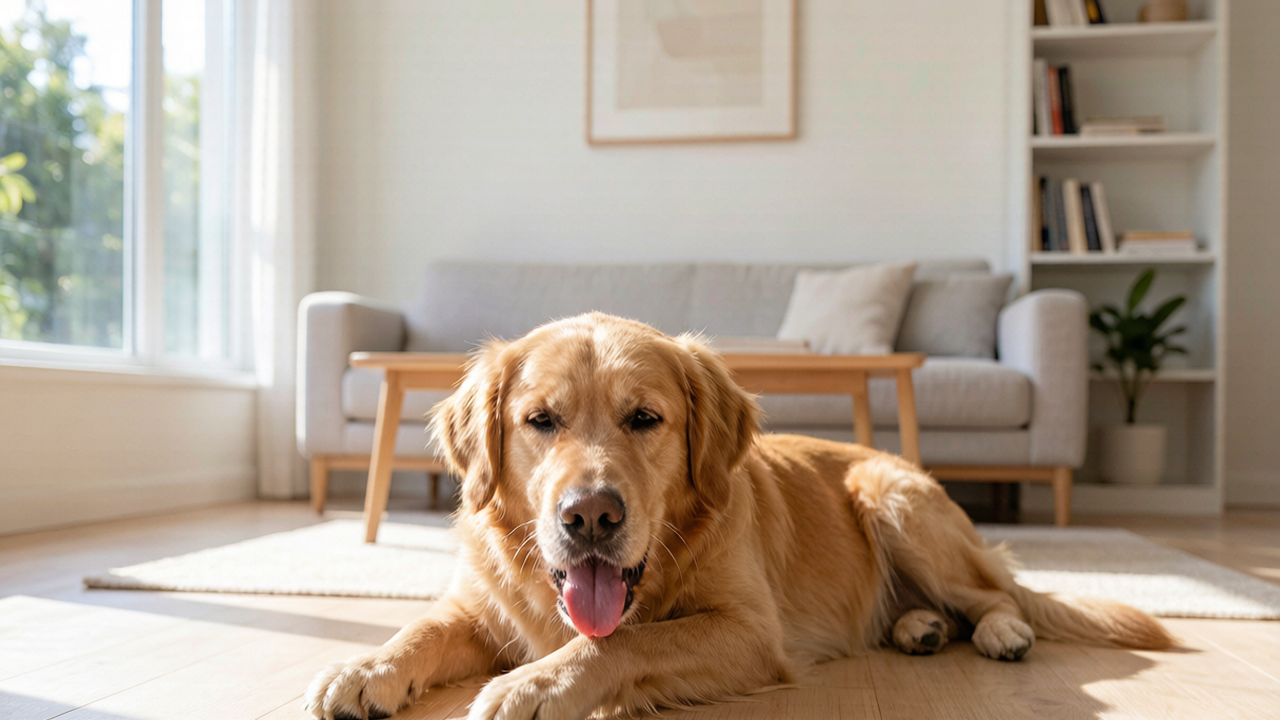
A dog who chews a bald patch into his belly every August is rarely dealing with fleas — and the flea bath, the laundry marathon, and the new bedding usually buy about two days of false confidence before the licking starts again.
The reason that pattern repeats is that allergies present differently in dogs than in people. Humans with hay fever sneeze and stream. Dogs itch. The same pollens that irritate a human respiratory tract mostly show up in dogs as inflamed skin — belly, paws, ears, muzzle, armpits — a condition veterinarians call canine atopic dermatitis [source].
Why Late Summer Is the Hardest Stretch for Itchy Dogs
Two things stack up at the same time.
First, the biology. Allergens contact the skin directly and are absorbed through a barrier that, in allergic dogs, is already weaker than it should be. The immune response drives inflammation in the skin itself, which drives scratching, which damages the barrier further and lets more allergen through. That self-reinforcing loop is why an allergic dog rarely settles down on his own once the season starts.
Second, the calendar. Ragweed pollen typically peaks from mid-August into September across much of the United States, while warm-season grass pollens are still circulating. In humid regions, mould spores thrive in exactly these conditions. Dogs also spend more time lying directly on grass in summer, which puts allergens against the thinnest-skinned parts of the body for hours at a stretch.
A useful way to picture it: constant low-grade contact irritation over most of the body, with teeth and paws as the only available relief.
Allergy Signals That Get Filed Under "Dogs Being Dogs"
Belly chewing is hard to miss. These four are the ones owners routinely explain away:
Head shaking after walks. The ear canal is lined with skin, and it inflames with everything else. Recurrent ear trouble — head shaking, scratching at the base of the ear, a yeasty smell, brown discharge — is one of the most common first presentations of environmental allergy in dogs, and it is frequently treated as an isolated ear infection year after year [source].
Methodical paw licking, usually in the evening. Not a quick clean — twenty focused minutes between the toes. The giveaway is colour: saliva stains light fur a rust or reddish-brown, and the skin between the pads looks pink rather than pale.
Face rubbing along furniture and carpet. It reads as affection or post-dinner satisfaction. On an allergic dog it's a muzzle and eye-area itch he can't reach with a paw, and it eventually leaves the skin raw.
Hot spots that appear overnight. Acute moist dermatitis can develop in a matter of hours where a dog has been licking or chewing one spot, particularly in heat and humidity. A patch that was not there at bedtime and is raw, weeping, and painful in the morning is normal for this condition — and needs veterinary attention rather than a home remedy, because the surface is already infected in most cases.
⚠️ Not everything itchy is allergy. Sarcoptic mange, flea allergy dermatitis, bacterial and yeast infections, and (less often) thyroid disease can all produce the same picture. Skin disease that is worsening, spreading, or accompanied by hair loss, odour, crusting or open sores needs a diagnosis, not a longer list of home fixes.
Reducing the Allergen Load: Five Measures Worth the Effort
None of these cure an allergy. Environmental allergy is managed, not fixed. What they do is lower the total amount of allergen sitting on the skin and dampen the inflammation, which is often the difference between a dog who scratches and a dog who self-mutilates.
1. Wipe down after every trip outside
A damp microfibre cloth over paws, belly, groin, and muzzle after walks physically removes pollen before it has hours to sit against the skin. It takes about thirty seconds and it is the least glamorous, highest-yield habit on this list. A rinse of the feet in plain lukewarm water works equally well for dogs who tolerate it.
Do it after short garden breaks too, not just walks. Peak pollen exposure often happens in a dog's own back yard.
2. Bathe more often in season — with the right product
Bathing removes surface allergens and rehydrates the skin barrier. During peak season, weekly is reasonable for most allergic dogs; medicated or hypoallergenic shampoos are frequently prescribed at that frequency.
| Do | Avoid |
|---|---|
| Lukewarm water; hot water increases itch | Human shampoo, dish soap, scented products |
| Fragrance-free, dog-specific formulas (oatmeal, ceramide, or as prescribed) | More than twice weekly without veterinary direction — it strips skin oils |
| Leave lather in contact for 5–10 minutes, then rinse thoroughly | Rushing the rinse; residue is itchy in itself |
| Dry the ears and skin folds afterwards | Leaving a damp coat in humid weather — a hot-spot recipe |
3. Omega-3 fatty acids, with realistic expectations
Marine-source omega-3s (EPA and DHA) are used to support the skin barrier and modestly reduce inflammation. This is a slow, supportive measure — several weeks before any difference is apparent, and a supporting role rather than a lead one. Because dosing depends on body weight and product concentration, and because oils vary widely in quality and purity, it is worth asking a veterinarian which product and dose rather than guessing from a label [source].
4. Cut the indoor allergen load
Pollen comes indoors on coats, shoes, and open windows, then settles into bedding where the dog spends eight to twelve hours a day. Three cheap moves: wash dog bedding weekly in hot water during peak season, keep windows closed on high-pollen mornings, and run a HEPA filter in the room the dog sleeps in. Vacuuming soft furnishings more often helps for the same reason.
5. Know where prescription treatment fits
Many owners spend two or three summers trying to manage moderate atopic dermatitis with home measures alone, and their dogs are itchy for the entire season. Modern veterinary options — including licensed anti-itch medications and injectable antibody treatments — interrupt the itch-scratch-inflammation cycle quickly, which is often what makes bathing, wiping, and diet measures effective at all. Ask specifically about them; the goal is a dog who sleeps through the night without chewing [source].
The threshold most vets would suggest: broken skin, an itch that interrupts sleep, or a dog who cannot be distracted from chewing. At that point, "toughing it out" has costs on both sides.
Four Mistakes That Prolong the Itching
Reaching for the human medicine cabinet. Antihistamines help only a minority of allergic dogs and are unreliable for atopic dermatitis, and dosing is not a scaled-down human dose. More importantly, many human allergy and cold products are combination formulas containing decongestants or other ingredients that are dangerous to dogs, and some liquid or chewable formulations contain xylitol [source]. Nothing from a human bottle without a veterinarian's dose.
Treating coconut oil as a therapy. It is a moisturiser, not a treatment for allergic skin disease, and most dogs simply lick it off — which adds calories and, in some dogs, a gastrointestinal upset on top of the itch.
Assuming the food is to blame. This is the most common wrong turn. Food-responsive itch exists, but true food allergy is considerably less common than environmental allergy, and a strict elimination diet takes eight to twelve weeks to interpret properly. A dog whose itch reliably arrives in August and fades in November is describing a pollen calendar, not a protein problem [source].
Dropping flea prevention in an itchy dog. A single bite can trigger flea allergy dermatitis in a sensitised dog, and flea allergy layered on pollen allergy is far harder to control. Year-round prevention is standard advice for allergic dogs specifically [source].
What Realistic Success Looks Like
An allergic dog does not stop being allergic. What changes is severity: fewer sleepless nights, no bald patches, no hot spots, no emergency visits in the middle of August. That outcome usually comes from several modest measures running at once — wiping, bathing, laundry, diet support, and appropriate medication during the peak weeks — rather than any single product.
If a dog is scratching more this month and the cause is unclear, the paw-and-belly wipe after every trip outside is the cheapest place to start. Give it a week or two and note whether anything changes. Then take those notes, and the dates the itch started, to a vet — seasonality is one of the most useful diagnostic clues an owner can provide.
Related reading:
- Why Is My Dog Scratching So Much? How I Figured Out the Real Cause
- Expert-Backed Tips: How to Keep Pets Cool in Summer
- Dog Hot Spots: What They Are and How I Finally Got Mine Under Control
- Dog Summer Ear Infections: How I Stopped Mine Before They Started
This article is for informational purposes only and is not a substitute for professional veterinary advice, diagnosis, or treatment. Always consult a licensed veterinarian if your pet shows signs of illness, injury, or distress. If you believe your pet is experiencing a medical emergency, contact your veterinarian or the nearest emergency animal hospital immediately.
🐾 Enjoyed This Article?
Save it for later, share with a fellow pet parent, or check out more tips on our homepage!
📩 Never Miss a Tip
Get our best pet care hacks delivered straight to your inbox. No spam, unsubscribe anytime.
Shop dog supplies on Amazon & Chewy
Comparing prices before you buy? Check current deals and read reviews from other pet owners.