Why Does My Dog Bark at Night? Causes and How to Stop It
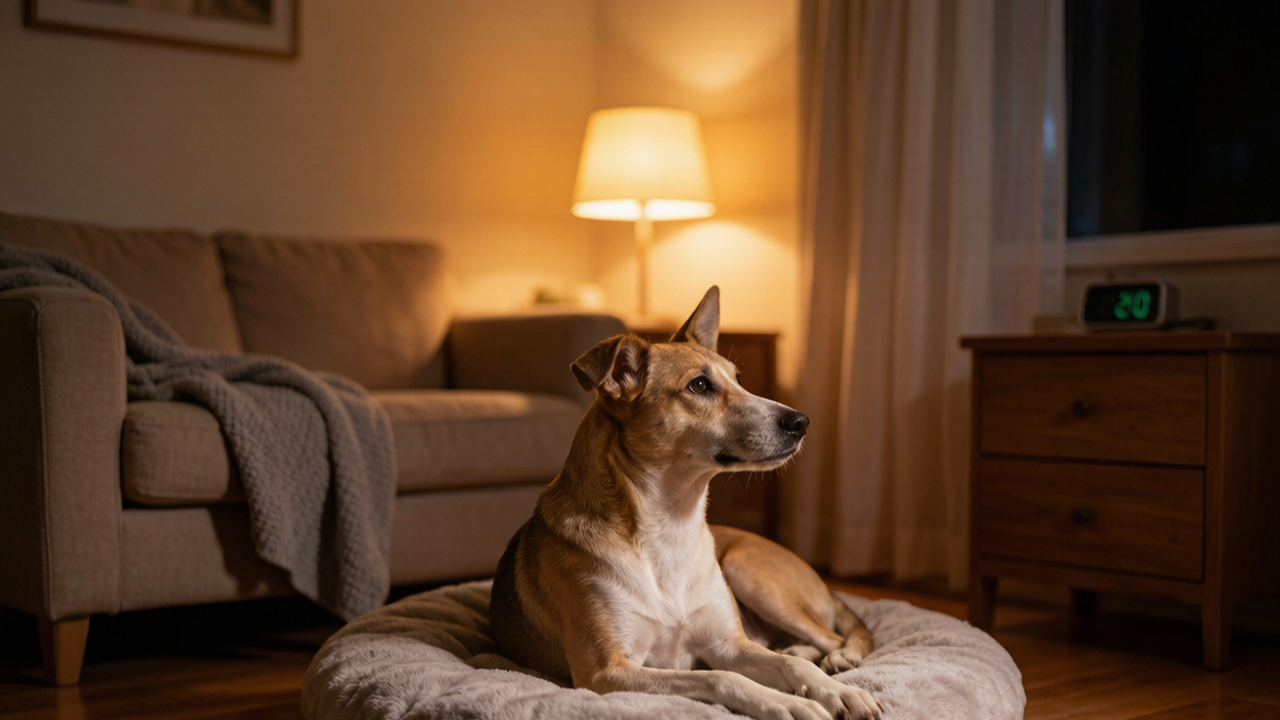
It's late. The house is quiet, everyone's asleep, and then it starts: one sharp bark, a pause, then a full monologue aimed at the fence or the front window. You lie there in the dark, doing the mental math on how long it takes before a neighbor mentions it. Night barking is one of those problems that feels small at first and gets big fast — because it's not just your sleep on the line, it's the peace of the whole block.
The good news is that nighttime barking almost always has a reason, and reasons can be found. Dogs don't bark at night to spite you. They bark because something is genuinely going on for them, even when it looks like nothing to you. Here's how to figure out what it is and quiet things down without yelling, shock collars, or giving up on your dog.
First, Rule Out the Stuff That Isn't "Bad Behavior"
Before you reach for any training plan, check the boring stuff. A dog that suddenly starts barking through the night can be telling you something is physically wrong.
Pain or discomfort. A dog with an ear infection, a sore joint, or an upset stomach may bark more at night simply because lying still makes it hurt worse, and the quiet gives them nothing to distract from it. If the barking came on suddenly, or it's paired with restlessness, panting, pacing, or changes in appetite, a vet visit is the right first move. This is exactly the kind of thing you want to rule out before you assume it's a training problem.
Getting older. Older dogs can develop something that looks a lot like sundowning in people. As their brains age, they may get disoriented or anxious when it gets dark, pacing and vocalizing in the middle of the night. It's not them being stubborn — it's a real cognitive shift, and it responds better to routine, nightlights, and a vet's guidance than to scolding. If your senior dog has started night barking out of nowhere, read up on the signs of canine cognitive decline before you treat it as naughtiness.
Needing to go out. Sometimes the answer really is that simple. A dog who's house-trained but barks at 3 a.m. may be telling you their stomach is off, or they drank a lot of water before bed. Worth a quick check before you assume the worst.
Why Dogs Bark When It's Dark and Quiet
Once you've cleared the physical stuff, most night barking falls into a few familiar buckets:
They hear what you can't. This is the big one, and it catches a lot of owners off guard. A dog's hearing runs well beyond ours — they pick up high-pitched sounds and faint noises from much farther away, from a car door two streets over to the neighbor's cat padding across a fence. At night, when the house is silent, those sounds stand out even more. To your dog, a 2 a.m. bark at "nothing" is often a very real bark at something you simply didn't register.
Under-exercised and under-stimulated. A dog who snoozed all day because nobody was home is a dog with a full battery at midnight. High-energy breeds in particular need real exercise and mental work during the day; without it, that energy has to go somewhere, and barking is one of the easiest outlets available.
Alert barking and territorial instincts. Some dogs are wired to announce anything unusual. At night, with less background noise to muffle things, a passing jogger or a raccoon in the yard can read as an intruder worth sounding the alarm about.
Separation or isolation anxiety. A dog who's suddenly sleeping alone, or who's anxious about being shut away from you at night, may bark to try to close that distance. This isn't a quick-fix situation — it's a comfort and trust problem that needs a gradual plan.
How to Actually Quiet It Down
Meet the exercise need first, during the day. This one fix does more heavy lifting than almost anything else. A good walk, some fetch, and a little mental work — a puzzle toy, a short training session, a stuffed Kong — earlier in the day means a dog who's genuinely tired by bedtime. Tired dogs sleep. Bored dogs bark. If you're not sure how much is enough, err on the side of more, and watch what changes.
Teach a "quiet" cue when it's not the middle of the night. The trick with "quiet" is that you can't teach it during a full-blown barking fit at 2 a.m. You teach it in daylight, in short sessions, when your dog is calm. Let them bark a couple of times, then the instant they pause, say "quiet" in a steady voice and offer a treat the moment they stop. Mark the silence, not the barking. Keep sessions short — five to ten minutes is plenty — and repeat daily. Over time the pause gets longer, and the word starts to mean something.
Don't shout back. When you yell at a barking dog, what they often hear is, "Oh good, you're barking too — let's do this together." It can actually wind them up more. A calm, quiet response teaches far better than volume ever will.
Manage the environment. If the trigger is the view out the front window or the sound of the street, take it away. Close the curtains or blinds before bed. A fan or a white-noise machine can mask the little sounds that set them off. If your dog sleeps near a window facing the sidewalk, moving their bed to a quieter corner can do more than a week of scolding.
Make the reward consistent. Decide what you'll do when the barking happens and stick to it. If you sometimes run out to see what's wrong and sometimes ignore it, your dog learns that barking sometimes pays off — and intermittent rewards are the hardest habit to break. Be boring and predictable about it.
For separation-driven barking, go gradual. If the issue is being shut away from you, short, positive practice sessions where you step out briefly and return before they get worked up can help rebuild the feeling that being alone at night is safe. This kind of anxiety rarely resolves by just "letting them bark it out."
When to Bring in Help
If you've ruled out pain, met the exercise need, taught a quiet cue, and managed the environment — and the barking still won't budge — that's not a failure, it's a sign the problem is deeper than a DIY fix. A certified trainer or a behaviorist can watch what's actually happening and build a plan around your specific dog. There's no shame in calling someone. Persistent night barking that keeps you and your neighbors up for weeks on end is worth professional eyes, and it's a lot cheaper than the goodwill of your street.
Most night barking is solvable. It just takes a little detective work, a tired dog, and the patience to teach calm instead of demanding it.
---
Related reading:
- How to Stop Your Dog Barking at the Doorbell and Visitors
- Dog Separation Anxiety: A Step-by-Step Training Guide
- Beyond Walks: Mental Enrichment for a Bored Dog
- Signs of Dementia and Cognitive Decline in Senior Dogs
This article is for general information only and is not a substitute for professional veterinary or behavioral advice. If your dog's night barking is sudden, severe, or paired with other symptoms, contact your veterinarian.
---
Have you cracked the code on your dog's night barking — or are you still in the trenches? Tell me what you've tried and what (if anything) actually worked in the comments.
This article is for informational purposes only and is not a substitute for professional veterinary advice, diagnosis, or treatment. Always consult a licensed veterinarian if your pet shows signs of illness, injury, or distress. If you believe your pet is experiencing a medical emergency, contact your veterinarian or the nearest emergency animal hospital immediately.
🐾 Enjoyed This Article?
Save it for later, share with a fellow pet parent, or check out more tips on our homepage!
📩 Never Miss a Tip
Get our best pet care hacks delivered straight to your inbox. No spam, unsubscribe anytime.
Shop dog supplies on Amazon & Chewy
Comparing prices before you buy? Check current deals and read reviews from other pet owners.