Why Your Dog Is Destroying Your Stuff Even Though You Walk Them Twice a Day
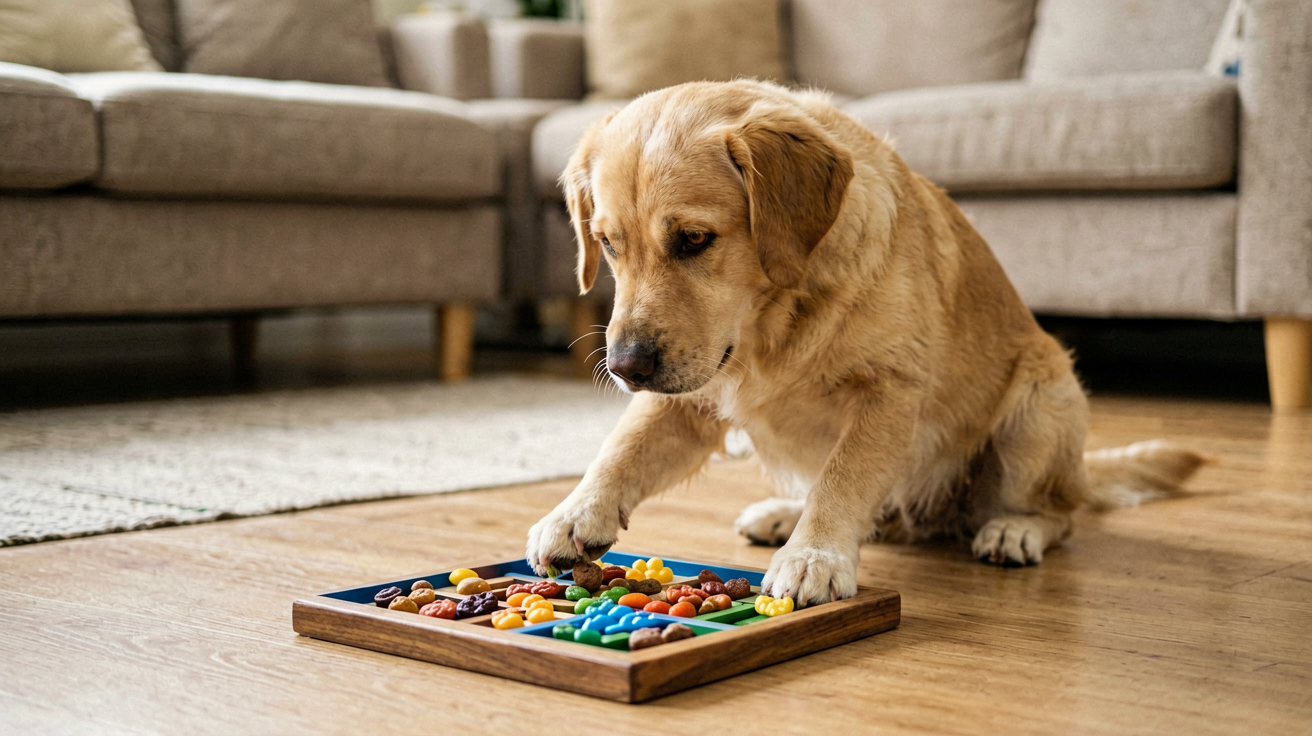
If you walk your dog twice a day, it's natural to assume that's enough — a morning walk before work, a longer one in the evening, maybe a quick midday break. By every reasonable measure, your dog should be the picture of contentment.
Instead, you may come home to find a chewed shoe or a shredded couch cushion, with your dog sitting proudly in the middle of it — tail wagging, as if they've accomplished something important.
The lesson lands hard: a tired body doesn't mean a tired brain. For a smart dog like a Labrador, an under-stimulated brain is essentially a ticking time bomb wrapped in fur.
The Realization Most Owners Miss
Most owners do what feels obvious — they double down on exercise. Longer walks, more fetch, a dog-park visit three times a week. The dog comes home physically exhausted, flops on the floor, and you think "finally, peace."
Then they wake up 45 minutes later and immediately start pacing, nosing at the trash can, whining at nothing.
Here's the key point: dogs don't just need exercise — they need mental work. A dog's ancestors spent their days solving problems: tracking scents, accessing food, navigating social dynamics. A 30-minute walk around the same block doesn't scratch that itch. It's the equivalent of you walking the same hallway on repeat. Your legs get tired, but your brain is screaming for something — anything — interesting.
A study in the Journal of Veterinary Behavior found that just 15 minutes of scent work can be as mentally tiring as an hour of physical exercise. That reframes the behavior: your dog isn't being "bad." They're being underemployed.
What Actually Happens Inside a Bored Dog's Brain
This part matters because it explains why "more walks" doesn't fix the problem.
When a dog doesn't get enough mental stimulation, their brain doesn't just go idle. Cortisol — the stress hormone — actually starts to creep up. Think of it like you being stuck in a room with nothing to do for hours. At first you're bored. Then you're restless. Then you start doing things just to feel something.
That's what "destructive behavior" really is. It's not revenge. It's not spite. It's a dog self-medicating their own boredom. Chewing releases endorphins. Digging is deeply satisfying from an evolutionary standpoint. Barking at every leaf that blows past the window? That's just the dog version of doom-scrolling.
And here's the part most owners underestimate: some breeds are wired to need mental work. Working breeds like Border Collies, Australian Shepherds, German Shepherds, and retrievers (bred to fetch and problem-solve all day) were never designed to be couch companions. Trainers have a useful way of describing it: you have a Ferrari brain in a dog that's only being asked to idle in the driveway.
Five Enrichment Methods — and What Actually Works
1. The Snuffle Mat (Cost: $18, Results: Immediate)
This is the easiest place to start, and it consistently outperforms expectations. A snuffle mat is basically a fabric mat with lots of fleece strips where you hide kibble. The dog has to use their nose to find each piece.
Move a dog's breakfast from the bowl into a snuffle mat and the same meal can stretch past 20 minutes — twenty-plus minutes of intense focus, sniffing, pawing, nudging. When they finish, most dogs don't go hunting for shoes. They flop down and nap.
Pouring kibble into a bowl takes about 12 seconds and quietly robs your dog of their most natural form of mental work. Once you've seen the difference, there's little reason to go back: snuffle mat, puzzle feeder, or frozen Kong instead.
2. The Frozen Kong Upgrade (Cost: Already Had the Kong, Filling ~$0.50/serving)
Everyone has a Kong. Most people put some peanut butter in it, hand it over, and the dog cleans it out in 4 minutes. That's the snack version. The enrichment version is different.
Here's a layered recipe that buys 35-45 minutes of occupied dog: kibble, a smear of plain yogurt, a few frozen blueberries, more kibble, a spoonful of canned pumpkin (100% pumpkin, not pie filling — that's toxic), and a final peanut butter plug to seal it. Freeze overnight.
A properly frozen Kong keeps most dogs working long enough to get through an entire work meeting uninterrupted. That's the gap between the snack version and the enrichment version.
3. Scent Walks ("Sniffaris") — The Free Option
It's easy to get frustrated when your dog stops to sniff every single bush and fire hydrant — tugging the leash, muttering "come on," trying to keep a brisk pace. Doing that actively shuts down the most mentally enriching part of the walk.
A dog's nose has up to 300 million olfactory receptors. Humans have about 6 million. When your dog is sniffing, they're reading a newspaper, checking who's been in the neighborhood, what they ate, how they're feeling. It's information-dense work.
Aim for a "sniffari" at least three times a week: clip your dog to a 15-foot long line, head to a quiet park or trail, and let them lead. Don't set the pace. Don't pick the route. Just follow and keep the leash loose. Covering half a mile in 40 minutes is a perfectly good outcome — and most dogs come home more tired than after a 3-mile power walk.
4. The "Find It" Game — 5 Minutes, Zero Setup
This one is so simple it's easy to overlook. Put your dog in a "stay" (or behind a door), hide a few treats around the room, then release them with a "find it!" command.
Start easy — put the treat in plain sight. Once they understand the game, gradually make it harder: behind a chair leg, under a towel, on a low shelf. Watching a dog work a room with their nose is genuinely fascinating. Most dogs learn the "find it" cue fast, and before long the words alone are enough to set off a full-body wiggle of anticipation.
5. The Cardboard Destruction Box (Cost: $0)
This is the messy one, but it's an absolute favorite for most dogs. Take a cardboard box — Amazon delivery boxes are perfect — and fill it with crumpled paper, empty toilet paper rolls, and a handful of kibble scattered throughout. Tape it shut. Hand it over.
Your dog will shred it. That's the point. Ten minutes of destruction, and they'll have found every last piece of kibble. Yes, you'll need to sweep up cardboard bits. But you know what you won't need to do? Replace another pair of shoes.
A quick note on safety: supervise this one, especially the first few times. Some dogs will try to eat the cardboard. Most shred it and spit it out, but stay in the room and make sure your dog isn't swallowing large pieces.
What Changed After Two Weeks
After two weeks of replacing the regular bowl with enrichment feeding and adding just 10-15 minutes of intentional mental work per day, the changes owners report are concrete:
- The pacing stops. Completely.
- The room-to-room shadowing every time you move stops.
- The 5 PM "witching hour" of restless nudging disappears.
- A pair of shoes left on the floor by accident gets walked past instead of chewed.
The most telling change? The dog starts choosing to settle. Before enrichment becomes part of the routine, a dog only rests once physically worn out. Afterward, they'll voluntarily head to their bed and nap even when nothing has "tired them out" in the traditional sense. That's the difference between an exhausted dog and a satisfied one.
If You Only Do One Thing
Start with replacing the food bowl. It's the lowest-effort, highest-impact change you can make. Get a snuffle mat, a puzzle feeder, or just scatter kibble across the floor (hard surfaces are easier to clean). It turns a 30-second activity into a 15-minute brain workout.
From there, add one enrichment activity per day. Five minutes of "find it." A frozen Kong in the afternoon. A sniffari instead of a power walk. You don't need to overhaul everything overnight. You just need to give your dog's brain something to do besides wait for the next walk.
---
Destructive behavior is almost always a symptom rather than a personality trait. Feed the brain first, and the rest of the house usually stops paying for it.
This article is for informational purposes only and is not a substitute for professional veterinary advice, diagnosis, or treatment. Always consult a licensed veterinarian if your pet shows signs of illness, injury, or distress. If you believe your pet is experiencing a medical emergency, contact your veterinarian or the nearest emergency animal hospital immediately.
🐾 Enjoyed This Article?
Save it for later, share with a fellow pet parent, or check out more tips on our homepage!
📩 Never Miss a Tip
Get our best pet care hacks delivered straight to your inbox. No spam, unsubscribe anytime.
Shop dog supplies on Amazon & Chewy
Comparing prices before you buy? Check current deals and read reviews from other pet owners.