Why Do Dogs Bury Bones and Hide Toys?
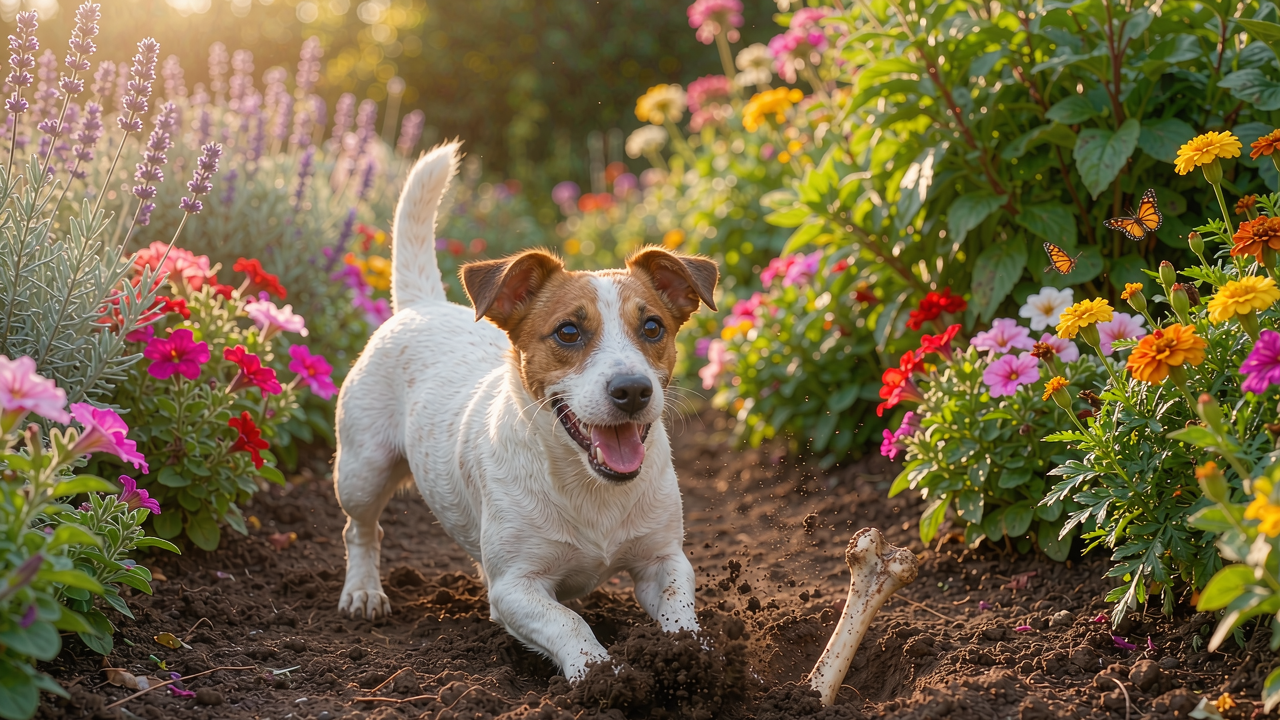
You reach between the couch cushions for the TV remote and pull out a half-buried rawhide instead. There's a fresh hole in the flower bed, a toy stuffed under the pillow, and a pile of kibble "saved" in the corner of the laundry basket. Your dog doesn't go hungry, so why are they acting like they're preparing for a famine?
It's one of those behaviors that looks completely illogical until you look at where dogs came from — and then it makes perfect sense.
It's the wolf in them
Burying food is one of the oldest behaviors a dog carries around, inherited straight from their wild ancestors. Wolves and other wild canines didn't eat on a schedule. They lived feast-or-famine, and when they made a big kill, they couldn't eat it all at once. So they buried the leftovers.
This has a name: food caching, or scatter hoarding. The clever part is that wild dogs don't dump everything in one spot — they spread their stash across several hiding places over a wide area. That way, if another animal finds one cache, the rest survives. Some wolves would even dig things up and move them to a new hiding spot to throw off competitors.
And here's the part that explains the hole in your flower bed: the dirt is basically a refrigerator. Burying meat shields it from sunlight and heat, which is exactly what makes food spoil, and the deeper a dog digs, the cooler the soil gets. So burying wasn't just hiding — it was food preservation.
Your dog eats twice a day like clockwork and has never missed a meal. But that ancient wiring is still in there, and some dogs feel it a lot more strongly than others.
More reasons than just instinct
Instinct is the big one, but it's not the only one. If you watch closely, you can usually figure out which driver is behind your particular dog's burying habit:
- They really value the object. Dogs will bury things they consider precious to keep them safe from "thieves" — which, in their mind, includes other pets, and sometimes you. In a multi-pet home, a dog who worries about competition is more likely to hide their treasures.
- They're bored. A dog with extra energy will invent their own entertainment, and digging plus hiding is a classic self-made game. It gives them exercise, interesting smells, and a mission.
- They're anxious. Digging can be a way to burn off stress, and it shows up more in dogs left alone for long stretches or dealing with separation anxiety. Hiding food can also be a self-soothing ritual.
- Their breed is built for it. Some breeds were developed to chase prey into underground burrows, and that digging drive is baked in. Terriers, dachshunds, beagles, basset hounds, and schnauzers all tend to be enthusiastic diggers and hoarders.
- It's just fun. For a lot of dogs, burying and digging is simply a good time — new textures, new smells, and a satisfying job done.
When burying becomes something to watch
For most dogs, this is a harmless quirk, and the worst consequence is a torn-up garden bed or a mystery stash of socks. But there's one version that deserves closer attention: resource guarding.
Caching is normal. Guarding is different. A dog who's resource guarding doesn't just hide the bone — they get protective of the hiding spot, and they may growl, show teeth, or snap if you or another pet gets too close. That's not a cute quirk; it's a sign the dog is feeling anxious about losing their stuff, and it can escalate into a bite.
If you're seeing growling, bared teeth, or air-snapping around a hidden stash, don't punish the dog — that usually makes the guarding worse. This is the one time to bring in a certified trainer or behaviorist, and give your vet a heads-up too. The fix is about making the dog feel more secure, not about yelling at them for being a dog.
How to keep the instinct without losing your garden
You don't need to train the burying out of a dog — and honestly, you probably can't, since it's hardwired. What you can do is give the behavior a healthy outlet so it stops trashing the house:
- Limit the surplus. If your dog buries toys, give them one or two at a time and rotate them out weekly. Fewer resources to guard often means less burying.
- Time the treats. Don't hand over a big bone right after a meal when the dog's already full — that's when a "save it for later" reflex kicks in. Give bones when they're actually going to work on them.
- Turn it into a game. If your dog loves the hide-and-seek part, lean into it. Have them "bury" a toy in a pile of blankets on cue, then ask them to find it. Same instinct, zero yard damage.
- Give them a digging spot. If you have the space, a sandbox or a designated dirt box is the single best fix for a dedicated digger. Bury a few toys and treats in it, and your dog gets to dig to their heart's content — somewhere you actually want them digging.
- Add enrichment. A bored dog digs more. More walks, puzzle feeders, and training sessions burn the energy that otherwise goes into excavating your garden.
Do they even remember where they hid it?
This is the question every owner asks eventually, and the honest answer is: it depends on the dog. Some dogs seem to keep a precise mental map and will dig a specific spot back up weeks later. Others bury a bone, wander off, and never give it another thought — the thrill was in the burying, not the saving.
It also seems to come down to mood and circumstance. Plenty of dogs are astonishingly indecisive about the whole thing, digging a treasure up and reburying it in a new spot over and over, as if no location is ever quite right. Watching that dance is a good reminder that for a lot of dogs, the point was never food security. The point was that digging is fun, and the object was just an excuse to do it.
A quick way to tell if you should step in
If you're trying to decide whether the burying is harmless or needs attention, run it through one simple filter. A dog who hides a toy and then happily shows you where it is, or digs in the yard for the joy of it, is just being a dog — redirect the energy and move on. A dog who hides a bone and then turns stiff, hard-eyed, and growly if you come near the spot is a different story, and that's your cue to get a trainer involved rather than push back.
Most burying sits squarely in the first camp. It's messy, occasionally gross (there's nothing quite like finding a week-old bone in your pillowcase), and completely normal. Once you see it as leftover wolf wiring instead of a problem to solve, it becomes a lot easier to shrug off the holes in the garden.
The short version
Burying bones and hiding toys isn't a flaw in your dog, and it isn't some mysterious rebellion. It's an ancient survival behavior that stuck around because it worked — food stays fresh underground, and a scatter-hoarder never goes hungry. Modern dogs just apply the same instinct to rawhides, socks, and the occasional TV remote.
The only time it needs a second look is when hiding turns into guarding — growling, snapping, or protecting a stash. Everything else is just your dog being a dog, and with a little redirection, you can both live with it.
So — what's the weirdest place you've ever found a "buried" treasure, and does your dog actually go back for it later, or is it out of sight, out of mind? Drop it in the comments, because some of these hiding spots are genuinely impressive.
This article is for informational purposes only and is not a substitute for professional veterinary advice, diagnosis, or treatment. Always consult a licensed veterinarian if your pet shows signs of illness, injury, or distress. If you believe your pet is experiencing a medical emergency, contact your veterinarian or the nearest emergency animal hospital immediately.
🐾 Enjoyed This Article?
Save it for later, share with a fellow pet parent, or check out more tips on our homepage!
📩 Never Miss a Tip
Get our best pet care hacks delivered straight to your inbox. No spam, unsubscribe anytime.