The Cat Toys That Actually Work — and the Ones Your Cat Will Ignore
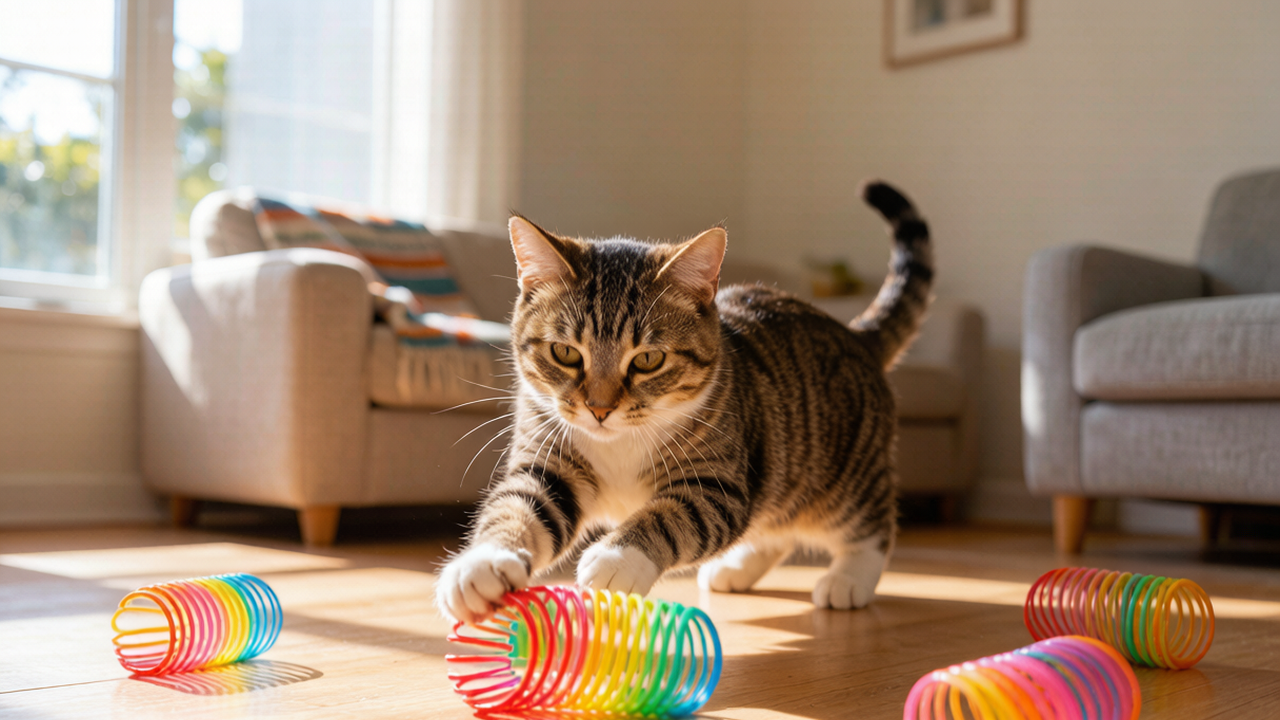
A cat will often ignore the expensive toy you researched for an hour and then go absolutely feral over a bottle cap. The $40 automated laser toy sits untouched under the couch for months, while a crumpled receipt gets carried around the house like a freshly caught mouse.
If you've ever watched your cat do this, you already know where this is going.
Most owners end up with a "graveyard" — a box in the closet full of toys their cat sniffed once and walked away from. The motorized fish that flops realistically? Terrifying to some cats. The crinkle tunnel with three chambers? Used for four minutes on day one, never again. The treat puzzle marketed as "genius-level enrichment"? Your cat stares at it, then walks to the food bowl.
Here's what's worth knowing before you start throwing money at the problem.
Why Most Cat Toys Fail (It's Not What You Think)
Cats aren't dogs. Obvious, right? But most cat toys are designed like dog toys — bright, noisy, assuming the animal will just figure it out. Cats don't work that way.
A cat's play drive is wired around one thing: the hunting sequence. Stalk → chase → pounce → catch → "kill" → eat. If a toy doesn't trigger at least part of that sequence, your cat will lose interest in about 90 seconds. That motorized laser toy is a good example: it moves in a predictable circle, with no stalking required and no satisfaction at the end. A cat figures out within a couple of minutes that they can never "catch" it, and their brain checks out.
The other thing nobody tells you: cats get bored of the same toy faster than a toddler with an iPad. It's not that the toy is bad — it's that the novelty wore off. The single biggest thing that improves your hit rate with cat toys isn't buying better ones. It's rotating them.
The 4 Types of Toys That Actually Earn Their Keep
After plenty of wasted money and trial and error, here are the only categories worth buying.
1. Wand Toys (The Non-Negotiable)
This is the only category where it's worth spending real money. A good wand toy — a long stick with a string and something feathery or fuzzy at the end — is the closest thing you'll get to simulating actual prey. You control the movement. You can make it skitter, pause, dart behind furniture, climb up the side of the couch. Your cat gets the full hunt sequence.
Most owners go through several wands. The ones with wire attachments last longer but can be dangerous if the wire snaps and pokes out. A simple wooden stick with a fleece ribbon and a feather cluster at the end costs about $8 at a local pet store, and it outlasts the $25 "premium" versions.
The key isn't the wand. It's how you use it. Don't just wave it in your cat's face. Drag it slowly across the floor, pause behind a chair leg, make it "hide." Let your cat stalk it for a solid 30 seconds before you let it move again. The pause is what triggers the hunting brain.
2. Small Prey Mimics (The Solo Players)
These are the toys your cat can bat around when you're not available for wand duty. Think small, lightweight, and unpredictable in movement. Three top picks:
- Plastic coil springs ($3 for a 10-pack): These are a cat's version of crack. They bounce in random directions, they're light enough to bat across the room, and they're cheap enough that losing them under the fridge doesn't hurt. You'll find them in your shoes, in the water bowl, and occasionally in your bed. Your cat carries them around like prey.
- Crinkle balls ($1-2 each): The sound triggers something primal. Your cat will chase a crinkle ball for a solid 10 minutes on their own. Get the ones with mylar — the plain foil ones shred too fast.
- Catnip mice ($2-3 each): Hit or miss depending on whether your cat responds to catnip (about 50-70% of cats do, genetically). Cats in the responsive camp get about 15 minutes of intense batting before losing interest. Rotate them out for a few weeks to "recharge" the novelty.
3. Puzzle Feeders (The Brain Workout)
Many owners dismiss these at first because their cat "didn't get" the first one they bought. The mistake is starting too hard. A cat who's never used a puzzle feeder needs the easiest possible version — a tray with shallow divots where you scatter a few treats. Once they get the concept (sniff → paw → reward), you can level up.
Give your cat three puzzle feeders of varying difficulty, and put their dry food in one at least every other day. It takes about 8 minutes to solve the medium-difficulty one, which doesn't sound like much, but for an indoor cat that's a meaningful chunk of mental energy burned. Cats are noticeably calmer on puzzle-feeder days — fewer 3 AM zoomies, less attention-seeking meowing.
4. Tunnels and Hideaways (The Ambush Zone)
A simple collapsible tunnel ($12-15) is one "big" item most cats don't tire of. They use it as an ambush point during wand play, nap in it on sunny afternoons, and occasionally tear through it at full speed during an evening zoomie.
The trick with tunnels is placement. Put it along a natural pathway — between the couch and the wall, or connecting two rooms — and your cat will use it. Tuck it in a corner and they'll ignore it.
The Rotation System That Changed Everything
The pattern is predictable: every time you buy your cat a new toy, they'll be obsessed for 2-3 days, then lose interest. Buy another and the cycle repeats. Pull out a wand toy they haven't seen in two months and they'll act like it's brand new.
That's the lightbulb moment.
Keep most of your cat's toys in a closet and only leave 3-4 out at a time. Every 4-5 days, swap them — put the current batch away and pull out a different set. It takes 30 seconds. Your cat will treat every rotation like brand-new toys. You'll buy far fewer toys, and your cat will play just as much as when you were dropping $20 a week at the pet store.
The one exception: keep the favorite wand toy available all the time, because wand play is your main bonding activity. Everything else rotates.
How Long Should You Actually Play With Your Cat?
Five minutes of play here and there isn't enough — at least not for a young indoor cat.
Most cats need about 15-20 minutes of active play per day, split into two sessions. One in the morning (around 7 AM, when they're naturally active) and one in the evening (around 8 PM, before the last meal). The evening session is the important one — it mimics the hunt-eat-groom-sleep cycle. When you do a solid 10-minute wand session followed by dinner, your cat sleeps through the night. Skip it and you'll hear parkour off your bedroom door at 3 AM.
If your cat is getting overstimulated during play — tail twitching, ears flattening, skin rippling — stop. That's not "more fun." That's your cat telling you they're done. Let them cool down for a few minutes before trying again.
The $3 Winner
If you had to pick one toy to recommend to every cat owner, it would be those plastic coil springs. You can get a 10-pack for about $3. They're light, they bounce unpredictably, they slide well on hardwood and carpet, and your cat treats them like small prey to hunt, catch, and carry to a favorite hiding spot.
You'll find at least three under the fridge every time you clean. Worth every penny.
---
What's the one toy your cat can't live without — and what's the most expensive thing they've completely ignored? Share your wins and fails in the comments.
---
If you found this guide helpful, you might also like:
- Indoor Cat Enrichment: 15 Boredom Busters That Actually Keep Your Cat Happy
- Why Does My Cat Go Crazy at Night? Solving the 3 AM Zoomies
- Cat Behavior Problems A-Z: Real Solutions for Common Issues
This article is for informational purposes only and is not a substitute for professional veterinary advice, diagnosis, or treatment. Always consult a licensed veterinarian if your pet shows signs of illness, injury, or distress. If you believe your pet is experiencing a medical emergency, contact your veterinarian or the nearest emergency animal hospital immediately.
🐾 Enjoyed This Article?
Save it for later, share with a fellow pet parent, or check out more tips on our homepage!
📩 Never Miss a Tip
Get our best pet care hacks delivered straight to your inbox. No spam, unsubscribe anytime.
Shop cat supplies on Amazon & Chewy
Comparing prices before you buy? Check current deals and read reviews from other pet owners.