DIY Pet First Aid Kit: Emergency Essentials
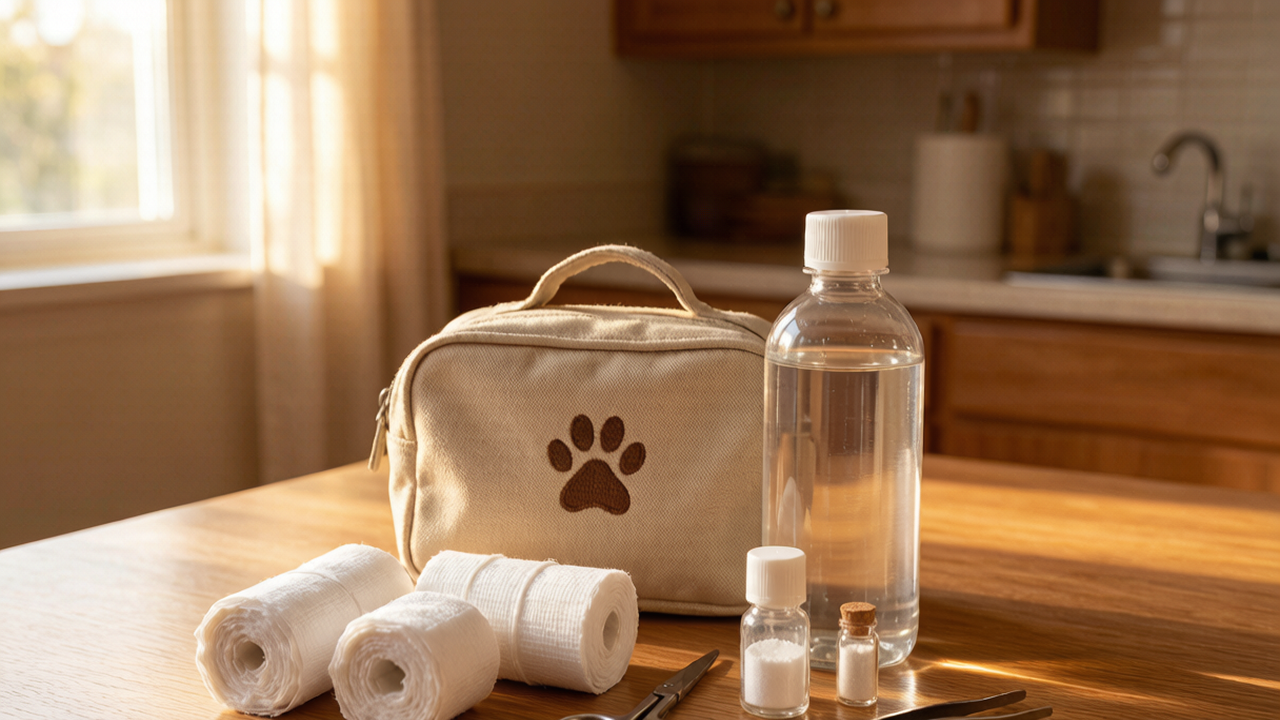
Picture a Tuesday night. You're washing dishes, your dog is dozing under the kitchen table like he always does, and then a wine glass slips out of the drying rack. Shattered everywhere. Before you can even say "stay," your dog — a Labrador, genetically incapable of ignoring anything that hits the floor — is on his feet.
He steps right on a shard. The yelp is something you hope you never hear — high, sharp, scared. Then blood. A lot of it. Paw pads bleed like crazy.
You grab the nearest towel, wrap his foot, and call the emergency vet. If they're 45 minutes away, the bleeding isn't life-threatening but also isn't stopping on its own. You spend those 45 minutes holding pressure with a kitchen towel, keeping a 75-pound dog calm in the car while your brain runs through every scenario: what if it's deeper than it looks? What if there's glass still in there? What if he needs stitches?
When you finally get to the vet, they clean the wound, confirm there are no fragments, wrap it, and send you home with a $340 bill and a sympathetic smile. Your dog is fine. You are not. You stare at your kitchen cabinet that night and realize you have nothing — not gauze, not vet wrap, not styptic powder, not even a proper pet-safe antiseptic. If the cut had been worse, or the vet farther away, those 45 minutes could have gone very differently.
The next day, build a proper pet first aid kit. Here's exactly what goes in it, why each item matters, and what you actually need versus what the pre-made kits leave out.
Why the Pre-Made Kits Are Mostly Useless
Save yourself the $35: buy one of those "pet first aid kits" on Amazon with a cute paw-print bag and you'll likely be disappointed. It arrives, you open it, and you'll be genuinely annoyed. Three tiny gauze pads. Two alcohol wipes — which you should never use on an open wound because they burn and can damage tissue. A pair of tweezers so flimsy they couldn't pull a splinter out of a grape. A single roll of what they call "vet wrap" that's about four feet long and doesn't stick to itself.
The bag is cute. Keep it if you like. Throw everything else in the trash. Build your own. It's cheaper and you'll actually have what you need when you need it.
What Goes In Your Kit: The Real List
Bleeding Control
Sterile gauze pads (4×4 inches, at least 10). This is the number one thing you don't have until you buy it, and the number one thing you'll use. For wounds, for applying pressure, for cleaning, for wrapping. Get the non-stick kind if you can — they're less likely to stick to a wound when you eventually have to change them.
Self-adhesive vet wrap (at least 2 rolls). This is the stretchy, colorful wrap that sticks to itself but not to fur. It's cheap — like $3 a roll at any pet store — and it's what you'll use to hold gauze in place or wrap a paw. In a pinch, it can also work as a makeshift muzzle if your dog is in pain and lashing out. (Important: never muzzle a dog that's vomiting, having trouble breathing, or overheating.)
Styptic powder. This stops bleeding from minor cuts and torn nails. A torn dew claw from chasing a squirrel is a classic example — styptic powder usually stops the bleeding in about 30 seconds. Kwik Stop is the brand most vets carry.
An old clean towel or two. This sounds too simple to belong in a "first aid kit," but a kitchen towel during an incident can save you. Towels are for applying pressure, wrapping an injured animal, making a sling for a dog that can't walk, or just keeping them warm if they're in shock. Throw a couple in your kit. They'll be the most useful thing in there.
Wound Care
Saline solution (sterile, in the little squirt bottles). This is for flushing out wounds. You can buy it at any drugstore for a few dollars — it's the same stuff contact lens wearers use. Don't use hydrogen peroxide. Your grandma may have sworn by it, but hydrogen peroxide kills healthy tissue along with bacteria and slows healing. Saline is what vets use. It's safe, it's cheap, and it doesn't sting.
Chlorhexidine solution (2%, diluted). This is the blue-green antiseptic your vet probably uses. It kills bacteria without the tissue damage of alcohol or peroxide. You can buy a bottle at most pet stores or online. Dilute it — most vets recommend 1 part chlorhexidine to 10 parts water for wound cleaning. Keep a little pre-diluted spray bottle in your kit.
Triple antibiotic ointment (plain, without pain relief). The generic drugstore kind. Key word: without pain relief. The "plus pain relief" versions contain pramoxine or other ingredients that aren't safe for dogs if they lick it off. Plain bacitracin/neomycin/polymyxin ointment is fine for minor cuts and scrapes. Just don't let them lick it for at least 10 minutes after you apply it.
Cotton balls and Q-tips. For applying ointment, cleaning around wounds, or gently cleaning ears. Keep a small ziplock of each.
Tools
Tweezers (good ones). Not the cosmetic kind. Get the pointed, stainless-steel kind from the first aid aisle — the ones that actually grip. Ticks, splinters, glass fragments (after the vet says it's okay to remove), debris in a wound. This is one place where spending $8 instead of $2 genuinely matters.
Tick remover tool. The little plastic hook kind. If you live anywhere with ticks, this is a must. Twisting with tweezers can leave the tick's head embedded. The hook tool pops the whole thing out clean with a gentle turn. They cost about $4.
Blunt-tipped scissors. For cutting gauze, trimming fur around a wound, cutting vet wrap. Blunt tips so you don't accidentally stab your dog if they flinch. These are sometimes called "bandage scissors."
Digital thermometer (pet-specific or just a dedicated one). A dog's normal temperature is 101-102.5°F. Anything above 103.5 is a fever, anything above 106 is an emergency. You need a thermometer to know the difference between "he seems warm" and "we need to go now." Use a separate one from your family's. Label it DOG in sharpie. You'll be glad you did.
Disposable gloves. Because blood and wound fluids are gross, and also because you want to keep things clean. A box of nitrile gloves costs about $6 and lasts forever.
Emergency Info
A printed card with:
- Your regular vet's phone number and address
- The nearest 24-hour emergency vet's phone number and address
- The ASPCA Animal Poison Control number: (888) 426-4435
- Your dog's weight, age, breed, and any medications they're on
- Any known allergies
We all have phones, and you can Google this stuff. But when your dog is bleeding and you're panicking, your fine motor skills go out the window. Having it on a physical card taped to the inside lid of your kit is worth the three minutes it takes to write it down.
Extras Worth Having
Benadryl (diphenhydramine) — but only if you've talked to your vet about dosing. For allergic reactions, bug bites, mild swelling. Standard dosing is roughly 1 mg per pound of dog, but confirm the right dose for your specific dog with your vet before an emergency happens. Write the dose on that emergency card.
Hydrogen peroxide 3% — but only for one very specific reason. If your vet or poison control tells you to induce vomiting, hydrogen peroxide is how you do it (about 1 teaspoon per 10 pounds, once). Do NOT use this unless a professional tells you to. Some substances cause more damage coming back up than they did going down.
Muzzle (basket-style). Even the sweetest dog can bite when they're in pain. A basket muzzle lets them pant and drink while keeping everyone safe. Get one that fits, practice with it when things are calm so it's not a new scary thing during an emergency.
A small flashlight. For looking in mouths, checking pupils, examining wounds in poor lighting. Your phone flashlight works in a pinch, but a dedicated one won't drain your phone battery.
An old credit card or loyalty card. Weird one, but true. If your dog gets stung by a bee, you scrape the stinger out with a flat edge — don't squeeze it with tweezers, which can push more venom in. The edge of a credit card is perfect.
Collapsible water bowl. For hydration, for flushing wounds when you're not near a sink, for giving activated charcoal if poison control tells you to.
One Mistake to Avoid
After a real emergency, it's tempting to go overboard. A massive plastic tote filled with every first aid item you can find on Chewy weighs about 15 pounds and ends up living in a hall closet — which means when your dog slices his paw on a trail hike, the kit is at home and you're in the woods with nothing but your car keys and regret.
Keep two versions: a small car kit (gauze, vet wrap, styptic powder, saline, tweezers, tick tool, gloves, Benadryl, a towel, the emergency card) and the full home kit. The car kit lives under the passenger seat. The home kit lives in a clearly labeled cabinet everyone in the house knows about. If you only build one, build the car kit first. That's where emergencies happen.
How to Actually Use This Stuff (Briefly)
The most important thing to remember: stop the bleeding, keep them calm, get to a vet. Everything else is secondary.
For a bleeding wound: apply firm pressure with gauze or a clean cloth for at least 3-5 minutes without peeking. If blood soaks through, add more gauze on top — don't remove the soaked layer, you'll disturb any clots that are forming. If the bleeding is pulsing or spurting, that's arterial and you need to get to a vet immediately while maintaining pressure.
For a suspected toxin: call poison control first. Don't induce vomiting on your own. The ASPCA number is on your emergency card. They'll tell you exactly what to do and they'll stay on the phone with you. It costs about $85 for the consult, and it's worth every penny.
For heatstroke: get them into shade or air conditioning, offer small amounts of cool (not ice cold) water, wet their paws and belly with cool water, and get to a vet. Don't wrap them in cold wet towels — that traps heat. Don't force water if they can't drink on their own.
The Bottom Line
That $340 bill and 45 minutes of panic teach a simple lesson: a $40 kit makes those 45 minutes far less terrifying. Nothing in this kit replaces a vet — if your dog is seriously injured or sick, get professional help. But what a good first aid kit does is buy you time, reduce panic, and keep a bad situation from getting worse while you reach the people who can actually fix things.
Build yours this weekend. It takes 20 minutes and a trip to the drugstore. And hopefully you never need it.
---
A well-stocked kit buys time, reduces panic, and keeps a bad situation from getting worse while you reach the vet.
This article is for informational purposes only and is not a substitute for professional veterinary advice, diagnosis, or treatment. Always consult a licensed veterinarian if your pet shows signs of illness, injury, or distress. If you believe your pet is experiencing a medical emergency, contact your veterinarian or the nearest emergency animal hospital immediately.
🐾 Enjoyed This Article?
Save it for later, share with a fellow pet parent, or check out more tips on our homepage!
📩 Never Miss a Tip
Get our best pet care hacks delivered straight to your inbox. No spam, unsubscribe anytime.
Shop pet first aid kit on Amazon & Chewy
Comparing prices before you buy? Check current deals and read reviews from other pet owners.