How to Stop Dogs from Counter-Surfing and Stealing Food
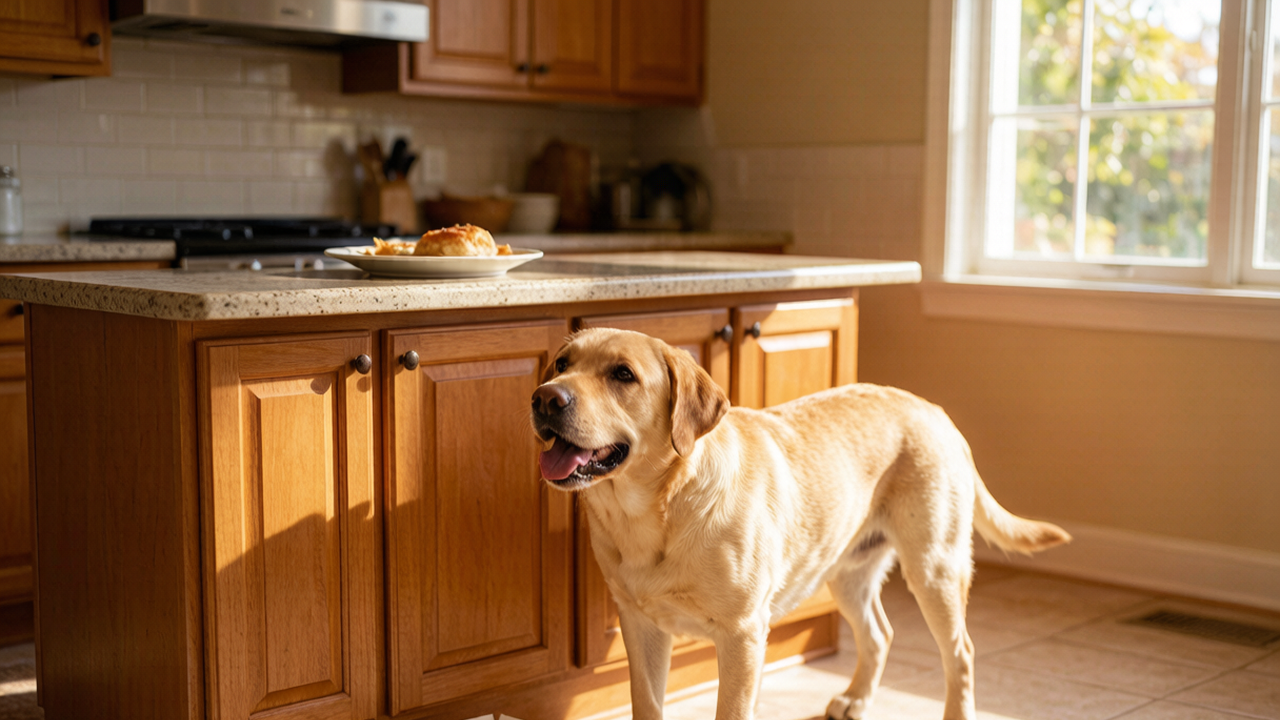
Counter-surfing — a dog jumping onto a counter or table to grab food — is one of the most common kitchen complaints trainers hear. It's frustrating, it's risky (human food can be toxic or cause blockages), and it has a way of escalating once a dog learns that counters occasionally pay out.
The good news: it's a manageable behavior, and the fix is mostly about changing the dog's environment and teaching an incompatible routine. The bad news: most owners accidentally make it worse before they make it better.
Why Dogs Counter-Surf
It's rarely about a dog being "naughty" or deliberately disobedient. It's about reinforcement. Every time a dog finds food on the counter, the behavior is rewarded — and because success is intermittent, the dog keeps trying. Intermittent reinforcement is powerful: a dog that wins only occasionally stays motivated far longer than one that never succeeds. [source]
Size is no protection. Large dogs rest their paws on the edge; small dogs launch like missiles; medium dogs exploit chairs, open drawers, or anything that gets them closer. When food is within reach, "within reach" becomes a flexibly interpreted concept.
Methods That Tend to Backfire
Most failed attempts share one flaw: they react after the theft, when there's nothing left to train. Common missteps:
- Yelling from across the room. The dog simply learns to check whether you're watching before jumping up — better timing, not better behavior.
- Pushing the dog off. To many dogs this reads as play. Jump up, get pushed, jump again — with a wagging tail the whole time.
- Shoving food "far back." A dog's reach is longer than owners expect; what looks safely distant is often easily within range.
- Bitter spray on the edge. Some dogs lick it once, recoil, and simply jump up from a different angle.
- Lecturing the household. Unless everyone keeps counters clear, one lapse undoes a week of progress.
Every one of these corrects the symptom instead of removing the reward. Once the food is gone, there's nothing to build a lesson on.
A Two-Part Approach That Works
Lasting change comes from two directions at once: remove the reward (management) and teach a better option (training). Do only one and the habit tends to survive.
Part 1: Make the Counters Unrewarding
Training can't compete with a counter that keeps paying out. The first step is to make the kitchen boring:
- Keep nothing edible on the counters. Bread, fruit bowls, butter dishes — all go into cabinets, the fridge, or sealed containers pushed to the back wall.
- Clean as you cook. Crumbs and grease splatters read as "food zone" to a nose many times more sensitive than ours. Wipe surfaces right after prep.
- Use a lidded trash can. A foot-pedal can with a latch removes another easy score.
- Gate the kitchen during unsupervised prep. When you can't watch, a baby gate turns the kitchen into a no-dog zone and prevents practice of the unwanted behavior.
This is management, not training — but without it, training has little to build on.
Part 2: Teach an Incompatible Behavior
"Don't jump up" is a weak instruction. "Go to your mat and stay" gives the dog a concrete job that's physically incompatible with surfing the counter. [source]
A simple sequence:
- Lure to the mat. Say a cue like "place" and toss a treat onto a mat in the kitchen corner. When all four paws land, mark and reward. Keep sessions short and frequent.
- Build duration. Once the dog runs to the mat on cue, wait a couple of seconds before rewarding, then gradually longer. If it gets up, reset without reward.
- Add distractions. Start with an empty counter, then a boring object, then a low-value food item at the back. Reward heavily for staying on the mat despite temptation.
- Practice during real prep. Send the dog to its mat while you actually cook, rewarding at intervals. The mat becomes the better deal; the counter becomes irrelevant.
A reliable "leave it" cue adds a safety net: a calm "leave it" can redirect a dog eyeing the counter before it ever jumps.
What Progress Looks Like
Change is rarely instant. Early on, lapses usually trace back to management slipping — a loaf left out, a moment of unguarded prep — rather than training failing. Over a few weeks, most dogs move from dashing to the counter, to holding the mat while you cook, to ignoring food that hits the floor nearby. The counter-surfing doesn't vanish because the dog becomes saintly; it fades because the counter stops paying out and the mat pays better.
Even after success, it's wise never to leave food unattended on the counter. The behavior is one easy win away from returning.
Making It Stick: The Household Factor
The hardest part is often consistency across everyone in the home. A single person leaving a sandwich out can undo days of progress. Agreeing on clear kitchen rules — and using a gate during unsupervised prep — gives training the stability it needs. Management buys the breathing room to train without constant setbacks.
This article is for informational purposes only and is not a substitute for professional veterinary advice, diagnosis, or treatment. Always consult a licensed veterinarian if your pet shows signs of illness, injury, or distress. If you believe your pet is experiencing a medical emergency, contact your veterinarian or the nearest emergency animal hospital immediately.
🐾 Enjoyed This Article?
Save it for later, share with a fellow pet parent, or check out more tips on our homepage!
📩 Never Miss a Tip
Get our best pet care hacks delivered straight to your inbox. No spam, unsubscribe anytime.
Shop pet slow feeder bowl on Amazon & Chewy
Comparing prices before you buy? Check current deals and read reviews from other pet owners.