Why Is Your Cat Hiding All Day? How to Read the Silent Signs of Stress and Illness
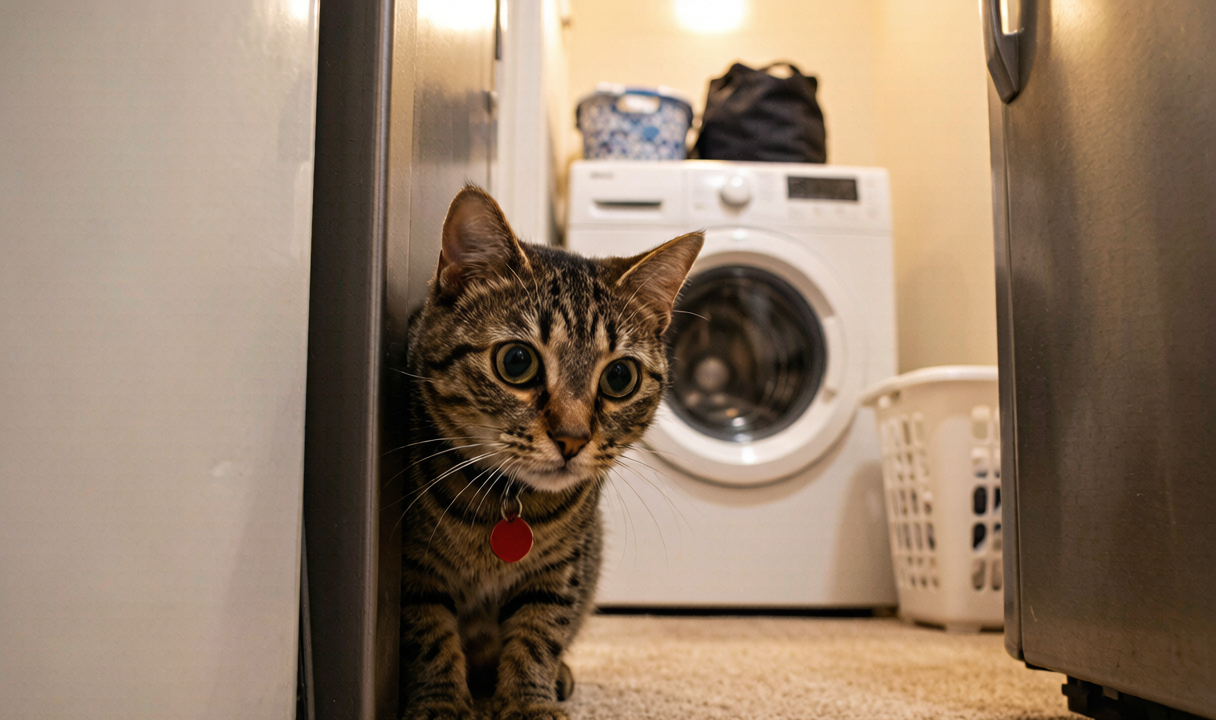 A cat that disappears for an entire afternoon can trigger immediate worry — especially when the household is busy and no one notices the absence until dinner. Finding her wedged behind the washing machine, watching with wide, flat eyes, raises the obvious question: is she sick, or is something wrong?
Hiding is normal feline behavior, which makes it hard to tell the difference between "just a cat being a cat" and a signal that needs action. The guidance below separates the ordinary from the concerning and explains what to watch, drawing on general feline-health guidance from the ASPCA and AVMA [source].
📋 Table of Contents
First: Some Hiding Is Totally Normal
The reassuring part is that cats hide by nature. In the wild, small predators spend much of their time in enclosed spaces — it is how they stay safe from larger predators and conserve energy between hunts. So when a cat disappears under the bed for a few hours, that is not automatically a crisis.
Many cats rotate through a few preferred retreats depending on mood: a dark, isolated spot when they want quiet, a warm soft spot when they want comfort, and a vantage point when they want to be near the household without joining it. Learning a cat's normal rotation is the baseline that makes change visible.
The useful question is not "is my cat hiding?" but "is this hiding different from her normal pattern?" A cat that routinely spends the morning under the bed and reappears for dinner is following a routine. One that stays hidden through dinner and beyond is showing a change worth investigating.
When Hiding Signals Stress
Stress is the most common reason a cat retreats beyond her normal pattern. Triggers include a move, a rearranged room, new people, construction noise, a newly introduced pet, a shift in the household schedule, or a loud event such as fireworks or a party.
A useful response is a "safe room": one quiet space holding the cat's food, water, litter box, and a familiar blanket, with no other animals and minimal noise. Spending low-pressure time in that room — sitting and reading, offering presence without demands — lets many cats re-emerge on their own timeline. Progress is usually steady rather than instant.
The ASPCA's cat-care guidance emphasizes predictable environment and routine as core to reducing feline stress [source].
When Hiding Signals Illness
The part many casual articles gloss over: cats hide when they are unwell. This is instinct. A sick animal is vulnerable, so it conceals itself. The signal is quiet and easy to miss.
Signs that hiding is illness-related rather than stress:
- Stopping food entirely. A stressed cat will often eat if food is placed close. A sick cat frequently will not eat at all.
- A changed posture in the hiding spot. A relaxed cat curls loosely; a painful one crouches tight with the head pressed against a wall — what veterinarians describe as a hunched, guarded posture.
- Skipping grooming. A cat that normally licks her coat for long sessions looks dull and unkempt within a day or two when unwell.
- Changed eyes. Pupils dilated even in dim light, or a half-closed, squinting look, can indicate discomfort.
When these signs appear together, a same-day or next-day veterinary visit is warranted. Conditions such as feline lower urinary tract disease are common and can become serious quickly if untreated. Cats rarely announce pain; they signal it through behavior changes. The AVMA advises contacting a veterinarian when a pet shows unexplained changes in eating, drinking, or habits [source].
Other illness-linked hiding patterns to watch:
- Hiding near water but not drinking — possible kidney or metabolic issues
- Hiding in cool spots (tile, near vents) — possible fever or overheating
- Hiding with quiet vocalizing — possible dental or abdominal pain
- Repeatedly hiding in a new spot — abandoning familiar retreats is a change worth noting
Telling "I Need Space" Apart From "I Need Help"
The most useful distinction for any guardian is whether hiding is normal retreat or a cry for help.
"I need space" hiding looks like this:
- Cat emerges voluntarily for meals, play, or affection
- Body is relaxed when found (loose curl, soft eyes, slow blink)
- Cat returns to the same familiar spots
- Pattern is consistent day to day
"I need help" hiding looks like this:
- Cat does not emerge for food or interaction
- Body is tense (hunched, pressed against surfaces, stiff)
- Cat chooses new hiding locations or abandons old ones
- Behavior escalates — longer and more frequent over days
- Other subtle changes appear: decreased grooming, different vocalizations, changed litter-box habits
The practical red flag is total withdrawal — a cat that will not come out for food, a favored toy, or company, especially when that contrasts with earlier stress episodes where she still emerged for meals. That degree of disengagement points to illness rather than routine avoidance.
A Daily Check-In Routine That Catches Problems Early
A short daily check-in — about five minutes — makes subtle changes visible before they become emergencies:
- Check hiding spots morning and evening. Note whether the cat is present and her posture. Do not drag her out.
- Track food intake. A dry-food bowl that is untouched by evening is a flag worth acting on.
- Note grooming status. A quick look: smooth or dull coat? Any mats?
- Watch the litter box. Frequency, amount, and location. Accidents outside the box always merit a note.
This is ordinary awareness, the same habit you would keep for any family member. The point is to notice change early, not to monitor obsessively.
One More Thing: Don't Drag Them Out
Pulling a cat out of a hiding spot when worried is a common mistake. From her perspective, a hand reaching in and removing her against her will violates the one safe space she has — and it tends to increase the hiding, not reduce it.
A calmer approach is to sit near the spot and talk softly, or place a treat at the edge of her space to invite a small step rather than force a full exit. When she emerges on her own terms, offer quiet affection — a slow blink, a gentle stroke.
Cats need to trust that their hiding spots are theirs. For a veterinary visit, luring with food so she walks into the carrier herself preserves that sense of agency and usually produces a less stressed cat at the clinic.
Shop cat calming diffuser on Amazon & Chewy
Comparing prices before you buy? Check current deals and read reviews from other pet owners.