A Dog Bouncing Off the Walls in Hot Weather? Indoor Enrichment That Tires Them Out
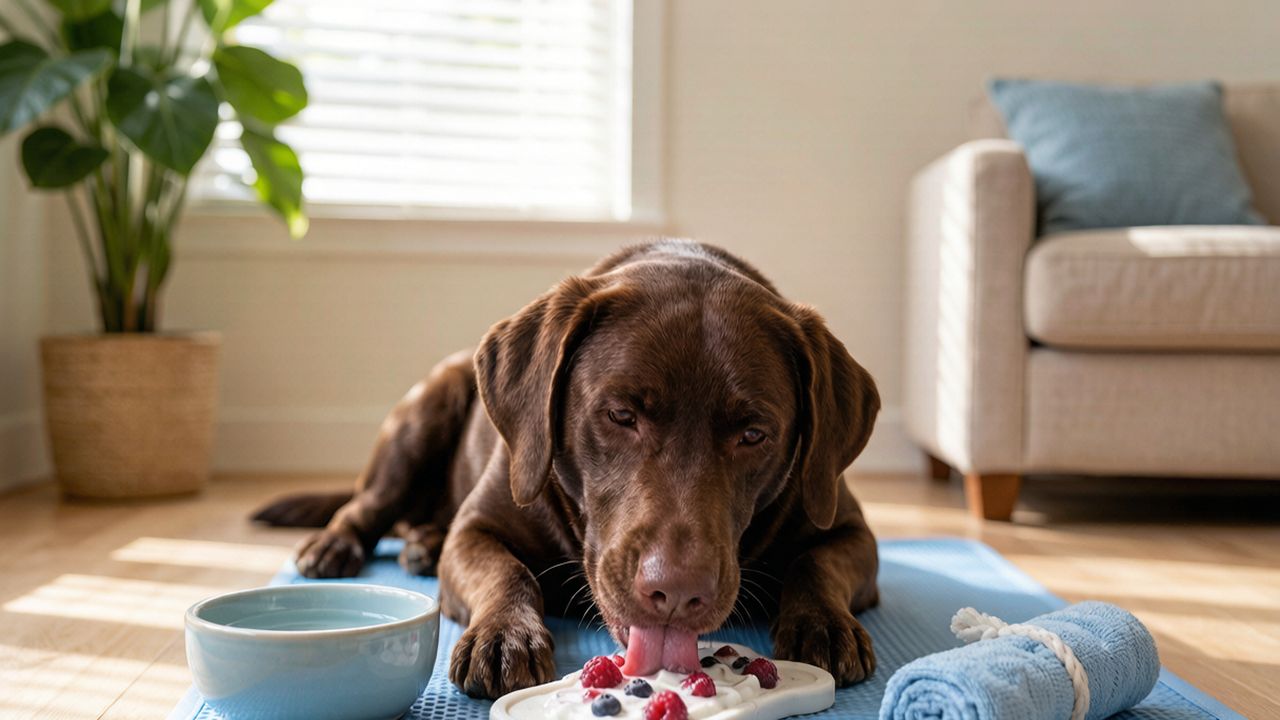
During sustained summer heat, pavement temperatures make walks unsafe for a dog's paws, and many owners face days with no outdoor exercise. A high-energy dog confined indoors with no outlet becomes restless, destructive, and difficult to live with. The solution is not to wait out the heat — it is to meet the dog's needs indoors.
Indoor enrichment works because it targets the brain, not just the body. The activities below require little space and no backyard, and most use items already in the home. [source]
Why Walking Alone Doesn't Tire Most Dogs
The common formula — walk the dog until it is tired — fails for two reasons. First, for high-energy breeds, you cannot physically out-walk them. Second, and more important, a walk mainly tires the body, while what makes a dog settle is mental fatigue.
Mental work — problem solving, sniffing, impulse control — burns meaningful energy. Structured scent games and food puzzles are widely used by trainers precisely because they exhaust a dog without requiring physical exertion. For heat-sensitive breeds, mental enrichment is also the safer default on hot days. [source]
An Indoor Enrichment Rotation
Over a hot week, the goal is a rotation of short activities spread through the day — one in the morning, one at lunch, one in the afternoon, one before bed. No single session needs more than 20 minutes, but together they keep the dog genuinely tired.
1. The Frozen Lick Mat
Spread plain Greek yogurt mixed with a little peanut butter across a lick mat, add a few blueberries, and freeze it. Licking is a self-soothing behavior that releases endorphins, so the dog is simultaneously cooled, engaged, and calmed. Choose a mat with varied texture zones (bumps, ridges, grooves) so the dog has to work different angles; flat mats are finished too quickly.
2. "Find It" — The Scent Game
Put the dog in another room, hide 8–10 small treats around the living space, then release it with a "find it" cue. Start with treats visible, then progress to hiding them under rug edges, behind chair legs, or on low shelves. The sniffing — not the walking — is what tires the dog. Count the treats beforehand so you know when all are found, and keep early hides easy to avoid frustration.
3. The Kibble-in-a-Towel Puzzle
Scatter the dog's kibble across an old bath towel, roll it loosely, and tie a loose knot. The dog spends 15 minutes unrolling and nosing out food it would otherwise inhale from a bowl in seconds. Begin with a loose roll and tighten it over several days to keep the challenge appropriate.
4. Indoor Obstacle Course
Using household items — a broom balanced between chairs as a low step-over, a blanket draped over a table as a tunnel, cushions arranged as weave poles, a hula hoop propped as a doorway — lead the dog through a short course with treats. Keep jumps low and safe. A few runs provide surprising physical and mental engagement.
5. "Which Hand?" Impulse Control Game
Hold a treat in one closed fist, present both, and ask "which one?" When the dog nudges the correct hand, open it and reward. This builds impulse control and decision-making with zero setup. After a few minutes, the dog is visibly thinking hard — and thinking hard is tiring.
6. Teach a New Trick
A heat-wave day is a good time to teach a fun trick — "spin," "play dead," "paw," or "take a bow." Short, positive training sessions are mentally exhausting for the dog and strengthen your communication. The trick itself matters less than the focused work. [source]
A Sample Indoor Day
A structure that works for many owners during heat confinement:
- Early morning — A brief walk only if the pavement is cool enough to hold a hand on comfortably
- After breakfast — Frozen lick mat
- Midday — "Find it" scent game using the dog's lunch kibble
- Afternoon — A short training session (5–10 minutes)
- Evening — Towel puzzle, then a walk once it cools down
Between sessions, a mentally worked dog is far more likely to nap than to pace.
What May Not Work (and Why)
Treat-dispensing balls. Some dogs simply carry the ball to a soft surface and chew the opening until treats fall out, bypassing the puzzle. Others engage properly. Know your dog.
A lone chew. A bully stick occupies a dog for 20 minutes, then the pacing returns. Chews are a useful supplement but do not replace problem-solving for mental fatigue.
Daycare. For dogs that enjoy it, daycare is a legitimate option on brutal heat days, though it costs more and books up quickly. It works best as a backup rather than a daily plan.
Signs It's Heat, Not Boredom
Sometimes what looks like restlessness is a dog physically uncomfortable from heat. Watch for:
- Excessive panting with no recent activity
- Lying flat on tile or hardwood with legs splayed (maximizing contact with a cool surface)
- Refusing play or activities it normally enjoys
- Restlessness — up, move, down for 30 seconds, up again
If you see these, pause the games and cool the dog down: a damp towel on the belly, a fan near the bed, ice cubes in the water bowl, and a cooling mat if available. A dog that is overheating will not benefit from stimulation — it needs cooling first. [source]
The Takeaway
The lasting lesson is that dog exercise is about engagement, not miles. A dog does not need a three-mile walk to be content; it needs something to do — a problem to solve, a scent to track, a skill to learn, food to work for. Meeting those needs keeps a dog calm even on days it barely leaves the apartment.
An indoor rotation is worth keeping as a permanent backup — not only for heat waves, but for rainy days, sick days, and busy mornings. The frozen lick mat alone can salvage a routine on the days when there is simply no time for a walk.
🐾 Enjoyed This Article?
Save it for later, share with a fellow pet parent, or check out more tips on our homepage!
Shop dog puzzle enrichment toys on Amazon & Chewy
Comparing prices before you buy? Check current deals and read reviews from other pet owners.