Cat Whisker Fatigue: Why My Cat Left Half Her Food (and the $12 Fix That Solved It)
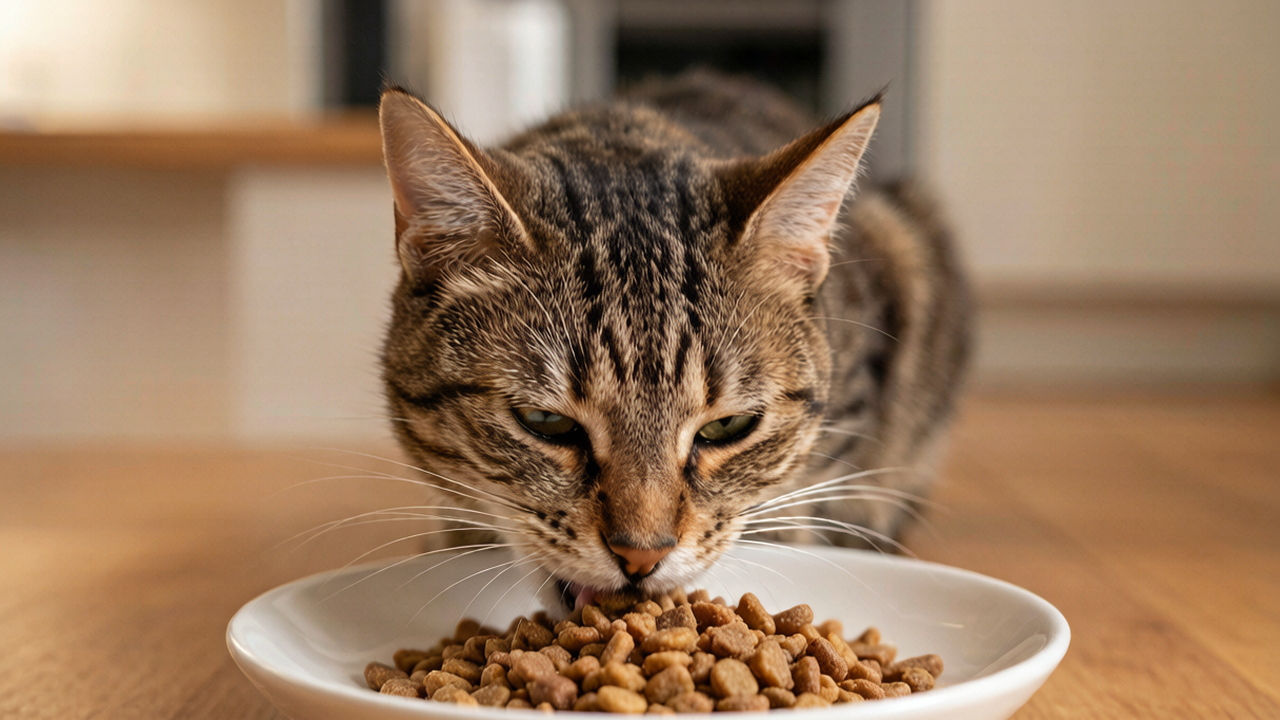
For six months, Maya left a perfect donut in her food bowl. She'd eat the middle clean, abandon the ring of kibble pressed against the sides, then come find me an hour later screaming like I'd been starving her on purpose.
I did what any reasonable person does: I blamed the food. I switched her to a "picky eater" formula, then a fish-based one, then a $60-a-bag grain-free brand. She ate the middle of all of them and left the edges. I moved her bowl to a quieter spot. I warmed her food. Nothing changed.
Then a friend who fosters cats mentioned whisker fatigue, and I felt like an idiot for not thinking of it sooner.
The fix cost me $12 — a wide, flat ceramic plate from the dollar store. Within three days, Maya was cleaning every meal. Here's what was actually going on.
What Whiskers Are Actually For
A cat's whiskers aren't just decorative. They're thick, specialized hairs packed with nerve endings at the base, wired straight into the cat's nervous system. They're sensitive enough to detect tiny changes in airflow — which is how a cat navigates in the dark, judges whether a gap is wide enough to squeeze through, and senses movement it can't see.
Whiskers are, more or less, as wide as the cat's body. They're a built-in measuring tool. But they're also a touch sensor, and that's where the trouble starts.
The idea behind "whisker fatigue" is this: when a cat has to push its whole face into a deep, narrow bowl to reach the food at the bottom, the whiskers constantly bend and press against the sides. For a cat whose whiskers fire with every tiny touch, that's a lot of sensory noise. Some behavior experts argue the stress of that constant stimulation is enough to make a cat reluctant to eat — especially the food pushed up against the bowl walls.
Not everyone in the veterinary world agrees on the "fatigue" framing. Some say it's more of a comfort preference than a true sensory overload. But here's the thing that matters for you and me: the fix is exactly the same either way, it's cheap, and it worked for my cat.
The Signs That Look Like "Picky" but Aren't
Looking back, Maya was practically waving a flag. Here's what whisker-related eating problems actually look like:
- Eating only the center of the bowl and leaving food around the edges
- Scooping food out of the bowl with a paw and eating it off the floor
- Hesitating or flinching before putting her face in the bowl
- Dropping food out of her mouth repeatedly
- Eating fine from a flat surface but not from a deep dish
- Pawing at the water bowl before drinking
None of these read as "I don't like this food." They read as "I don't like the bowl." But because cats can't exactly tell us that, most of us — me included — waste months and a small fortune on food swaps first.
The Fix (and What Actually Matters)
The whole solution comes down to one thing: let your cat eat without her whiskers touching anything. That means:
Go wide and shallow. A flat plate, a wide saucer, or a shallow whisker-friendly bowl. The sides should be low enough that the whiskers never press against them. A regular cereal bowl is way too deep for a cat — imagine eating soup with your face pressed against the rim and you'll get the idea.
Skip the plastic. Plastic bowls can harbor bacteria in tiny scratches and are linked to chin acne in some cats. Ceramic, stainless steel, or glass are easier to clean and gentler on the chin. If you do use plastic, wash it hard and replace it when it gets scratched.
Do the same for water. A cat's water bowl should be wide too. Maya used to dip her paw in and lick it off, which I now realize was the same problem — she didn't want to put her whole face into a narrow bowl.
Don't overthink the "raised" bowl. You'll see elevated feeders marketed for cats, and some people swear by them. The height is not the thing that fixes whisker issues — the width and shallowness are. Get the shape right first.
One more thing worth saying, because I don't want to send anyone down the wrong path: if the change is sudden, or it comes with weight loss, vomiting, drooling, or a cat that's hiding and lethargic, that's not a bowl problem. That's a "call the vet" problem, and no plate is going to fix it. This is Vet-Informed advice, not a substitute for a professional when something is actually wrong. Whisker-related pickiness is a gradual, otherwise-healthy-cat thing. Sudden changes get a vet visit.
The $12 Test (Do This Before Buying More Food)
If you're on the fence about whether your cat's problem is the bowl or something else, run this tiny experiment before you spend another dollar on specialty food:
- Serve one meal on a flat plate. A dinner plate, a saucer, even a paper plate works. Spread the food out so there's nothing to press against.
- Keep everything else the same. Same food, same amount, same spot, same time. You want the bowl to be the only variable.
- Watch for a full week. Some cats adjust the first day; others need a few days to trust the new setup. Give it time.
- Compare the leftovers. If the "donut" disappears on the plate but stays in the bowl, you have your answer.
The whole thing costs you a plate you already own. If it doesn't help, no harm done — you've at least ruled out the cheapest possible fix before escalating to food changes or a vet visit.
One thing I noticed while doing this: Maya also drinks more now. A cat that avoids a narrow bowl often drinks less too, and cats are already chronically under-hydrated by nature. The more reasons I give her to actually put her face in the water, the better — for her kidneys, her digestion, everything. A wide, shallow water dish sitting away from the food bowl solved two problems at once.
What Changed for Maya
The switch was almost anticlimactic. I put her food on a flat ceramic plate, and she ate it. All of it. The "donut" stopped appearing within a few days, and she stopped the 2 AM food complaints too, which was a nice bonus for my sleep.
The thing that still gets me is how long I let it go. I'd been interpreting a physical discomfort as a personality quirk — "she's just picky" — when the real problem was a bowl that cost less than my lunch. For a while I genuinely thought I had the world's most high-maintenance cat. Turns out she just didn't want to eat with her face in a cup. Fair enough.
If you've got a cat that leaves the edges, eats with a paw, or hesitates at the bowl, try the $12 experiment before you try another bag of food. Worst case, you own a new plate. Best case, you've solved a problem you didn't know had a name.
Has your cat ever "fixed" a mystery eating problem by accident? Tell me about it in the comments — I'm always collecting the weird little things that turn out to matter.
---
If you found this helpful, you might also like:
- Cat toys that actually hold a cat's attention
- 9 reasons a cat stops using the litter box
- Why your cat follows you everywhere
- Cat water fountains worth the money
This article is for informational purposes only and is not a substitute for professional veterinary advice, diagnosis, or treatment. Always consult a licensed veterinarian if your pet shows signs of illness, injury, or distress. If you believe your pet is experiencing a medical emergency, contact your veterinarian or the nearest emergency animal hospital immediately.
🐾 Enjoyed This Article?
Save it for later, share with a fellow pet parent, or check out more tips on our homepage!
📩 Never Miss a Tip
Get our best pet care hacks delivered straight to your inbox. No spam, unsubscribe anytime.
Shop pet slow feeder bowl on Amazon & Chewy
Comparing prices before you buy? Check current deals and read reviews from other pet owners.