Why Does My Cat Follow Me Everywhere? 9 Reasons — and When It Means Something's Wrong
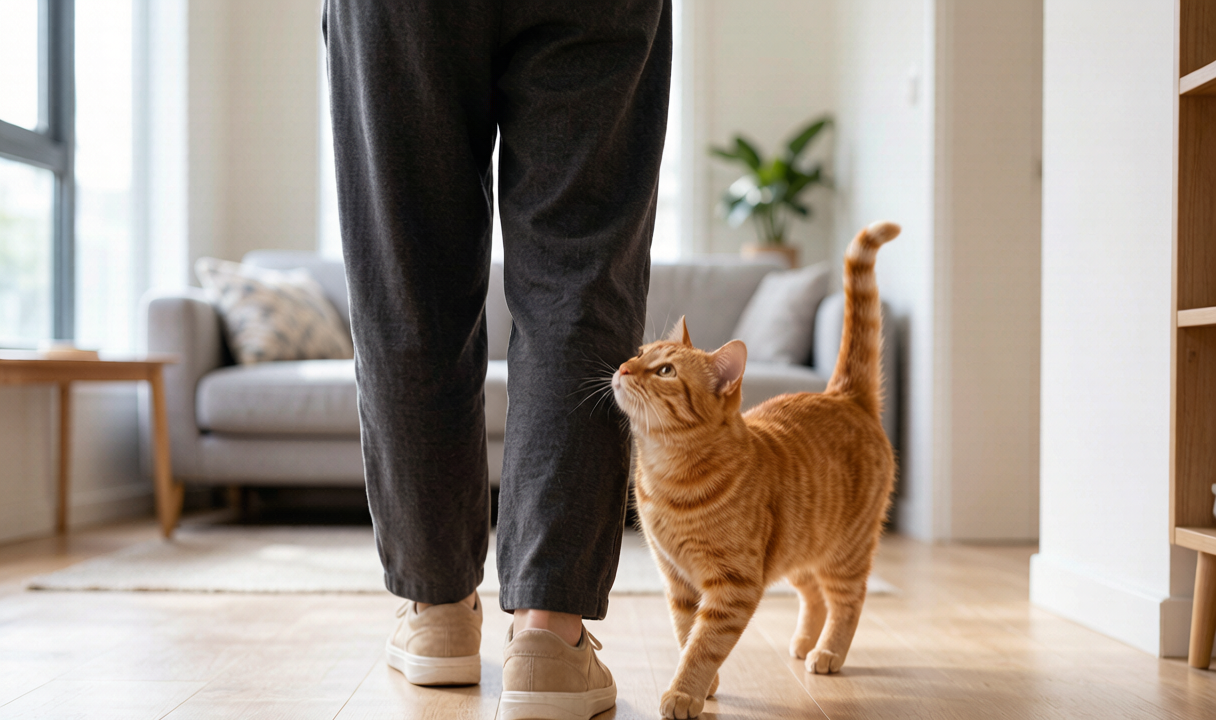
You've probably nearly tripped over your cat more than once. Bathroom? She's there. Kitchen? Sitting on your foot. Office? Perched on your laptop bag like it's her personal throne. If you've ever wondered why your cat seems to have installed a GPS tracker on you, you're not alone — and the answer isn't always "she just loves you."
Let me walk you through the nine real reasons your cat might be shadowing you 24/7, plus the red flags that tell you when clinginess has crossed from cute to concerning.
📋 Table of Contents
- 1. She Actually Just Loves You (Yes, Really)
- 2. Curiosity — You're the Most Interesting Thing in the House
- 3. She Wants Food — and She Knows You're the Food Source
- 4. She's Bored and Understimulated
- 5. Separation Anxiety — The One That Worries Me
- 6. She's a "Velcro Cat" — It's Just Her Personality
- 7. Something Changed — and She's Seeking Reassurance
- 8. She's Not Feeling Well
- 9. She's Protecting You (or at Least Thinks She Is)
- When Should You Be Concerned?
- What You Can Do About It
1. She Actually Just Loves You (Yes, Really)
Cats have a reputation for being aloof by nature. But the cat who follows you around proves that reputation wrong every single day. Cats that follow their owners are often showing genuine attachment — not the desperate, anxious kind, but the comfortable "I enjoy your presence" kind.
Research published in *Current Biology* found that cats form secure attachments to their owners similar to how dogs and even human babies bond with caregivers. So when your cat trails you around the house, it might genuinely be because she feels safe and happy with you nearby.
The tell: She follows you but also settles down nearby rather than constantly demanding attention. She's content just being in your orbit.
2. Curiosity — You're the Most Interesting Thing in the House
Cats are naturally curious. Every time you open a cabinet, your cat's head pops in before you even reach for anything. When you move from room to room, you're creating action — and cats are drawn to action like moths to a lamp.
Your cat might be following you simply because you're doing things. Opening doors, making food, typing on the computer — these are all potential sources of entertainment, treats, or new smells. Your cat might spend twenty minutes watching you fold laundry. Not because she loves laundry, but because you're doing something and she wants to see what happens next.
The tell: She follows you casually, explores whatever you're interacting with, and eventually wanders off to do her own thing.
3. She Wants Food — and She Knows You're the Food Source
This one's universal. Every cat owner knows the "follow-you-to-the-kitchen" maneuver. Your cat has an internal clock that's more accurate than your smartphone. At 5:55 PM, she's already sitting by her bowl, and if you walk anywhere near the kitchen, she assumes dinner is happening.
Cats learn routines fast. If you've ever fed her after she followed you to a specific room, she's filed that away as a winning strategy. It's not manipulation — it's efficient problem-solving.
The tell: The following intensifies around meal times, and she leads you toward the kitchen or food storage area.
4. She's Bored and Understimulated
Many owners notice their cat follows them way more after they switch to working from home full-time. At first it seems like she's just happy you're around more. But then the reality sets in: she has less stimulation during the day. No birds at the window (you've closed the curtains for video calls), no interactive play sessions, just you sitting at a desk for hours.
Understimulated cats will latch onto whatever source of engagement exists — and that's you. If your cat follows you relentlessly but also seems restless, paces, or gets destructive when you're not around, boredom might be the driver.
The fix: Try two 10-minute play sessions daily with a wand toy, and add a window perch so she can watch birds. The following often drops by about 60% — she still trails you, but it feels like choice, not desperation.
5. Separation Anxiety — The One That Worries Me
This is where following crosses from adorable to alarming. Owners who've dealt with this describe it as rough. A cat with separation anxiety will follow you everywhere, cry when you close any door, and literally claw at the bathroom door when you're inside for more than two minutes.
Signs your cat's following is anxiety-driven:
- She cries or meows excessively when you leave a room
- She destroys things (scratching doors, knocking items over) when separated from you
- She over-grooms herself — bald patches, excessive licking
- She refuses to eat when you're not home
- She follows you in a way that feels frantic, not casual
If you're seeing several of these, talk to your vet. Separation anxiety in cats is real, and it's treatable — but it needs a proper approach, not just "more treats."
6. She's a "Velcro Cat" — It's Just Her Personality
Some cats are just wired this way. Siamese, Burmese, Ragdolls, and other social breeds tend to be naturally clingy. Some Ragdolls literally sit on their owner's feet wherever they go — not anxious, not bored, just... that's who they are.
Velcro cats are different from anxious cats. A velcro cat follows you everywhere but relaxes when you sit down. An anxious cat follows you everywhere and stays stressed no matter what.
The tell: She follows you persistently but seems calm, not frantic. She can settle down once you settle down. No other anxiety signs.
7. Something Changed — and She's Seeking Reassurance
Cats hate change. When an owner moves apartments, a cat often glues herself to them for three solid days. New furniture, new roommate, a different feeding schedule — all of these can make a cat suddenly clingier than usual.
Even subtle changes count. A new pet, construction noise outside, a different brand of litter, or even you working different hours can trigger this. Even moving a cat's favorite scratching post two feet to the left can make her act like you've betrayed her for an afternoon.
The tell: The following started suddenly after a change in routine, environment, or household. It usually fades within a few days to weeks as the cat adjusts.
8. She's Not Feeling Well
This one catches many owners off guard. When your cat develops a urinary tract infection, she starts following you way more than normal. It seems sweet, but she's actually uncomfortable and seeking comfort.
Cats often become clingy when they're sick or in pain because they instinctively seek the safety of their closest companion. If your cat's clinginess is new, persistent, and accompanied by any of these, see your vet:
- Changes in eating or drinking habits
- Hiding more than usual between following episodes
- Lethargy or less playful behavior
- Vocalizing differently (pitch, frequency)
- Changes in litter box usage
Catching a UTI early often happens because owners notice the shift in behavior. That following can save a cat from a much worse infection.
9. She's Protecting You (or at Least Thinks She Is)
This sounds ridiculous until you've seen it happen. Your cat may position herself between you and the front door when strangers knock. She may alert you to a mouse in the kitchen by standing guard and meowing until you come to investigate. Some cats genuinely patrol their territory and consider you part of it.
While cats aren't "guard dogs," they do have territorial instincts. If your cat follows you around the house and seems especially attentive near doors, windows, or when new people arrive, she might be keeping watch. It's not as dramatic as a dog barking at intruders, but the instinct is real.
The tell: She positions herself strategically (near entrances, between you and potential "threats") and seems alert rather than relaxed.
When Should You Be Concerned?
Here's a simple rule: if the following behavior is new, intense, and paired with other changes (eating, grooming, vocalizing, litter box), it's worth a vet visit. If it's always been her personality and she's otherwise healthy and happy, it's just who she is.
The biggest red flag is sudden-onset clinginess in a cat that was previously independent. That almost always means something — stress, illness, or a change that's bothering her more than you realize.
What You Can Do About It
If your cat's following is causing issues (you can't work, she's distressed when separated, you're tripping over her constantly):
- **For boredom:** Add daily interactive play, window perches, puzzle feeders
- **For anxiety:** Gradually build independence — start with short separations behind a closed door, reward calm behavior, don't punish clinginess
- **For health concerns:** See your vet — don't guess
- **For velcro cats:** Accept it, set up cozy spots near your work area so she can be close without being *on* you
Putting a soft cat bed right next to your desk helps. Your cat follows you to the office, settles into her spot, and snoozes while you work. She's still following you — but now you both have what you need.
---
If the following is new and shows up with other changes, book a vet visit. If it's simply her personality, set up cozy spots near where you spend your time and enjoy the company.
Shop cat interactive toys on Amazon & Chewy
Comparing prices before you buy? Check current deals and read reviews from other pet owners.