Your Indoor Cat Keeps Trying to Escape Every Time You Open the Front Door — Here's What Actually Works
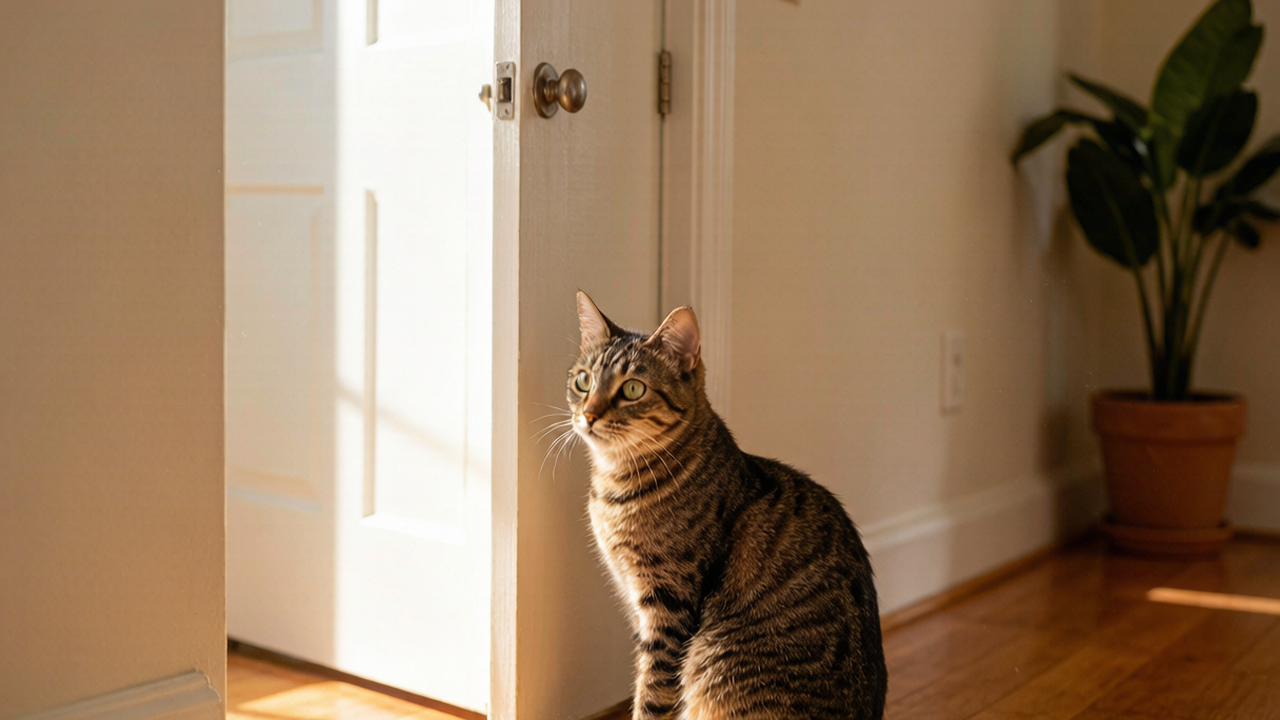
The first time your cat bolts past your ankles through the front door, it's almost funny. She makes it three feet, freezes, and sprints back inside. Cute — until it isn't.
The fifteenth time? She makes it to the neighbor's hedge. You spend 45 minutes coaxing her out with tuna while a toddler screams from the high chair.
By the twentieth time — when she's learned the garage door's two-second delay and started timing her dashes — you're ready to install an airlock in the hallway.
Why Your Cat Is Really Dashing (It Isn't Always What You'd Think)
It's easy to assume your cat is unhappy indoors. The pattern usually tells a different story. She dashes at dawn and dusk — when birds are most active. When the neighbor's cat walks past. When delivery drivers bring new smells.
A vet will often call the first one "predatory frustration" and the second "territorial insecurity." Two problems that look identical but need completely different fixes.
What Makes It Worse
A squirt bottle only teaches her to sprint faster when your hands are full. Yelling and chasing turns the whole thing into a game — plenty of cats will glance back mid-dash as if checking whether you're joining in.
What Actually Works
A window perch overlooking the bird feeder. It lets her watch prey without the glass feeling like an obstacle. Dawn-and-dusk door-camping usually drops sharply within a week.
Scheduled hunting around 6:45 PM. Wand toy, full sprint, ten minutes — then a few treats as the post-hunt meal. A cat who has just completed a full predatory sequence has no interest in door-dashing.
Make the door boring. Put puzzle feeders in rooms far from the entrance during high-risk hours, and add a Feliway diffuser near the front hallway. For territorial insecurity, that "this area is safe" pheromone signal does real work.
Give it three weeks of consistency. The whole setup costs about $45, and most cats stop door-dashing within a couple of months once the routine sticks.
🐾 Enjoyed This Article?
Save it for later, share with a fellow pet parent, or check out more tips on our homepage!
The Leash-Training Twist Nobody Mentions
Everyone says "just don't let them out." The tactic that actually helps is leashing your cat indoors during high-risk moments — the doorbell, groceries coming in — so the door can open and she physically can't bolt. No yelling, no scramble. After about ten calm repetitions, most cats stop treating the doorway like a starting line. Use a lightweight cat harness, not a collar, or she'll slip it.
Why the Window Seat Changes Everything
Her dash isn't "I hate you," it's "I want the world." Move a cat tree to the front window so she can watch the street from safety. The urge to bolt drops by maybe 80% once the outside isn't a forbidden mystery. If the bed-peeing started around the same time, this guide covers the stress angle, and the shedding routine is a good place to park your cat when you need five minutes.
Giving Your Cat a Reason to Stay In
Door-dashing often peaks right after a move, when everything feels unfamiliar. The fix isn't punishment — it's giving your cat a reason to stay in: a window perch with bird TV, more vertical space, and a consistent play session before you leave. A cat lobbying to escape is usually a cat under-stimulated at home.
Build a richer indoor world with ideas from why cats shadow you and our new-cat setup guide. Check screens and latches too — some escapes are just a loose window.
Make the Indoors More Interesting Than the Door
For a cat, a rotating toy stash and a cat-TV video on an old tablet cut the door dashes noticeably. Ten minutes of wand-play before you leave burns the energy she'd otherwise spend plotting an escape. Boredom, not defiance, is the driver — once the home gives her something better to do, the door loses its pull.
Build the setup from our new-cat guide, and check why she shadows you for the motivation behind the behavior. A cat who feels safe and entertained stays put.
Shop cat window perch calming on Amazon & Chewy
Comparing prices before you buy? Check current deals and read reviews from other pet owners.
Frequently Asked Questions
Why does my indoor cat keep darting for the door?
It is usually curiosity, a strong hunting instinct, boredom, or a stressor they can sense outside (other cats, loud noises, strange smells). A cat that bolts out is not "bad", they are just wired to investigate.
Is it really dangerous if my cat escapes?
Yes. Outdoor risks include traffic, other animals, parasites, toxins, and simply getting lost, because indoor cats have no street sense. Even a few minutes outside can turn serious.
How do I stop the door-dashing?
Make the indoors more interesting than the outdoors, teach a "back" cue at the door, and always enter/exit through one cat-free room when possible. A microchip ID is essential backup.
Keep-They-Stay Checklist
- Add vertical space: cat trees, window perches, wall shelves.
- Rotate toys weekly so the environment stays novel.
- Use a door-mounted baby gate during high-traffic times.
- Microchip and use a breakaway collar with an ID tag.
Common Mistakes to Avoid
- Do not punish door-dashing - it raises stress and can make the dash a game for attention.
- Do not leave windows or screens unsecured - a determined cat finds any gap.
- Do not skip ID - a microchip is the difference between a lost cat and a returned one.
Your First Steps This Week
- Get the microchip done if it is not already - it is the single most useful safety net for a door-dasher.
- Add one new vertical perch by a window so the outdoors is something to watch, not something to chase.
- Practice a "back" cue at the door with treats, so the cat learns the threshold is not a launch point.
- Secure windows and screens before a warm day tempts an open pane.