How to Get Mats Out of Cat Fur: Safe Removal and Prevention
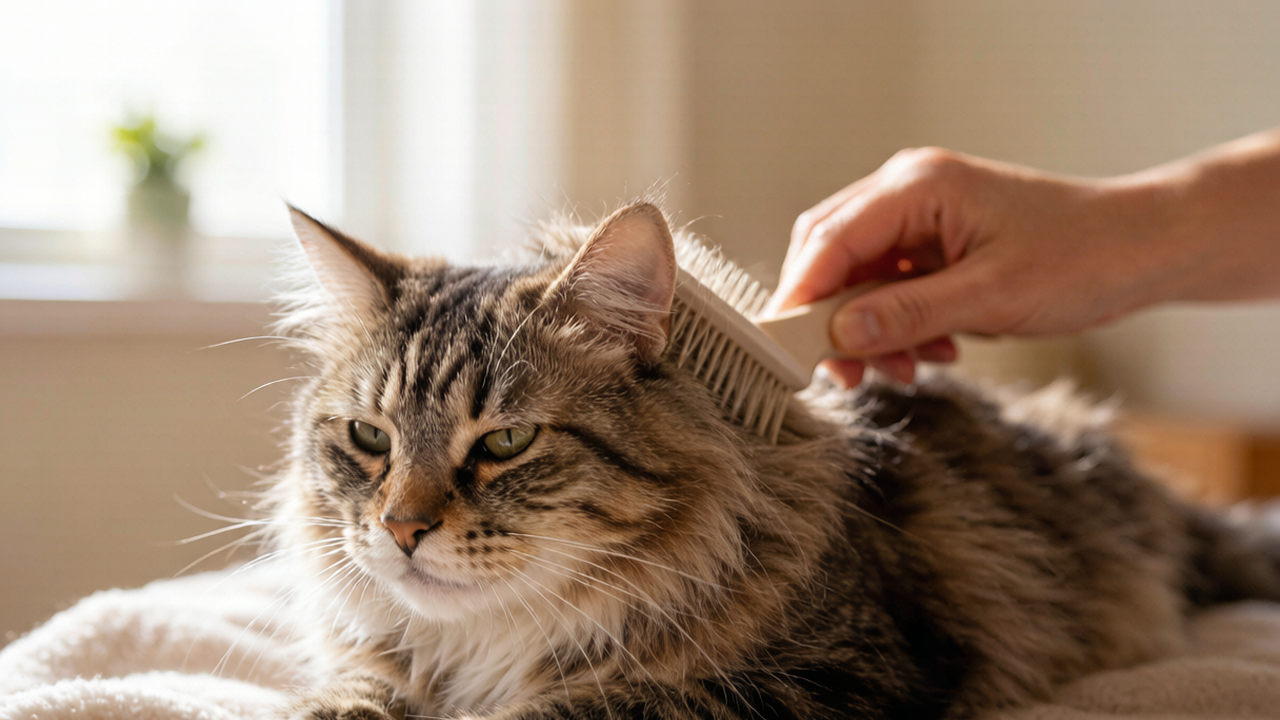
You reach down to give your cat a scratch and your fingers land on a hard, felted clump behind the ear that definitely wasn't there last week. You try to pull it apart with your fingers and it won't budge — and now the cat is giving you the look. Mats are one of those things that seem to appear overnight and only get worse the longer you ignore them.
What a Mat Actually Is
A mat is just a knot of shed fur that got tangled and then tightened up into a solid, felt-like pad. Cats are constantly shedding, and the loose undercoat is supposed to fall away or get groomed out by their own tongue. When it doesn't — because the coat is long, or the cat has stopped grooming themselves as well as they used to — that loose hair twists around the live hair and locks into a knot. Add a little skin oil and static, and it tightens into something solid.
Some cats are simply more prone to it. Long-haired cats top the list, for obvious reasons. But age and health matter just as much as coat length: an older cat with arthritis, or one carrying extra weight, often can't twist around to groom the hard-to-reach spots anymore, and those are exactly where mats form. Even a young, healthy cat can blow through a heavy shedding season and end up with tangles if nobody's helping them out.
Why Mats Are a Real Problem
A mat isn't just ugly — it's uncomfortable, and it can turn into an actual health issue if it's left to sit.
They pull on the skin. A tight mat tugs constantly at the base of the hair, which is genuinely painful, like having your hair held in a too-tight ponytail all day, every day. Cats hide discomfort well, but a matted cat is often a quietly miserable cat.
They hide problems underneath. You can't see the skin through a mat, and the skin under a mat can become irritated, inflamed, or infected without you ever noticing. It's not unusual to find raw, sore skin hiding under what looked like a harmless lump of fur.
They trap moisture and debris. Mats around the rear end can collect urine and feces, which is both painful and a fast track to a skin infection. This is the one area where you shouldn't wait to act.
They restrict movement. A big mat in the armpit or groin can actually limit how comfortably a cat stretches, jumps, or grooms, which starts a feedback loop: the cat grooms less, more mats form.
Where to Look First
Mats are usually easier to feel than to see, especially on a fluffy cat. Run your fingers against the direction of the fur and feel for lumps. The classic hiding spots:
- Behind the ears and under the chin
- The armpits and inside the thighs
- The belly, especially the lower belly
- Around the tail base and the rear
- Under the collar
If your cat flinches when you touch a spot, take it seriously — that's usually pain, not attitude.
The Right Tools (and the Ones to Skip)
A basic grooming kit handles most small jobs:
- A wide-tooth comb — your workhorse for teasing out small knots
- A slicker brush — good for smoothing loose hair and preventing tangles
- A dematting comb or mat splitter — a comb with short, blunted blades that slice through a mat so you can brush out the pieces
- Pet clippers — for mats that are too tight to comb, this is the safe way to remove them
Do not use scissors. This is the one rule I'd carve in stone. When you cut a mat with scissors, the skin can get pulled up into the knot without you realizing it, and you slice right through it. Cat skin is thin and tears easily, and what started as a grooming session ends as a vet visit for stitches. If a mat can't be combed out, reach for the clippers or a professional — not the scissors.
How to Remove a Mat Safely
The whole philosophy is slow, small, and stop before the cat gets stressed. You're not trying to win; you're trying to make progress without making grooming something your cat dreads.
1. Pick your moment. Choose a time when your cat is already relaxed — after a meal or a nap is ideal — and a calm, familiar spot with good light so you can see exactly what you're doing.
2. Start with your fingers. Gently work the mat from the outside edges, pulling it apart sideways into smaller, looser pieces. Don't yank upward; that pulls the skin. Just tease the edges apart.
3. Hold the fur at the base. Put a couple of fingers between the mat and the skin, holding the fur near the root so the skin doesn't get pulled when you comb. Then work the wide-tooth comb through the loosened mat starting at the outer edge and moving inward, short strokes at a time.
4. Add a little slip. A cat-safe detangling spray, or even a small dab of something safe and neutral, can help stubborn knots slide apart. Whatever you use, make sure it's meant for cats — human products and essential oils are off the table.
5. Clippers for the tight ones. If a mat is too solid to comb, use pet clippers held parallel to the skin to shave it out, working slowly in the direction the fur grows. Clippers heat up as they run, so check the blade against your own hand frequently and take breaks if it's getting warm.
6. Keep sessions short. A few minutes of progress, a treat, and a break is worth far more than one long struggle. The moment your cat's tail starts flicking, their ears flatten, or they start to squirm, stop. Ending on a good note means they'll tolerate next time.
When to Hand It to a Professional
Some mats are beyond a home job, and knowing when to stop is part of doing it right. Get help from a groomer or your vet if:
- The mat is tight against the skin and you can't get your fingers between fur and skin
- The skin underneath looks red, sore, or swollen
- The mat is around the rear, genitals, or face
- There are many mats, or large felted areas instead of one or two knots
- Your cat is distressed, aggressive, or clearly in pain
For severe matting, or a cat who won't tolerate being handled, a vet may recommend sedation to remove the mats safely and check the skin underneath. It sounds like a big step, but it's far kinder than wrestling a frightened cat through a painful de-matting — and it's the right call when the alternative is leaving sores and infection to fester under the fur.
Keeping Mats From Coming Back
Prevention is dramatically easier than removal, and it mostly comes down to a few minutes of consistency.
Brush to the coat's needs. Long-haired cats benefit from daily brushing; short-haired cats can usually get by with a couple of sessions a week. Focus on the danger zones — behind the ears, armpits, belly, and rear. Work all the way down to the skin, not just over the topcoat.
Support the coat from the inside. A balanced diet with healthy fats helps keep fur smooth and less prone to tangling, and proper hydration keeps skin and coat from drying out. If your cat isn't a big drinker, wet food or a fountain can help.
Watch for changes in grooming. A cat who suddenly stops grooming themselves, or who develops mats in spots they used to reach easily, may be dealing with arthritis, dental pain, or weight gain rather than just being lazy. That's worth a vet conversation.
Keep an eye on the rear. For long-haired cats especially, a sanitary trim around the back end prevents the nastiest mats before they start.
This guide is written by pet owners for pet owners, and nothing here replaces professional care. It reflects general pet-care guidance, not medical advice. When in doubt — especially with a mat near the skin or one that's hiding sore spots — let a groomer or vet take a look.
Has your cat ever had a mat you had to battle with, and what finally got it out? Tell me what worked (and what you'd never try again) in the comments.
---
If you found this helpful, you might also like:
- Cat shedding: the grooming routine that helps
- How to bathe a cat without getting shredded
- Signs your cat is stressed (and how to help)
- How to trim your cat's nails without getting scratched
This article is for informational purposes only and is not a substitute for professional veterinary advice, diagnosis, or treatment. Always consult a licensed veterinarian if your pet shows signs of illness, injury, or distress. If you believe your pet is experiencing a medical emergency, contact your veterinarian or the nearest emergency animal hospital immediately.
🐾 Enjoyed This Article?
Save it for later, share with a fellow pet parent, or check out more tips on our homepage!
📩 Never Miss a Tip
Get our best pet care hacks delivered straight to your inbox. No spam, unsubscribe anytime.
Shop cat supplies on Amazon & Chewy
Comparing prices before you buy? Check current deals and read reviews from other pet owners.