Cat Summer Shedding: A Grooming Routine That Actually Works
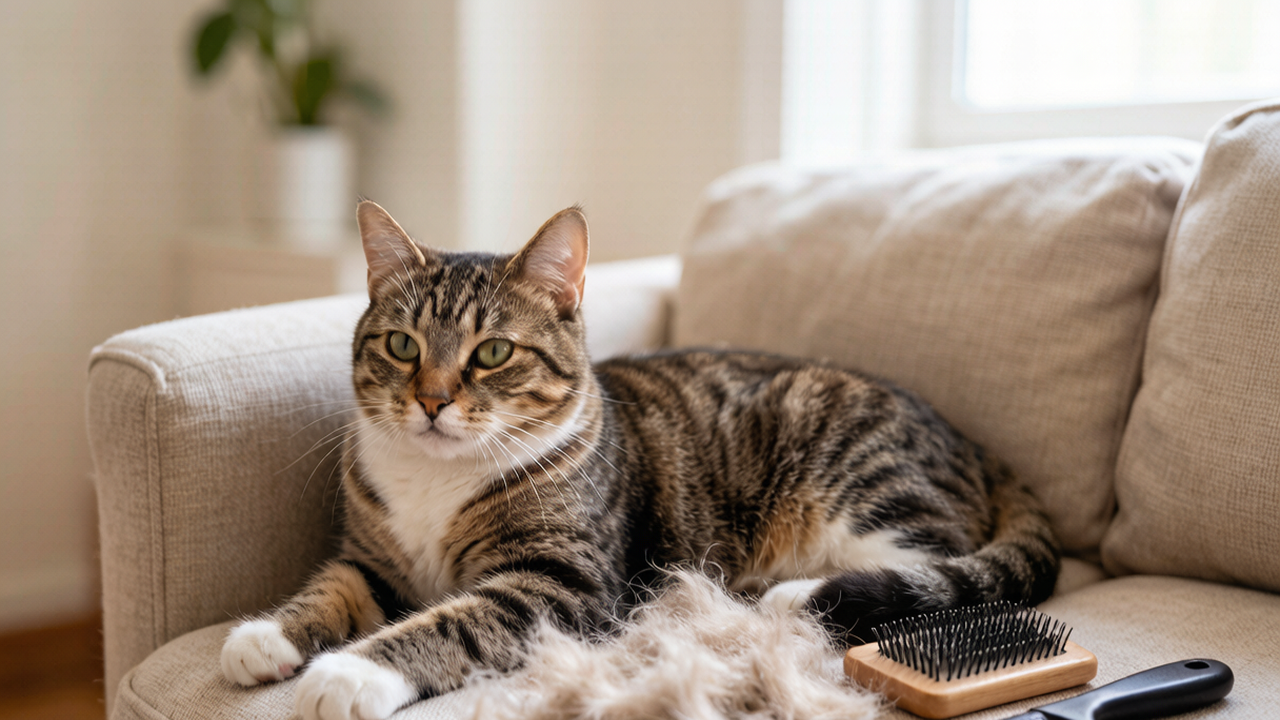
Cat hair on clothes is the universal sign of shedding season. A single couch session can leave a sweater looking like it rolled across a Persian rug. That's usually the moment owners realize "I'll brush them when I get around to it" isn't cutting it.
A heavy-shedding cat can produce enough loose fur in two weeks to look like a second cat. Lint rollers help — jumbo, Costco-size, three sheets a day — but they're a Band-Aid. The real fix is at the source: regular brushing that catches the undercoat before it lands on the sofa.
Why every cat turns into a fur factory in June
It's photoperiod shedding — triggered by daylight length, not temperature. Even indoor cats do it. The undercoat drops as days get longer. It's hormonal, not something wrong.
What worked vs. what didn't
Slicker brush: Many cats hate it. Cheap wire bristles can scratch the skin, so skip those. Rubber grooming mitt: Cats often like this — it feels like petting. But it only grabs surface hair and misses the undercoat where the real problem is. Undercoat rake: Game changer. First use can pull out enough fur for a small hamster. Limit to 2x/week — overdoing it irritates the skin. Fine-toothed metal comb: The surprise winner. About $6, used daily for 5-6 minutes. Gentle, doesn't pull, and most cats tolerate it longest.
The 5-minute daily routine
Morning: rubber mitt for 2 minutes while your cat eats. Evening: fine-toothed comb for 5-6 minutes on the couch. 2x/week: swap the comb for an undercoat rake. Total: under 10 minutes a day, and noticeably less fur on your clothes.
Things that were a waste
Deshedding shampoo — expensive, most cats hate the bath, and the effect is minimal. Shed-control supplements — generally no measurable effect. What does help: salmon oil every other day. Omega-3s mean healthier skin and less brittle fur. Also switch to higher-protein wet food — dehydrated cats shed more.
And do NOT shave your cat. Their coat protects from sunburn, bugs, scratches. Shaving removes that protection. The brush is the answer, not the clippers.
🐾 Enjoyed This Article?
Save it for later, share with a fellow pet parent, or check out more tips on our homepage!
The Brush That Finally Worked
Three "deshedding" gadgets later, the boring combo is what actually moves the fur: a rubber curry brush for the daily 5-minute loosen, then a fine slicker twice a week for the undercoat. A fancy motorized brush can stress a cat out — some hide for an hour afterward, which is counterproductive. The rubber one they treat like a massage. Technique beats gadget every time.
The Diet Link Nobody Mentions
Adding an omega-3 to the food (an expert-backed dose, not a human capsule) calms the "fur factory" noticeably within a month. Coat quality is a window into diet — dull, excess shedding is often the first visible sign something's off internally. Same principle for dogs: don't shave the double coat, brush it; and if stress is driving the over-grooming, this guide covers the calm-down side.
Your Cat's Summer Coat Routine (Without the Fur Avalanche)
A cat sheds in waves when the AC kicks on, and a daily five-minute brush keeps the tumbleweeds off the sofa. Use a soft slicker, go with the grain, and follow with a damp cloth on the spots your cat tolerates. Consistency matters more than any fancy tool.
For the rest of the home, our scratching post guide and litter comparison round out a low-fur routine. More water and a little omega-rich food also showed up as a shinier coat.
Diet and Water for a Shinier Coat
A little extra water in the food during shedding season, plus an omega-rich topper approved by a vet, shows up as less loose fur and fewer hairballs. Hydration does more than any supplement off the shelf, and it's cheaper. Adding water bowls — going from one to three — gets a cat drinking more without any effort on their part.
Round it out with the litter guide for the box area, since shedding and litter tracking tend to spike together in summer.
Shop cat deshedding brush on Amazon & Chewy
Comparing prices before you buy? Check current deals and read reviews from other pet owners.
Frequently Asked Questions
Is heavy summer shedding normal for cats?
Yes. Most cats blow their winter undercoat in late spring and summer. A sudden increase in loose fur is seasonal, not a health problem, as long as the skin underneath looks normal.
How often should I brush in summer?
Long-haired cats benefit from daily brushing during the shed; short-haired cats usually do well with two or three sessions a week. Regular brushing removes loose undercoat before it lands on your sofa.
Will shaving my cat keep them cooler?
For most cats, no. The coat regulates temperature and protects skin from sunburn. Brushing out the dead undercoat does far more for comfort than shaving.
Summer Grooming Routine
- Brush daily during peak shed; less often once it settles.
- Keep water bowls full and offer cool resting spots.
- Use a lint roller or rubber brush for loose topcoat.
- Watch for bald patches or red skin, signs to call the vet.
Common Mistakes to Avoid
- Do not shave a cat to "stop shedding" - it removes the coat that regulates temperature and protects skin.
- Do not skip brushing during the peak shed; loose undercoat turns into hairballs.
- Do not ignore bald patches - they can signal parasites or allergies, not normal shedding.
Your First Steps This Week
- Start a daily brush during peak shed; five minutes prevents most of the tumbleweeds.
- Keep water fresh and cool - hydration supports a healthy coat from the inside.
- Set up a shaded resting spot away from direct sun.
- Keep a lint roller handy by the couch for the inevitable loose topcoat.