Why Is My Cat Overgrooming? Causes and How to Stop It
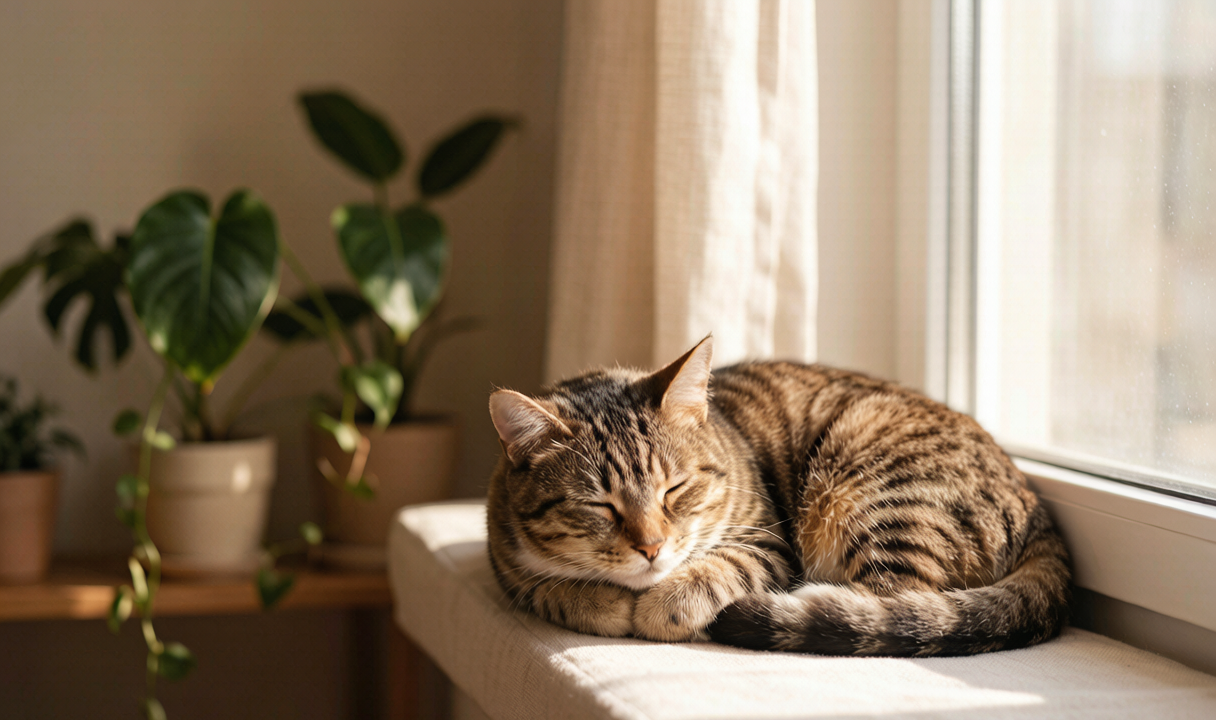
It often starts small — a bare patch on the belly no bigger than a coin. Easy to miss at first.
Left unchecked, that bare spot can spread across the underside as the cat keeps licking the same area.
Most owners do what any reasonable person does: Google it at 11 PM and convince themselves the cat has some rare feline autoimmune disease and is probably dying. Spoiler: she usually isn't dying. What she has is way more mundane — and honestly, kind of embarrassing once you figure it out.
Turns out, a stressed cat grooms herself bald. And the source of that stress is almost always the environment — the changes made around her without anyone realizing they mattered.
If your cat has a bald patch you can't explain, or you keep finding hairballs in places hairballs shouldn't be, pull up a chair. This guide is built from exactly that rabbit hole.
First: This Is More Common Than You Think
It's easy to feel terrible when you first notice a bald belly, like you've somehow failed her. Then you talk to other cat owners and realize — oh, this is everywhere.
Overgrooming (the fancy vet term is "psychogenic alopecia" when it's behavioral, but don't worry about pronouncing that) shows up in something like 10-15% of cats seen at veterinary clinics for skin issues. And that's just the ones whose owners notice and bring them in. A lot of cats are walking around with secret bald spots under all that fur.
The thing that trips most owners up: cats groom themselves constantly anyway. A healthy cat spends anywhere from 2 to 5 hours a day grooming. So when does "normal grooming" cross into "problem"?
The line gets crossed when the fur stops growing back. When you can see skin. When a cat licks the same spot so obsessively that the hair shafts break down to stubble, the patch feels like sandpaper.
What Actually Causes a Cat to Groom Themselves Bald
This is the part that takes most owners three vet visits to sort out, because overgrooming can come from two completely different directions: medical and behavioral. And you need to rule out medical first, always.
The Medical Stuff (Rule This Out First)
The vet checks for:
- Fleas. Even one flea can set off a grooming cascade in sensitive cats. An indoor-only cat seems like "no way" — but the vet often finds flea dirt anyway. Flea allergy dermatitis is the single most common cause of overgrooming in cats, period.
- Food allergies. Chicken, beef, dairy, and fish are the big ones. The vet puts the cat on a hydrolyzed protein diet for 8 weeks to rule this out. (Often, it isn't food.)
- Environmental allergies. Pollen, dust mites, mold — same stuff that makes humans sneeze can make cats itch.
- Pain. Cats are masters at hiding pain. A cat with arthritis in their hips or a urinary tract issue might overgroom their belly or inner thighs as a pain response, not because it itches. The licking releases endorphins, which temporarily dull the discomfort.
Here's the stat that matters: roughly 70% of overgrooming cases have a medical root cause. Only about 30% are purely behavioral. So if you skip the vet visit and assume it's stress, you're playing the odds wrong.
The Behavioral Stuff (When Stress Is the Cause)
Once the vet rules out fleas (after treatment), food allergies, and other medical causes, the diagnosis lands: psychogenic alopecia. Behavioral overgrooming. Stress-induced.
What stresses a cat out? Here are the changes owners commonly make in the weeks before a bald spot appears:
- Moving the litter box from the quiet spare bedroom to the laundry room (noisier, more foot traffic)
- Buying a new couch, which means new smells everywhere
- Starting longer work hours, so the evening play routine falls apart
Individually, none of these are catastrophic. To a cat? They're enough. Cats are creatures of absolute routine, and three changes at once throw them completely off.
The Fixes That Actually Worked (and One That Backfired)
What Helped
Putting the litter box back where it was. It's easy to feel dumb about this one. Moving it to a "more convenient" spot, without realizing that to a cat the laundry room is a stress factory — washing machine rumbling, dryer buzzing, door opening and closing — backfires. The original quiet spot was predictable. Two days after moving it back, most cats groom noticeably less.
Feliway diffuser. Many owners are deeply skeptical about this. A plug-in that releases synthetic cat pheromones? Sounds like something from a late-night infomercial. But the vet often recommends it, and owners are desperate. Plug one in near the cat's favorite napping spot, and within about a week, she seems noticeably calmer. It's not a miracle cure, but it takes the edge off. For $25, it's worth trying.
Scheduled playtime, no exceptions. Set a phone alarm for 7 PM every night. Fifteen minutes of dedicated play — wand toy, laser pointer, whatever she's into that day. The consistency matters more than the activity. She starts counting on it. And a tired cat with a reliable routine is a less anxious cat.
Environmental enrichment. Add a window perch (the suction-cup kind, $15 on Amazon), a second scratching post in the living room, and a cardboard box with a hole cut in it that becomes her personal panic room. Giving her more options for where to be and what to do reduces her baseline stress significantly.
Puzzle feeders. Instead of dumping kibble in a bowl, start using a puzzle feeder — one of those things with little compartments she has to paw open. Five minutes of problem-solving tires her out mentally in a way physical play doesn't. And tired cats groom less.
What Backfired
The cone of shame. The vet may give an e-collar to physically prevent licking while the skin heals. Most cats hate it. She stops eating, hides under the bed for two days, and gets more stressed than before. Take it off, and manage the healing with a soft recovery suit instead (basically a cat onesie). Much less traumatic.
The lesson: an e-collar stops licking, but if licking is a stress response, adding more stress doesn't solve the problem. It just delays it until the collar comes off.
How Long It Took (Because Nobody Ever Tells You This)
The fur on the belly takes about three months to fully grow back. The behavior itself improves in phases:
- Week 1-2: Still licking, but less intensity as the Feliway starts to help.
- Week 3-4: The bald patch stops expanding and looks less red and irritated.
- Month 2: Light fuzz starts coming in; grooming is no longer obsessive.
- Month 3: Full coat returns and grooming is back to normal levels.
The key moment is usually around week three, when you catch her mid-groom and she stops when you walk into the room — not because you scolded her (never scold a cat for grooming, by the way, it makes everything worse), but because she's relaxed enough to be distracted.
When to Stop DIY-ing and Call the Vet
Most owners wait about 10 days from when they first notice the bald spot to when they call the vet. That's usually a week too long. Here's when to pick up the phone immediately:
- If the bald spot has any sores, scabs, bleeding, or signs of infection
- If your cat is pulling fur out with their teeth (not just licking — actually plucking)
- If there's weight loss, appetite changes, or lethargy along with the grooming
- If the overgrooming started suddenly (like, overnight) — that often signals pain
- If you find hairballs more than once a week
Cats are notoriously good at hiding illness. A cat that's visibly "not right" has probably been not right for a while.
What to Know About Overgrooming
A bald belly is never about the belly. It's about everything else: the moved litter box, the new couch, the disrupted routine. The bald spot is just the visible symptom.
Cats don't have a lot of ways to tell us something's wrong. They can't say "I'm anxious" or "my hip hurts" or "this food makes me itchy." They can only show us — by scratching, hiding, peeing outside the box, or, in this case, licking themselves raw.
The fix isn't one big thing. It's a bunch of small things done consistently: moving the litter box back, showing up for playtime every night, giving her more choices about where to spend her time. None of it is complicated. Most of it is free. You just have to pay attention.
If your cat's rocking a bald patch right now, start with the vet — rule out fleas, allergies, and pain first. Then look at what's changed in their world recently. There's almost always a clue hiding in plain sight.
Watch for the early signs — a slightly thin patch, more frequent hairballs, or a cat who grooms one spot longer than the rest — and act before the bald spot appears.
Shop cat calming spray on Amazon & Chewy
Comparing prices before you buy? Check current deals and read reviews from other pet owners.
Shop cat calming collar on Amazon & Chewy
Comparing prices before you buy? Check current deals and read reviews from other pet owners.