Why Is My Dog Panting So Much? Normal Breathing vs. Warning Signs
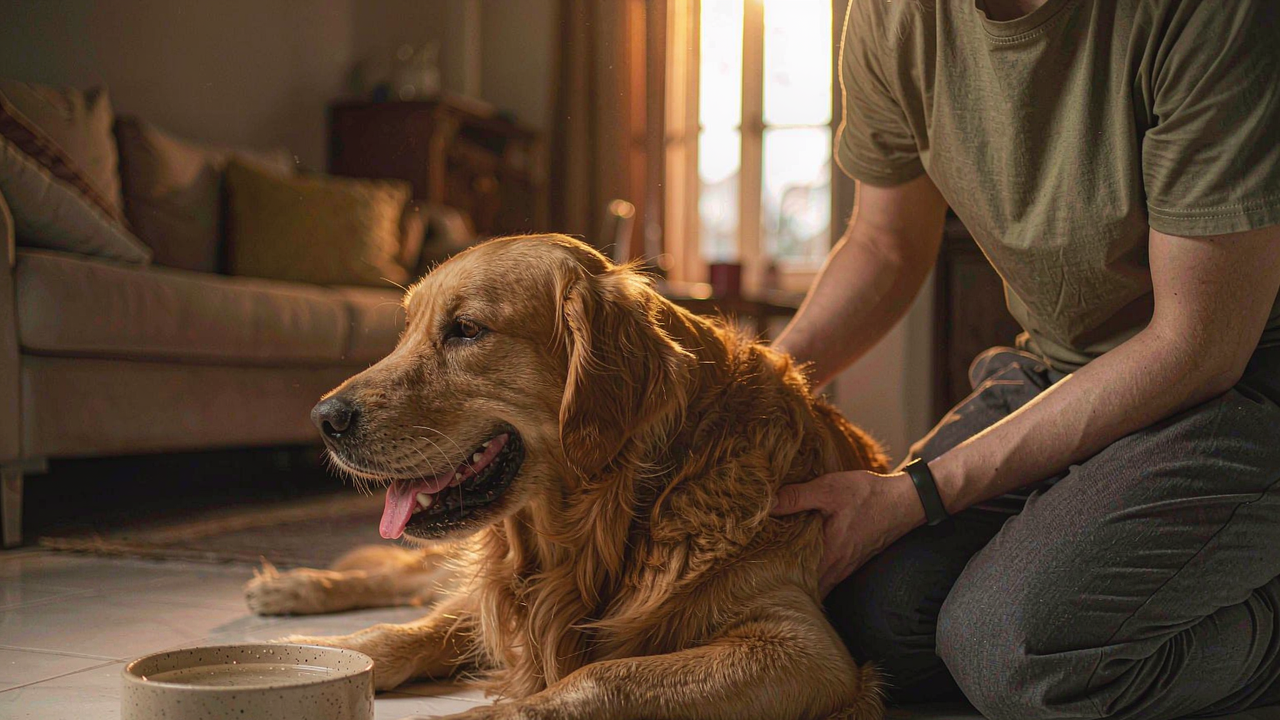
It's late, the house is cool, and your dog hasn't so much as chased a ball in hours — yet he's lying on the floor with his mouth open, sides heaving, tongue lolling. You stare at him for a minute, then two, and the question forms on its own: is this normal, or should I be worried?
Panting is one of those things that's usually harmless and occasionally a real emergency, and telling the two apart isn't always obvious. Here's how to read what your dog's breathing is actually telling you, so you know when to pour a bowl of water and when to grab the car keys.
Why Dogs Pant in the First Place
The short version: dogs can't cool themselves the way we do. We sweat. Dogs mostly pant. When a dog breathes fast with his mouth open, air moves over his wet tongue and the inside of his mouth, and the evaporating moisture pulls heat out of his body. It's a built-in air conditioner, and it's completely normal after a walk, on a warm day, or when he's excited.
That's why panting on its own is almost never the problem. The problem is panting that shows up when it shouldn't — at rest, in a cool room, in the middle of the night — or panting that comes with other signs. Once you know the difference, most of the guesswork disappears.
What "Normal" Actually Looks Like
A healthy dog at rest usually takes somewhere around 15 to 35 breaths a minute. When he's actively panting after exercise or in the heat, that number climbs fast, but it should settle back down within ten to fifteen minutes once he's resting somewhere cool. Panting from excitement — a visitor at the door, the leash coming out — also fades quickly.
You don't need a stopwatch, but it genuinely helps to know your own dog's baseline. Pick a calm moment, watch his chest rise and fall for a minute, and count. Write the number somewhere. Later, when you're wondering whether his breathing is "off," you'll have something real to compare it against instead of a gut feeling. Most owners skip this and then panic at 2 a.m. — don't be that person.
When Panting Crosses the Line
Here's where it pays to pay attention. Panting is worth a closer look — and usually a call to the vet — when:
- It happens at rest, in a cool room, or while he's trying to sleep.
- It doesn't settle after ten to fifteen minutes of rest.
- It looks like hard work — neck stretched out, nostrils flared, belly and sides pumping hard with each breath.
- It's accompanied by restlessness, pacing, drooling, or whining.
- It's a new behavior for him, especially if he's a senior.
There's a posture worth knowing about: a dog who insists on sitting or standing upright to breathe — who won't lie down because it makes breathing harder — is showing you something's wrong with his heart or lungs. That's not a wait-and-see situation.
The Common Causes Behind Heavy Panting
The reasons run from totally benign to urgent, and they're worth knowing by name so the signs ring a bell when you see them:
Heat. The most dangerous cause, and the one people most often underestimate. A hot car, a humid walk, a vigorous play session on a warm afternoon can push a dog's temperature into dangerous territory. Short-faced breeds — pugs, bulldogs, boxers, and their relatives — plus overweight and senior dogs run the highest risk. Heatstroke is an emergency, not a "let's wait and see."
Pain. Dogs are stoic, and panting is often the only outward clue that something hurts — an injury, arthritis, a belly problem, or recovering from surgery. If the panting comes with restlessness, reluctance to move, or a hunched posture, pain is a strong candidate.
Anxiety and stress. Thunderstorms, fireworks, car rides, vet visits, or being left alone can all set off stress panting. The tell is that it's situational — it comes with the trigger and passes with it — and it usually shows up alongside trembling, hiding, or pacing.
Heart disease. As the heart struggles, fluid can build up in the lungs, and the dog pants to compensate. This tends to worsen at night or when lying down, and it often comes with a cough or getting winded easily on walks.
Cushing's disease. An older dog who pants constantly, drinks and urinates more than usual, loses hair, and develops a rounded belly may be dealing with excess cortisol. It's very common in seniors and easy to miss because it comes on gradually.
Breathing and airway problems. Laryngeal paralysis (common in older large breeds), a collapsing windpipe, or lung issues all make breathing harder. These dogs often sound different — harsher, noisier — when they pant.
Anemia and medication side effects. Low red blood cells mean less oxygen moving around, so the dog pants to compensate. And certain medications, steroids especially, are famous for causing panting as a side effect.
Bloat. This one deserves its own category. A dog who is panting, restless, and retching without producing anything — combined with a swollen or tight belly — may have a twisted stomach, which is a genuine life-or-death emergency that needs immediate care.
The Signs That Mean "Go Now"
Most panting is fine. A handful of signs aren't, and they're not subtle:
- Gums or tongue that are brick-red, purple, blue, or pale instead of a healthy pink.
- Collapse, stumbling, or being unable to stand.
- Labored breathing with real effort — neck extended, wide stance, belly pumping.
- Panting together with a swollen belly and non-productive retching.
- Panting that starts suddenly after an injury, or in a dog who was just in a hot car or hot yard.
If you see any of these, skip the internet search and get to a vet or emergency clinic now.
What You Can Do at Home
For ordinary panting — after a walk, on a warm day, after a burst of excitement — the fix is usually simple: get him somewhere cool, offer water, and let him rest. A fan, a cool (not icy) spot to lie on, and a few quiet minutes do most of the work.
For everything else, the single most useful thing you can do is observe and record. Note when it happens, how long it lasts, what he was doing beforehand, and any other signs that come with it. Bring that to the vet. A timeline is worth more than a vague "he's been breathing weird."
And here's the part people forget: don't guess. Panting is a symptom, not a disease. Treating the symptom without finding the cause — whether it's pain, a heart issue, or Cushing's — doesn't actually help your dog. The vet can sort out which of those it is and what to do next.
The Bottom Line
Learn your dog's normal resting breathing. Let normal panting be normal, because it is. But treat panting that shows up at rest, at night, or with any of the red-flag signs as information your dog is trying hard to give you — and act on it. Most of the time you'll be reassured, and the times you're not, you'll be glad you didn't wait.
Has your dog ever had a panting scare that turned out to be something — or nothing? What tipped you off that it was time to get help? Drop it in the comments.
This article is for informational purposes only and is not a substitute for professional veterinary advice, diagnosis, or treatment. Always consult a licensed veterinarian if your pet shows signs of illness, injury, or distress. If you believe your pet is experiencing a medical emergency, contact your veterinarian or the nearest emergency animal hospital immediately.
🐾 Enjoyed This Article?
Save it for later, share with a fellow pet parent, or check out more tips on our homepage!
📩 Never Miss a Tip
Get our best pet care hacks delivered straight to your inbox. No spam, unsubscribe anytime.