Why Does My Cat Lick Me? The Real Reasons (and When It's Too Much)
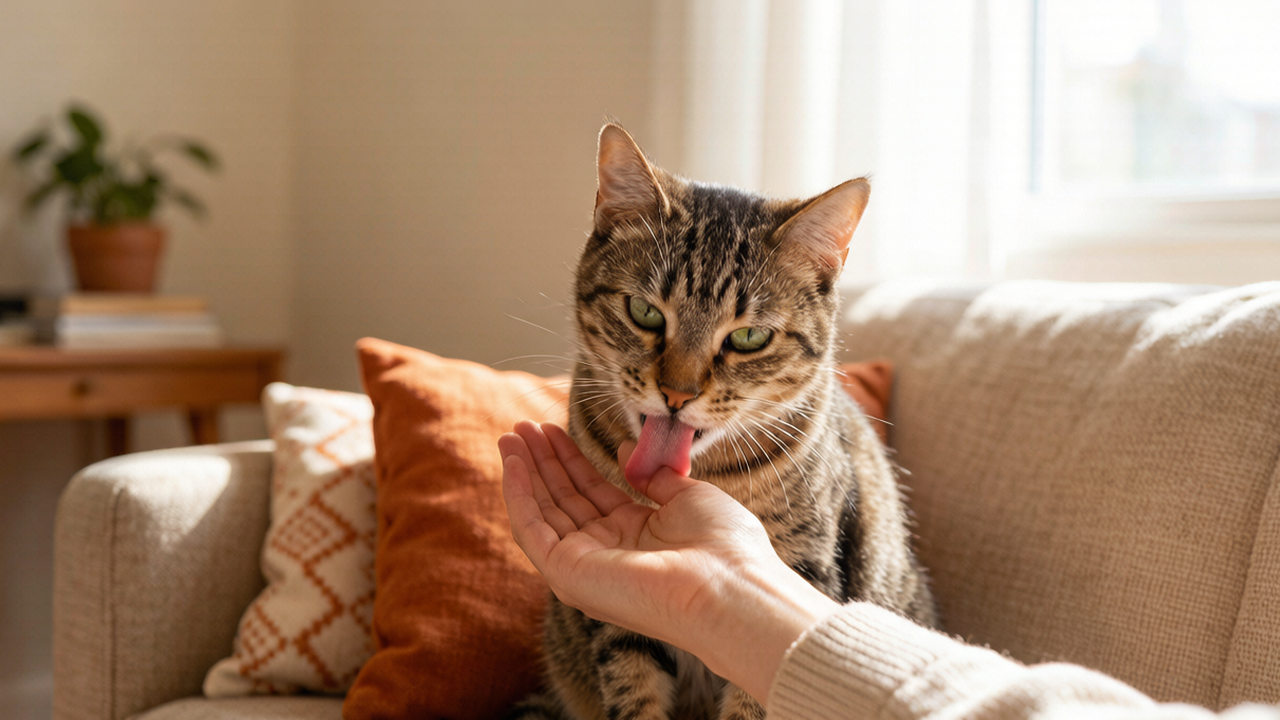
There's a moment every cat owner knows. You're sitting on the couch, minding your own business, when a rough little tongue starts sanding away at your hand. It's kind of sweet for about ten seconds — then it starts to sting. That sandpaper tongue is doing a lot more than just saying "hi."
Cats lick their people for a handful of reasons, and almost all of them are a compliment. But sometimes licking tips into something else — a sign of stress, a bid for attention, or a habit worth gently redirecting. Here's what that tongue is actually telling you, and what to do when it becomes too much.
Why That Tongue Feels Like Sandpaper
Before we get to the "why," let's talk about the "ouch." A cat's tongue is covered in tiny, backward-facing barbs called papillae, made of the same material as claws and hair — keratin. Those barbs work like a comb to pull loose fur, dirt, and debris out of the coat during grooming. They also help a cat scrape meat off a bone and hold onto food.
For you, though, those barbs translate to a scratchy, almost exfoliating sensation. It's a feature, not a bug — but it does explain why a long licking session on the same patch of skin can leave you a little raw.
The Main Reasons Cats Lick People
1. It's Affection (and You're Family)
This is the big one. When cats groom each other — a behavior called allogrooming — they're strengthening social bonds and creating a shared, familiar scent. When your cat licks you, they're basically treating you like another cat in their inner circle. In feline terms, it's one of the clearest "you're one of us" signals there is.
2. Scent-Marking You as Theirs
Cats run their world through smell. They have scent glands in and around their mouth, and licking deposits their scent directly onto you. It's a way of claiming you, labeling you as familiar and safe, and blending your scent with theirs. A cat who licks you and then grooms themselves right after is doing a little scent check-and-balance.
3. It Feels Good to Them
Grooming releases feel-good chemicals — endorphins — in a cat's brain. Licking is literally self-soothing for them. A content cat licking you while they purr and knead is a deeply relaxed animal. Some cats just find the rhythm of licking comforting, and you happen to be in reach.
4. A Throwback to Kittenhood
Kittens are groomed constantly by their mother from birth. That early grooming keeps them clean, bonds them to her, and calms them. Adult cats who lick their humans are often replaying that comfortable memory. You might notice your cat licks you while kneading with their paws — that's a direct echo of nursing as a kitten. Cats who were weaned very early sometimes grow up to lick or suckle on people, clothing, and blankets more than usual, reaching for a comfort they missed out on.
5. You Taste Interesting
Sometimes it's not deep at all. Sweat is salty, and cats are drawn to salt. If you've been working out, or you handled food — especially anything with meat, fish, or tuna — your hands may simply smell and taste intriguing. Some cats also lick lotion or soap residue off skin. (Worth keeping in mind: many skin products aren't great for cats to ingest, so it's best to gently discourage licking right after you apply anything.)
6. They Want Your Attention
Cats are quick studies. If licking you reliably gets you to look at them, talk to them, or pet them, they'll do it again — and again. Over time, licking becomes a learned button they press when they want food, play, or just your eyes on them.
When Licking Tips Into Too Much
Most licking is healthy and affectionate. But there are times it's worth a closer look.
Stress and anxiety. A cat who grooms to self-soothe will sometimes redirect that grooming onto you — or themselves — when they're uneasy. If the licking feels frantic, goes on for long stretches, or is paired with other stress signals (hiding, overgrooming themselves, changes in appetite or litter box habits), the licking may be a comfort behavior rather than affection.
A medical issue. Occasionally, a sudden increase in licking can signal nausea, pain, or discomfort. A cat feeling unwell may lick obsessively as a coping mechanism. If the licking is brand new, excessive, or paired with other changes, a vet check is the right call to rule anything out.
It hurts, and you want it to stop. Even normal, affectionate licking can leave your skin irritated. The good news is you don't have to choose between your cat's feelings and your forearm.
How to Gently Reduce the Licking (Without Hurting Their Feelings)
The most important rule: don't punish, shove, or shout. A cat won't connect your reaction to the licking — they'll just learn you're unpredictable, which can make the behavior worse. Here's what actually works.
Redirect, don't scold. When your cat starts licking, swap in something better. Offer a brush and groom them instead — it satisfies their bonding instinct and protects your skin. Or pull out a favorite toy and shift them into play mode. Redirecting gives them an outlet without breaking the connection.
Figure out the trigger. Is the licking happening at the same time each day? Before meals? When you come home? If it's attention-seeking, a little scheduled play or a quick cuddle before the licking starts can preempt it. If it seems stress-driven, look at the bigger picture — new pet, moved furniture, a change in routine, or not enough enrichment.
Give them more to do. A bored cat is more likely to over-groom or over-lick. Puzzle feeders, a window perch with a view, a cat tree, and a couple of short interactive play sessions each day give a cat healthy outlets for energy and instinct. A tired, stimulated cat is a calmer cat.
Protect your skin during application. If the licking happens right after you use lotion or other products, wait for them to absorb, or cover the area, and redirect your cat to something tastier for them — like a treat or a toy.
Don't let them lick open skin or your face. A cat's mouth carries bacteria, so it's smart to keep licking away from cuts, scratches, or your mouth and eyes. Redirect that affection to your hand or a brush instead.
The Bottom Line
When your cat licks you, it's almost always a good sign — affection, trust, and a cat who considers you family. Enjoy it for what it is. If it tips into something excessive, new, or obviously stressed, treat the underlying cause rather than the tongue itself. A calm, enriched, well-bonded cat usually licks out of love — not anxiety.
Does your cat lick you, and have you noticed a pattern to when it happens? Tell us about it below — and whether you've found a redirect trick that actually works.
---
Related reading: Why Does My Cat Follow Me Everywhere? · Cat Bites During Petting: Overstimulation Signs · Signs Your Cat Is Stressed and How to Help
This article is informational and reflects general cat-behavior knowledge gathered from experienced owners and public feline-behavior resources. It is not a substitute for a veterinary examination. If your cat's behavior changes suddenly or concerns you, please consult your veterinarian.
This article is for informational purposes only and is not a substitute for professional veterinary advice, diagnosis, or treatment. Always consult a licensed veterinarian if your pet shows signs of illness, injury, or distress. If you believe your pet is experiencing a medical emergency, contact your veterinarian or the nearest emergency animal hospital immediately.
🐾 Enjoyed This Article?
Save it for later, share with a fellow pet parent, or check out more tips on our homepage!
📩 Never Miss a Tip
Get our best pet care hacks delivered straight to your inbox. No spam, unsubscribe anytime.
Shop cat supplies on Amazon & Chewy
Comparing prices before you buy? Check current deals and read reviews from other pet owners.