I Thought My Cat Loved Being Petted. Then She Bit Me Hard Enough to Draw Blood — and Kept Purring
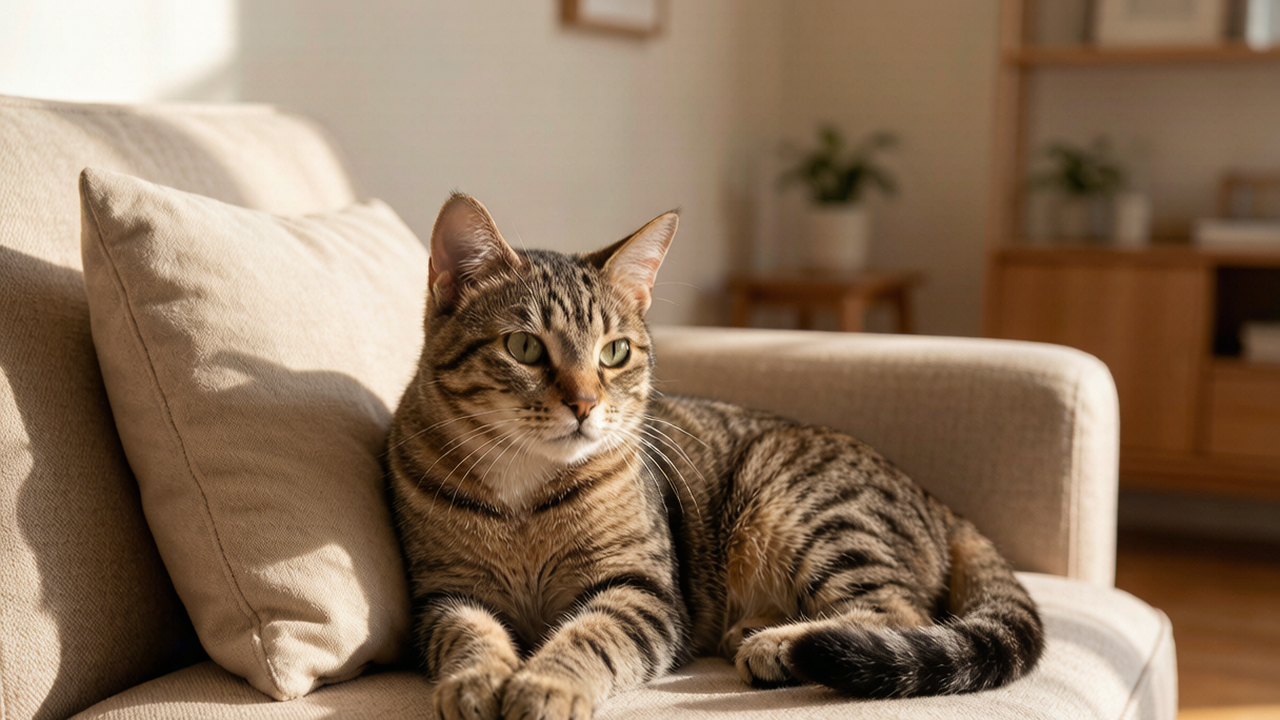
The bite came out of nowhere. Mochi was sprawled across my lap, purring like a tiny motorboat. I'd been stroking her back for maybe two minutes — the same way I'd done a thousand times before. Her eyes were half-closed. She looked like the dictionary definition of a content cat.
Then her teeth sank into my hand.
Not a warning nip. A real bite. I yelped, she launched off my lap, and I sat there staring at the blood welling up from two puncture marks while she calmly started grooming herself on the windowsill like nothing had happened.
I spent the next hour Googling "why does my cat bite me when I pet her" and discovered I'd been misreading her body language for years. This wasn't random aggression. It was a communication breakdown — and I was the one who wasn't listening.
The Purring Doesn't Mean What You Think It Means
Here's what I had wrong: I assumed purring = happy. It's more complicated than that. Cats also purr when they're nervous, in pain, or trying to self-soothe. A purring cat isn't necessarily a cat that wants more petting — sometimes it's a cat that's tolerating the situation and hoping it ends soon.
Mochi had probably been done with being petted a full minute before she bit me. I just missed every signal she sent.
The formal name for this is "petting-induced aggression" or "overstimulation aggression," and it's absurdly common. One survey of cat behaviorists I came across estimated that roughly 40% of cats will bite or swat during petting at some point in their lives. It's not about being a "mean cat." It's about a cat whose sensory threshold has been maxed out.
Think of it like this: you know that feeling when someone keeps rubbing the exact same spot on your arm, and after a while it goes from pleasant to annoying to actually uncomfortable? Cats experience that, except their skin is far more sensitive than ours, and they can't say "hey, can you move your hand please?" They communicate through body language, and when we miss those signals, biting becomes the backup plan.
The Warning Signs I Was Missing
After Mochi's bite, I started paying actual attention to what her body was doing during petting sessions. Turns out she'd been telegraphing her discomfort so clearly that I felt like an idiot for not noticing:
The tail twitch. This is the biggest one. A cat whose tail starts flicking or thrashing — especially just the tip — is getting overstimulated. A gently swaying tail is fine. A tail that's starting to whip back and forth like an angry metronome is your cue to stop. I'd been seeing Mochi's tail twitch for weeks and thought it was just a cat thing.
The skin ripple. You'll see this most on a cat's back when you're petting them. The skin sort of twitches or rolls under your hand. This is called cutaneous hyperesthesia, and it's basically the cat equivalent of "please stop touching that spot." Some cats have a lower threshold than others — Mochi's back gets twitchy after about 90 seconds of petting, and now I know that's her deadline.
Ears going sideways or back. A relaxed cat's ears point forward or slightly to the side. When the ears start rotating outward — like little satellite dishes scanning for an exit — the cat is getting uncomfortable. Ears flattened backward is the final warning before teeth come out.
The head turn. This one's subtle. When Mochi was done with petting, she'd sometimes turn her head slightly toward my hand — not nuzzling, but looking. A lot of people interpret this as "she wants me to pet her head" when it's actually "I'm monitoring your hand because I don't trust what it's doing anymore." If your cat turns to look at your petting hand, pause and see what happens.
Dilated pupils. In a brightly lit room, wide pupils can mean arousal — and not necessarily the good kind. If your cat's eyes look like black saucers during petting despite decent lighting, they might be in overstimulation mode.
The freeze. This was the one I missed most consistently. A few seconds before Mochi bit me, she went completely still. Her purring stopped. Her body tensed. I thought she was just relaxing deeper. She was actually bracing for what came next.
The Three-Second Rule That Changed Everything
After the bite, I completely changed how I pet Mochi. Here's what actually works:
Pet for three seconds, then pause. I stroke her back or chin for about three seconds, then lift my hand just slightly and watch her reaction. If she leans into my hand or nudges it, that's consent — she wants more. If she stays still or pulls away even slightly, I stop.
This "consent test" alone has prevented probably 90% of the bites that used to happen. Cats are really clear about what they want once you learn to ask.
Stick to the safe zones. Every cat is different, but most prefer being petted on the chin, cheeks, and base of the ears. The back, tail, and belly are much more likely to trigger overstimulation. Mochi will tolerate about 30 seconds of back petting before her skin starts twitching. Her chin? I could scratch that all day and she'd be in heaven.
I discovered this by accident — one day I just stopped petting her back entirely and only did chin scratches and cheek rubs. The biting incidents dropped to essentially zero almost immediately.
Count the strokes. This sounds ridiculously Type A, but it works. I learned that Mochi's limit was roughly 20-25 strokes on her back before she hit her threshold. Every cat has a different number, but most have one. Once you know your cat's number, you can stop before they reach it and switch to a safer zone or end the session entirely.
Watch for the rising tail. When a cat lifts their tail and the base gets stiff, they're approaching their limit. A relaxed tail that rests on the ground or drapes loosely is good. A tail that starts rising from the base upwards — almost like a flag being slowly raised — is a countdown.
Don't pet during high-energy moments. If my cat is in hunting mode — pupils dilated, tail twitching, crouched low, ready to pounce on a toy — that's not the time for cuddles. I used to reach over and pet Mochi during playtime, thinking I was being affectionate. I was actually redirecting her hunting energy onto my hand.
When It's Not Overstimulation — When It's Medical
This part is important. Not every cat bite during petting is about overstimulation. Sometimes the cat has a physical reason for reacting badly to touch.
Mochi turned out to have arthritis in her lower spine — something the vet found during a routine exam about six months after the bite incident. Petting near her tail base was probably causing her actual pain, and she'd been putting up with it until she couldn't anymore. Since starting her on a joint supplement and being more careful about where I touch her lower back, she's become noticeably more tolerant of petting in general.
Other medical causes that can make a cat reactive to petting include:
- Dental pain (cats with tooth problems often don't want their cheeks or chin touched)
- Skin conditions or allergies that make the skin hypersensitive
- Injuries you can't see (bruises, strains, abscesses under the fur)
- Hyperthyroidism, which can cause general irritability
If your cat's petting tolerance suddenly changes — especially in an older cat that used to love being petted — get a vet check before you assume it's behavioral. I wish I'd done this six months earlier with Mochi.
What to Do in the Moment (and After)
When a bite happens, your instincts will tell you to pull away fast. Don't. Cat teeth are sharp and curved, and yanking your hand back can tear the skin worse. Instead, freeze. Let the cat release on their own. Pushing into the bite slightly (counterintuitive, I know) can actually trigger the release reflex faster.
After the bite, don't punish the cat. Yelling or swatting will reinforce that human hands are scary and unpredictable, which makes future bites more likely, not less. Just walk away quietly. Calmly wash the bite with soap and water, apply antiseptic, and watch for signs of infection — cat bites are notorious for it because those needle-sharp teeth inject bacteria deep into tissue. If the area gets red, swollen, or warm within 24 hours, get to a doctor. I learned this the hard way when a different bite (from my sister's cat years ago) got infected and required antibiotics.
With Mochi, I gave her space for about 20 minutes after the bite, then went back to normal. No grudges. Cats don't hold them the way we do, and she was back to rubbing against my legs within the hour. The next petting session, I used the three-second rule from the beginning, and it went fine.
The Thing Nobody Tells You About Cat Body Language
The reason so many people get bitten during petting is that cat warning signs are quick and subtle. A dog will growl, show teeth, or walk away well before biting. A cat might give you two seconds of tail twitching and a brief ear flick before deciding you've failed the test.
The key isn't to learn all the signs at once — it's to pick the most obvious one for your specific cat and track it obsessively. For Mochi, it's the tail twitch and the skin ripple. Those two signals alone, if I pay attention to them, prevent basically every bite.
Pay attention to what your cat's body does in the ten seconds before they bite. Film it if you have to — I genuinely did this, and watching it back frame by frame was humbling. I could see every signal I'd missed in real time.
Once you know your cat's tell, petting becomes a conversation instead of a guessing game. Mochi still has her limits. She probably always will — some cats just have a lower sensory threshold. But I haven't been bitten during petting in nearly two years, and she initiates cuddle sessions way more often than she used to. Turns out that when a cat knows you'll respect their boundaries, they're a lot more willing to get close.
What's your cat's "tell" before they've had enough? Is it the tail, the ears, or something else entirely? I'm always collecting data on this — drop your cat's specific warning sign in the comments.
🐾 Enjoyed This Article?
Save it for later, share with a fellow pet parent, or check out more tips on our homepage!