Why Do Dogs Howl? The Real Reasons and How to Stop It
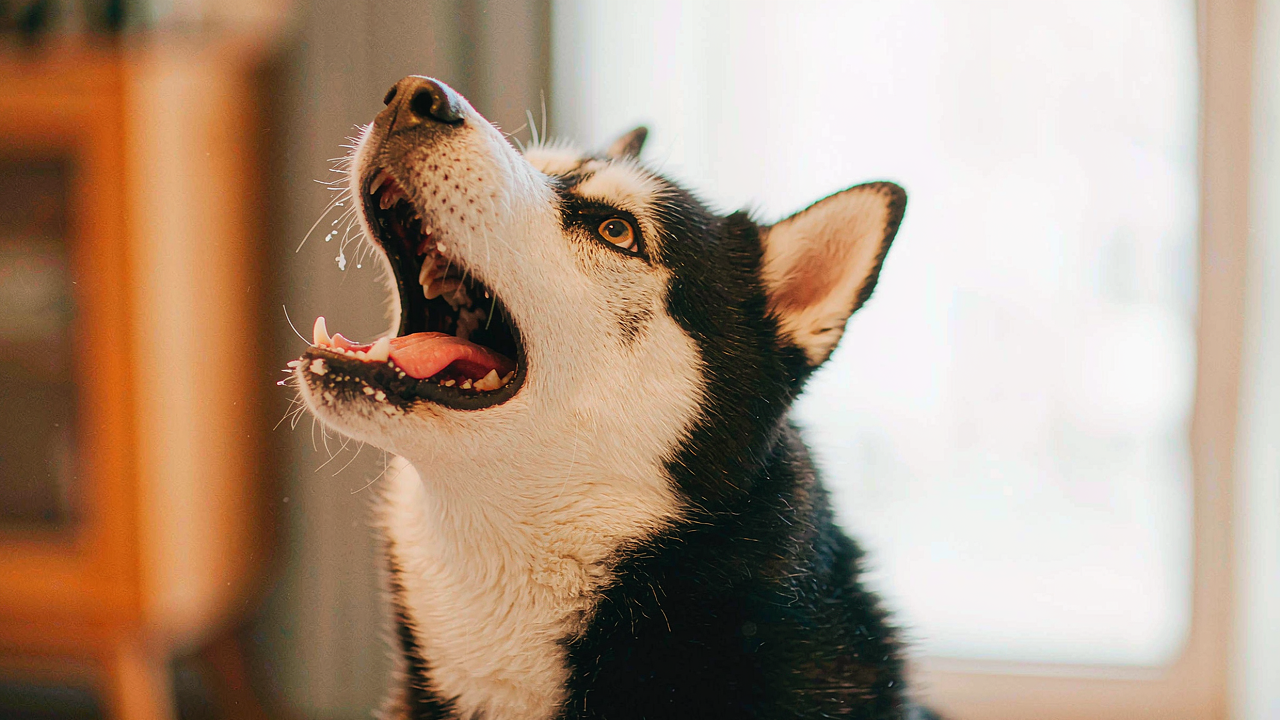
A siren goes by down the street, and before you know it, your dog has tipped their head back and joined in like they're singing backup. If you've ever watched this happen and thought "what on earth are you doing," you're asking the exact right question — and it's a more interesting answer than most people expect.
Howling is one of the oldest forms of dog communication, a behavior your dog inherited from wolves long before anyone ever put a collar on them. Most of the time it's harmless. But when it gets loud, frequent, or happens every time you walk out the door, it's worth figuring out what's behind it. Here's what your dog is trying to say, and what actually helps when the howling gets out of hand.
It's older than the dog
Howling isn't something dogs learned from people. It's an ancestral behavior that wolves use to call to the rest of the pack, announce where they are, and warn others away from their territory. A wolf's howl can carry for miles, which made it the perfect long-distance phone call.
Your dog kept that wiring. So when they howl, they're reaching for an old, instinctive way of saying something. The trick is figuring out which "something" it is, because the reasons range from "I heard a noise" to "I'm in pain."
The six reasons dogs howl
1. They're answering a sound. The most common trigger is a high-pitched noise — sirens, musical instruments, a baby crying, another dog howling. To a dog's ears, these sounds can resemble another howl, and the instinct to join in kicks in automatically. This kind of howling usually stops as soon as the sound does.
2. They're lonely or anxious. Dogs are social animals, and being left alone for long stretches is genuinely hard for some of them. A dog with separation anxiety may howl when you're gone — and only when you're gone. That's the giveaway: if your neighbors mention howling while you're at work, but your dog is quiet when you're home, separation anxiety is the prime suspect. The howling usually shows up alongside other signs, like pacing, destruction, or going to the bathroom indoors.
3. They want your attention. Dogs are quick studies. If howling has ever gotten them a reaction — even a scolding — they learn that it works. A dog howling for attention does it in your presence, usually when they want food, a toy, or just some interaction. The hard part is that any attention counts as a reward to a dog, even the "knock it off" kind.
4. They're in pain or feeling unwell. A dog who rarely howls and suddenly starts may be trying to tell you something physical is wrong. A new or sudden increase in howling is a reason to rule out injury or illness before assuming it's behavioral. If the howling comes with limping, appetite changes, or low energy, get it checked.
5. They're excited. Some dogs howl from pure, happy energy — the same way a kid yells when they're wound up. This usually comes with a wagging tail and a bouncy body, which is the easiest way to tell excited howling from anxious howling.
6. It's in the breed. Some dogs are simply more vocal by nature. Breeds like Siberian Huskies, Beagles, Malamutes, and other hounds were bred to use their voices, and they howl more readily than a breed that was selected for quiet work. If you have one of these, a certain amount of howling is just the price of admission.
How to tell which one it is
The context is usually enough to point you in the right direction:
- Howls only when you leave, plus pacing or destruction → separation anxiety.
- Howls while looking right at you, wanting something → attention-seeking.
- Howls at sirens or music, then stops → sound response.
- New howling plus other physical symptoms → get a vet check.
- Howls with a wagging tail and zoomies → excitement.
- Howls a lot, and always has → probably breed or personality.
What to do about it
Rule out the physical stuff first. If the howling is new, or your dog seems off in any way, a vet visit is the responsible first step. Pain and illness howling won't respond to training, and you don't want to miss it.
Don't reward attention howling. This is the one people get wrong most. If your dog howls to get your attention, the fix is to make howling stop working. That means completely ignoring the howl — no eye contact, no talking, no scolding — and then giving attention the moment they're quiet. Scolding feels like you're doing something, but to a dog, being yelled at is still attention, and it can actually make the howling worse.
Reward the quiet. Dogs learn what gets rewarded. If you only notice your dog when they're loud, loud is what you'll get. Flip it: catch them being quiet and reward that instead. A treat or a kind word when they're calm and silent teaches them that quiet is the behavior that pays.
Meet their needs. A dog who's physically and mentally tired is a quiet dog. Regular exercise, puzzle toys, and playtime go a long way toward cutting boredom howling. A dog who's genuinely worn out is less likely to howl out of restlessness.
Handle sound triggers with desensitization. If sirens or other dogs set your dog off, you can gradually desensitize them using a calm, structured approach — starting with the sound very low or far away and pairing it with good things like treats, slowly working up as the dog stays relaxed. Background music or a white-noise machine can also mask the triggers that get them going in the first place.
Teach "speak" and "quiet." One of the cleanest ways to get control is to teach both. Once a dog learns to howl on command ("speak"), you can teach the off-switch ("quiet") and reward it heavily. It turns a frustrating habit into a trick you control.
Work on separation anxiety properly. If the howling is separation anxiety, the answer is gradual training, not punishment. Start with very short absences, build up slowly, and give your dog something great to do while you're gone — like a puzzle toy stuffed with something tasty. In serious cases, a qualified behavior professional is worth the investment.
A couple of questions people always ask
Why does my dog howl at night? Nighttime howling usually comes back to one of the same causes: they can hear something you can't, they're feeling lonely or separated from the rest of the household, or they've learned it gets a response. Figuring out which one means watching the pattern — a dog who howls at night only when shut away from you is telling you something different from a dog who howls at a far-off siren.
Is howling ever a good sign? Absolutely. Howling is a social behavior, and plenty of dogs howl as a way of joining in, celebrating, or simply announcing "I'm here." If your dog howls a happy "hello" when you get home or howls along with a favorite song, that's not a problem to fix — it's a personality. The goal isn't to erase the behavior; it's to keep it from turning into a distress signal or a nuisance.
When it's more than noise
Most howling is just a dog being a dog. But pay attention to the pattern. Howling that's new, that happens when you're away, that comes with other symptoms, or that's getting worse is a signal worth listening to — not just tolerating.
What sets your dog off? Is it sirens, other dogs, or that one song on the radio? Tell me about it in the comments — the triggers are always more entertaining than the howling itself.
This article is for informational purposes only and is not a substitute for professional veterinary advice, diagnosis, or treatment. Always consult a licensed veterinarian if your pet shows signs of illness, injury, or distress. If you believe your pet is experiencing a medical emergency, contact your veterinarian or the nearest emergency animal hospital immediately.
🐾 Enjoyed This Article?
Save it for later, share with a fellow pet parent, or check out more tips on our homepage!
📩 Never Miss a Tip
Get our best pet care hacks delivered straight to your inbox. No spam, unsubscribe anytime.