Pet Routine Change Anxiety: When School Starts Again
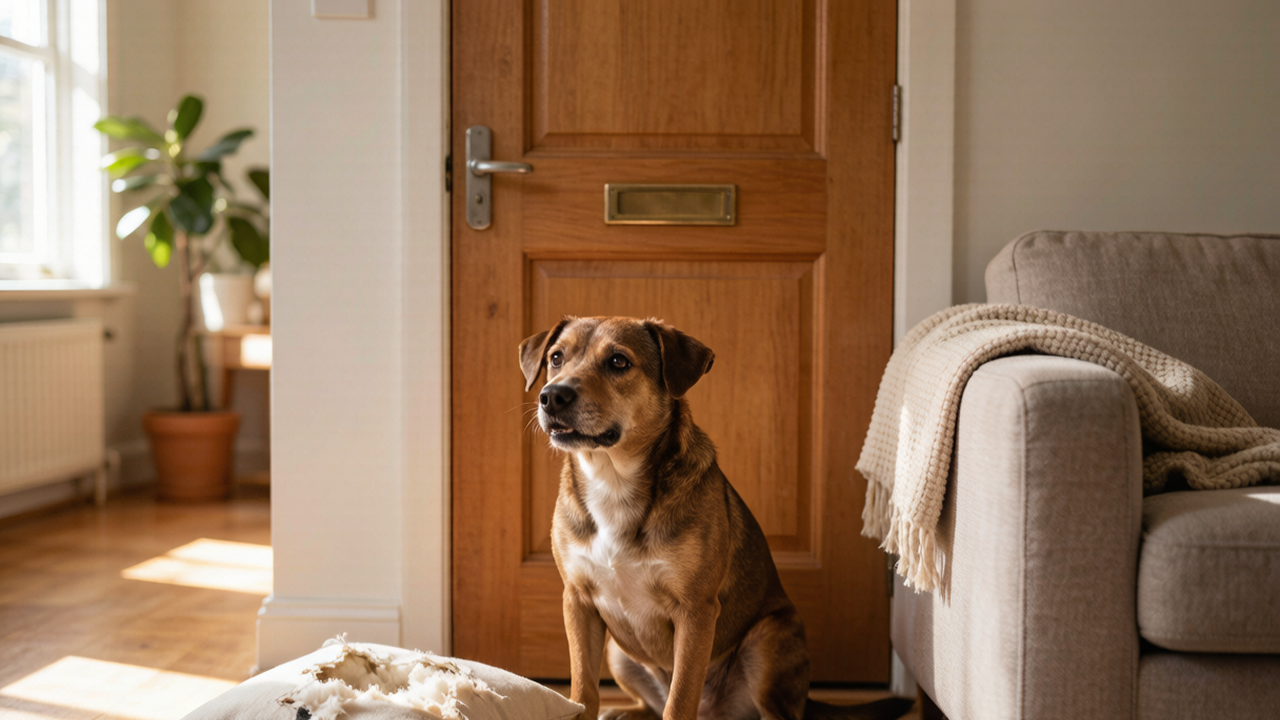
It's a classic setup: a dog spends the summer with their favorite person home all day — morning walks at 8 instead of 6, midday fetch, afternoon naps together. Then September arrives.
The schedule snaps back: out the door by 7:30, home around 5:30. Just like that, your dog goes from 24/7 human contact to nine hours alone.
The first day, they chew the corner off a throw pillow.
The second day, a neighbor texts a video: the dog is howling. Not barking — full-on, head-tilted-back, wolf-style howling for 20 straight minutes.
The third day, you come home to find they've scratched a two-foot patch of paint off the front door.
This isn't the dog you knew. It's a dog having a full-blown meltdown. And here's the thing — this dog may never have shown a single sign of separation anxiety before. They were crate trained and fine being left alone. You did all the "right" things as a puppy.
What many owners don't realize until it happens — and what veterinary behaviorists confirm — is that routine disruption is a completely different animal from chronic separation anxiety.
The Summer Trap Nobody Warns You About
Here's the pattern: summer means more family around, more walks, more attention, more treats "just because." Your dog's entire world expands. Their baseline for what "normal" looks like gets completely reset.
Then, in the span of a single day — maybe it's the first day of school, maybe you're back in the office, maybe your vacation ends — that world contracts. Hard.
Your dog doesn't understand calendars. They don't know it's September. They just know that yesterday you were there making breakfast together and today you vanished for nine hours.
The behavior problems that show up after a routine change often look like separation anxiety, but they're driven by something different: a mismatch between expectations and reality. Your dog's nervous system adjusted to one pattern, and you just changed the rules without warning.
Common signs to watch for:
- Destructive behavior that appears suddenly in a previously non-destructive dog
- Vocalization — howling, barking, whining — often in patterns (every 20 minutes, like clockwork)
- House-training regression, even in dogs who haven't had an accident in years
- Clinginess when you ARE home — following you room to room, panting, unable to settle
- Loss of appetite or refusing to eat treats left in puzzle toys
- Pacing, restlessness, inability to nap during the day
What makes this different from true separation anxiety: dogs with genuine SA panic the moment you pick up your keys, regardless of season. Dogs dealing with routine shock? They're usually fine once they adjust to the new normal — but the adjustment period can be brutal if you don't manage it.
What Didn't Work (and Why)
Some common approaches actually make the problem worse — here's what to avoid.
The "cold turkey" approach. The logic seems sound: just go back to the old schedule and your dog will adjust. Leave for a full workday, same as before summer, and they'll figure out you always come back. In reality, that's how you get the howling video and the destroyed door paint. Each day of full-on panic actually makes the problem worse — every terrifying alone-day reinforces that being alone is terrifying.
The "tire them out" approach. Waking up at 5:30 AM for a 3-mile run before work, thinking an exhausted dog will just sleep, doesn't fix anxiety. It just makes an anxious dog tired AND anxious. They still howl — just lying down.
The guilt-treats approach. Scattering a handful of high-value treats on the way out doesn't help. Your dog will ignore them completely until you get home, then eat them in front of you. Treats only work if the dog is under threshold — once they're in panic mode, even steak is irrelevant.
What Actually Worked (The Slow, Boring Version)
A veterinary behaviorist can provide a framework for this — it's not complicated, just slow.
Phase 1: The Fake-Out Week (Before the Change)
Ideally, you start this a week before the routine actually shifts. But even 3 days helps.
The concept is simple: you practice the new schedule while you're still home. If you're going back to work on Monday, starting the previous Thursday you:
- Wake up at the new earlier time
- Feed meals on the new schedule
- Do the morning walk at the new time
- But instead of leaving for 9 hours, you leave for 20 minutes. Then come back.
The next day, 45 minutes. Then 90 minutes. Then 3 hours.
The point isn't to "train" them to be alone — they already know how. The point is to give their internal clock time to adjust GRADUALLY to the new rhythm, so Monday morning doesn't feel like the world ended.
Phase 2: The Departure Ritual Reset
This is the change that makes the biggest difference, even though it feels odd.
Dogs read patterns. Your dog learns that when you put on real pants (not sweatpants), make coffee in a travel mug, grab your keys from the hook, and put on shoes in a specific order, you're leaving for a long time. Their anxiety starts building the moment you reach for the travel mug, 20 minutes before you actually walk out the door.
I had to break the ritual. Here's what I did:
- Started sometimes putting on "work clothes" and then just... sitting on the couch watching TV
- Picked up my keys and carried them around the house while doing laundry
- Put on shoes, walked to the front door, opened it, closed it, took off shoes, sat back down
- Made coffee in the travel mug and then drank it at the kitchen table while reading
It sounds odd, but within about 4 days, your dog stops associating those cues with abandonment. The pre-departure panting stops, and they start watching you grab your keys with mild interest instead of immediate distress.
Phase 3: The Morning Reset
This one's for the dog's brain, not just the routine.
Dogs need mental work in the morning. Not just physical exercise. A 30-minute walk is great, but if their brain isn't engaged, they'll still have mental energy to burn worrying about where you went.
Spend 10 minutes of training using your dog's breakfast instead of just putting it in a bowl. Sit-stays, down-stays, recall practice in the backyard, "find it" games with hidden kibble. Then 20 minutes of a sniff walk — let your dog choose the route and sniff whatever they want for as long as they want. No pulling them along. No agenda.
The sniffing part is the key. Sniffing is how dogs process the world, and 20 minutes of intense sniffing is mentally equivalent to a much longer walk. It activates the seeking system in their brain, which is naturally calming. A dog who's had a good sniff session is ready for a nap — not wired and worried.
Phase 4: The Enrichment Handoff
When you leave, give your dog something to do. Not just a Kong with peanut butter — that becomes background noise if it's the only thing they ever get. Mix it up.
What works now:
- A frozen Toppl stuffed with his breakfast kibble, a little wet food, and some blueberries — takes him 30-40 minutes to work through
- A snuffle mat with hidden treats (I switch up the hiding pattern so it's not predictable)
- A "busy box" — literally a cardboard box with crumpled paper, a few treats scattered inside, and the flaps loosely closed. He has to figure out how to get in. It's free, it's messy, and he loves it
- Leaving the radio on a talk station (NPR, not music — the human voices seem to help more than music does)
The key detail: hand your dog the enrichment item, wait until they're fully engaged (head down, working on it, not watching you), and then leave. Quietly. No big goodbye. A sad "bye buddy, be good" in your voice signals that leaving is A Big Deal. If you just go while they're busy, leaving becomes a thing that happens sometimes.
Phase 5: The Low-Key Return
When you get home, don't make it a party. Walk in, put your stuff down, go to the bathroom, change clothes — basically ignore your dog for the first 3-5 minutes. Once they're calm (not jumping, not frantic), then greet them with calm pets.
This was hard at first because he'd be so excited and I felt guilty for being gone. But making the return a huge emotional event teaches the dog that your absence was something to recover FROM. A low-key return says: "I left. I came back. Normal. Move along."
It takes about two weeks for a dog to fully adjust to the new routine — two weeks of consistency, two weeks of the enrichment handoff, two weeks of boring returns. By week three, most owners report the howling has stopped entirely.
The Cat Version (Yes, Cats Get Disrupted Too)
It's not just dogs. A cat can lose their routine the same way — yowling at 4 AM, knocking things off the nightstand, and overgrooming a patch on their belly when the household schedule shifts.
Cats are creatures of routine even more than dogs are. During summer, the person who feeds breakfast at 7 AM is home. In September, that person is gone by 7:30, and the cat's breakfast is put out before leaving. The cat eats it in 4 minutes and then has nothing to do for 9 hours.
What fixed it for her:
- An automatic feeder set to dispense a small portion at 10 AM (breaking up the long morning)
- A bird feeder outside the window she sits in (free Cat TV)
- A 10-minute wand toy session every evening, same time, no exceptions (predictability is the point)
The belly overgrooming stopped within a week.
The Real Talk
Here's the key takeaway: routine change fallout is normal, it's fixable, and it's not your dog's fault — or yours.
You gave your dog an amazing summer. You were present. You played. You bonded. That's not a mistake. The adjustment period when life goes back to normal is just the price of admission for those good months.
Start the transition early — even a few days of graduated departures helps. Break your leaving rituals so they lose their predictive power. Give their brain something to do in the morning besides just physical exercise. Create a handoff activity they're excited about. And when you come home, be boring about it.
Oh, and if it's been more than two weeks and things are getting worse instead of better? Talk to your vet. Sometimes what looks like routine shock is actually an underlying anxiety disorder that needs professional intervention. There's zero shame in that.
The adjustment period when life returns to normal is simply the cost of those good months together — and with a little planning, most pets settle back within a couple of weeks.
This article is for informational purposes only and is not a substitute for professional veterinary advice, diagnosis, or treatment. Always consult a licensed veterinarian if your pet shows signs of illness, injury, or distress. If you believe your pet is experiencing a medical emergency, contact your veterinarian or the nearest emergency animal hospital immediately.
🐾 Enjoyed This Article?
Save it for later, share with a fellow pet parent, or check out more tips on our homepage!
📩 Never Miss a Tip
Get our best pet care hacks delivered straight to your inbox. No spam, unsubscribe anytime.
Shop pet calming aid on Amazon & Chewy
Comparing prices before you buy? Check current deals and read reviews from other pet owners.