How to Stop a Cat from Scratching the Furniture (Without the Battle)
The arm of the couch looks like it lost a fight with a very small, very determined tiger, and you're caught between loving the cat and loving the sofa. Before you resign yourself to a lifetime of slipcovers, here's the reframe that changes everything: scratching isn't the cat misbehaving. It's a need, not a choice — and once you work with that instead of against it, the whole problem usually solves itself.
Why cats scratch (it's not spite)
Cats scratch for a few hard-wired reasons, and none of them have anything to do with punishing you for the couch:
- Claw maintenance. A cat's claws grow in layers, and the outer husk needs to shed. Scratching files off that worn outer layer and keeps the claws healthy underneath.
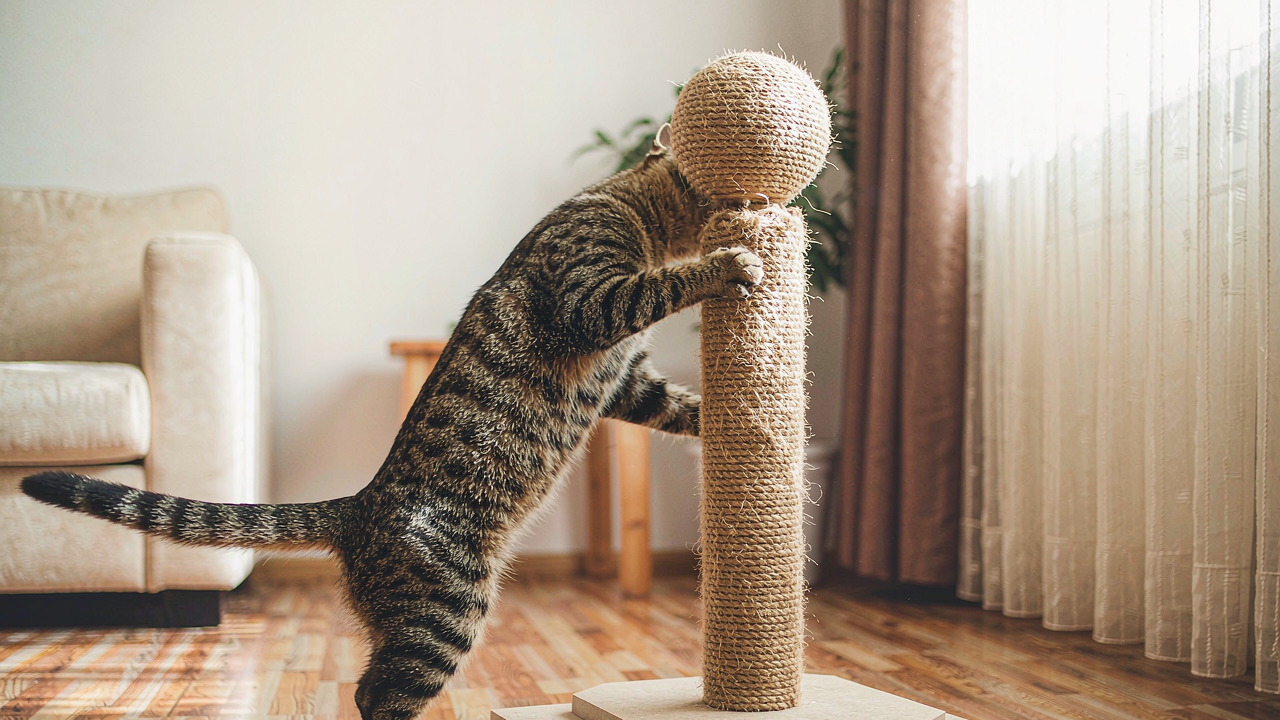
- Stretching. The classic full-body scratch — front paws up, back arched, claws digging in — is a deep stretch for the spine and shoulders. Cats do it a lot right after waking from a nap, which is why the "wake-up scratch" happens so predictably.
- Marking territory. Cats have scent glands in their paw pads. Scratching leaves both a visual mark and a scent signal that says "this is mine." It's communication, not vandalism.
- Working off energy or stress. Bored or anxious cats scratch more, because it's a physical outlet and a way to burn off tension.
Once you see scratching as a normal, healthy behavior that just needs a better target, the approach shifts from "how do I stop it" to "how do I redirect it."
Step 1: Give them a better target
The single most effective fix is a proper scratching surface — but "proper" matters more than "fancy." The key is to match what your cat already likes.
Match the texture. Cats have real preferences. Some love sisal rope, some go for corrugated cardboard, some like carpet, and a few prefer plain wood. If your cat is shredding the carpet, a carpet-covered post often lands better than a sisal one. If they're going for a wooden chair leg, try a wood or sisal surface. When in doubt, offer a couple of options and watch what actually gets used.
Match the direction. Does your cat scratch a vertical surface — the arm of the sofa, a door frame — or a horizontal one like the rug or carpet? Vertical scratchers are for the upright scratchers; flat cardboard pads are for the ground-scratchers. Get this wrong and even the nicest post will sit there ignored.
Make it sturdy. A flimsy post that wobbles or tips over when they lean into it won't get used. Cats want something they can really dig into without it moving, and tall enough to let them stretch out fully is ideal.
Step 2: Put it where it actually matters
Placement is half the battle. Put the scratcher:
- Right next to whatever they're currently destroying. You're not moving their target away — you're giving them a same-spot alternative.
- Near where they nap. That wake-up-and-stretch scratch is a prime moment, so a post near the bed catches it.
- Near where you spend time. Cats often scratch as a greeting or attention move, so a post in the living room where you hang out matters.
You can also make the new scratcher instantly more appealing: a sprinkle of catnip, a dangling toy nearby, or a quick play session right at the post. When they use it, praise and a treat go a long way — positive reinforcement builds the habit far faster than scolding ever will.
Step 3: Make the furniture less appealing
While you're building up the good option, you can gently cool down the bad one. The goal isn't to punish — it's just to make the couch arm boring.
- Double-sided tape. Cats hate the sticky feel on their paws. A strip on the spot they scratch is often enough to send them elsewhere.
- Aluminum foil. The texture and the crinkle turn a lot of cats off. Same idea — cover the spot for a while.
- A citrus-based spray. Most cats dislike citrus. A pet-safe citrus spray on the furniture can help, though it's worth testing on a hidden patch first to be sure it doesn't stain.
The trick with deterrents is that they're temporary. You use them just long enough to break the habit while the scratcher becomes the go-to, then ease off.
Step 4: Keep those claws blunt
Regular nail trims won't stop the scratching — and they shouldn't, because it's healthy — but they'll massively reduce the damage. Blunt claws mean even if your cat sneaks a scratch on the sofa, it won't shred the fabric. If you're not comfortable trimming, a groomer or vet can show you how. For an indoor cat who's a determined furniture-shredder despite everything else, soft nail caps are a last-resort option that covers the sharp tip without stopping the scratching behavior itself.
Step 5: Look at the bigger picture
Sometimes the scratching is a symptom, not the problem. A cat who suddenly scratches more — or who's marking a lot around doors and windows — might be stressed: a new pet, a move, a change in routine, even a strange cat outside the window. If that's the case:
- More play and enrichment. A tired, engaged cat is a calmer cat. A couple of focused play sessions a day with a wand toy go a long way.
- Safe spaces. High perches, a quiet spot to retreat to, and somewhere to watch the world — like a window ledge — help an anxious cat feel secure.
- Pheromone diffusers. These can take the edge off stress-driven scratching for some cats.
- Clean the marked spot right. Use a non-ammonia cleaner on the area they've been working over. Ammonia can smell like a cat's own marking and encourage more of it.
What you should never do
It's worth saying plainly: declawing is not a solution. It's the surgical removal of the last bone of each toe, and it causes lasting pain and behavior changes in many cats. It's banned or considered unethical in a growing number of places, and it's widely discouraged by veterinary and welfare groups. The scratching need doesn't go away — you just take away the cat's healthy outlet and leave them in discomfort. Redirecting to a proper scratcher is slower, but it's the only fix that's actually fair to the cat.
The bottom line
You don't have to choose between the cat and the couch. The fix is almost never punishment — it's a better target, in the right place, with a little encouragement, while you make the furniture slightly less fun to destroy. Most cats get the message within a couple of weeks once the right setup is in place, and the bonus is that a happy, properly-scratched cat is a calmer, more confident cat too.
What's your cat's favorite scratching spot — and have you found a scratcher they actually use? Tell me what finally worked (or what they stubbornly ignored), because if there's one thing every cat owner knows, it's that these little creatures have very specific opinions.
This article is for informational purposes only and is not a substitute for professional veterinary advice, diagnosis, or treatment. Always consult a licensed veterinarian if your pet shows signs of illness, injury, or distress. If you believe your pet is experiencing a medical emergency, contact your veterinarian or the nearest emergency animal hospital immediately.
🐾 Enjoyed This Article?
Save it for later, share with a fellow pet parent, or check out more tips on our homepage!
📩 Never Miss a Tip
Get our best pet care hacks delivered straight to your inbox. No spam, unsubscribe anytime.