How to Get Your Cat Into a Carrier Without Looking Like You Lost a Knife Fight
The first time most owners try to put their cat in a carrier for a vet visit, they make three classic mistakes. You only pull the carrier out of the closet five minutes before you need to leave. You try to shove your cat in head-first while they're already suspicious. And you aren't wearing long sleeves.
Fifteen minutes and roughly seventeen scratches later, many owners end up calling the vet to cancel. The cat is under the bed. The owner is bleeding from both forearms. The carrier is upside down in the hallway like a rejected prop from a horror movie.
That failed "just grab them and push" approach is what teaches cats that the carrier equals terror, which makes the next attempt even harder. It builds a feedback loop of dread — and the owner, not the cat, is the architect of it.
Here's a step-by-step method that actually works, and why it beats the grab-and-shove approach.
Why Cats Hate Carriers (It's Not Because They're Spiteful)
Cats aren't being difficult on purpose. The carrier triggers a perfect storm of everything cats are evolutionarily programmed to avoid.
First, it smells wrong. If your carrier lives in a closet or garage, it's absorbed ambient scents your cat doesn't recognize — and to a creature whose primary understanding of the world comes through their nose, "unfamiliar smell" translates roughly to "potential threat." Then you grab them, a predator twice their size, and try to force them into a small enclosed space with only one exit. From a cat's perspective, this isn't a carrier — it's a cave you're pushing them into while blocking the only way out. Every survival instinct they have screams at them to fight or flee.
And here's the key detail: cats don't generalize the same way dogs do. A dog who learns that the carrier sometimes means the vet and sometimes means the park will eventually figure out the carrier itself is neutral. A cat who has exactly two carrier experiences — both ending at the vet, where strangers poke them with cold things — has learned exactly one thing: carrier = bad things happen. They're not being dramatic. They're being logical.
The Approach That Transforms Carrier Training
Be honest with yourself: this takes about three weeks of daily, low-effort work. Not three weeks of intense training sessions. Three weeks of tiny, barely noticeable changes that require maybe two minutes a day. The hardest part is resisting the urge to rush it.
Step 1: The Carrier Becomes Furniture
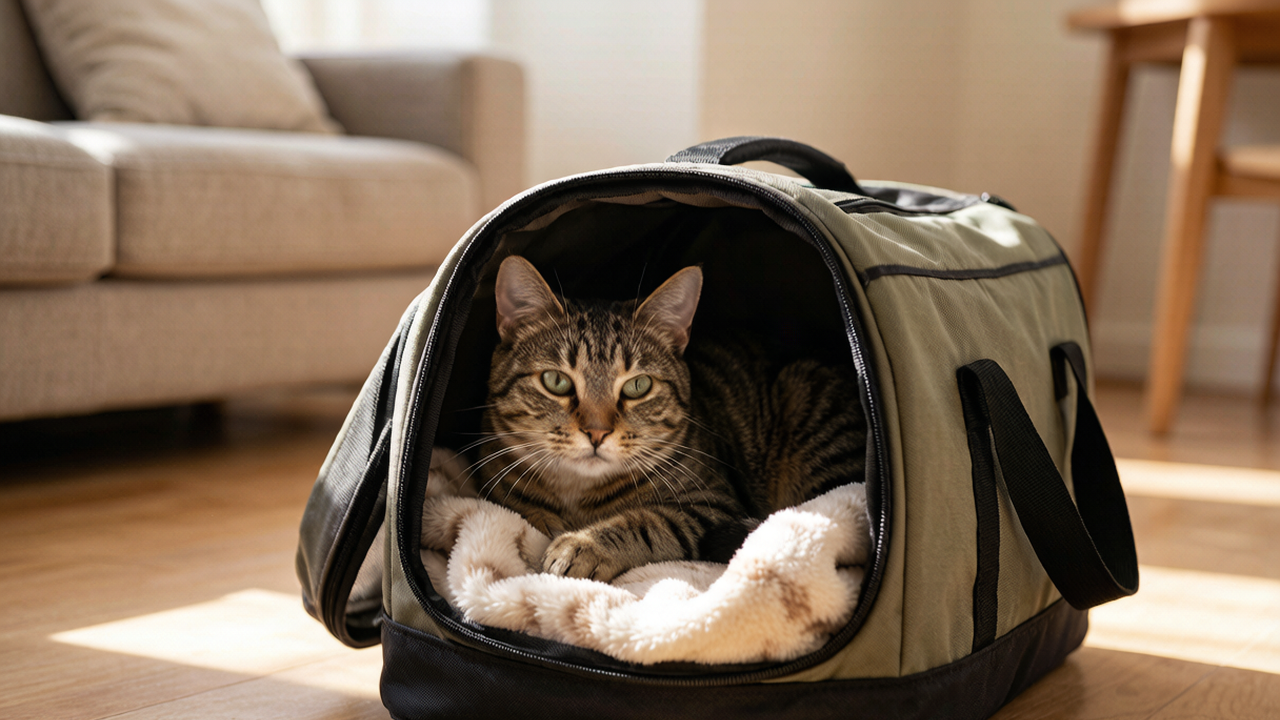
Take the carrier out of the closet and put it in the living room. Permanently. Door removed. Add a soft blanket inside that smells like your cat (rub it on their favorite sleeping spot for a few days first).
For the first three days, do nothing except leave it there. Your cat will likely walk past it, sniff it once, and otherwise ignore it. That's perfect. A carrier that's part of the furniture is a carrier that isn't scary.
On day four, toss a few treats near the entrance — not inside, just nearby. By day six, place treats inside the carrier, and your cat will step in to grab them and walk right back out. No pressure, no closed doors, no trickery. Just a weird little box in the living room that occasionally dispenses snacks.
Step 2: Meals Move Closer
Once your cat is comfortable stepping into the carrier for treats, start feeding meals progressively closer to it. Day one: food bowl six feet away. Day three: three feet. Day five: right at the entrance. By the end of the first week, they'll be eating with their front half inside the carrier.
The rule: never move the bowl farther into the carrier unless your cat has eaten comfortably at the current distance for at least two meals in a row. If they hesitate, move it back. No ego about it.
By day ten, put the entire meal at the back of the carrier. Your cat will walk in, eat the whole thing, and walk out. No drama. The carrier has officially become "the place where food appears," and cats are very, very motivated by the places where food appears.
Step 3: Door Touching (Not Closing)
This is the delicate part. Once your cat is happily eating inside the carrier, start touching the door gently while they eat. Not closing it — just resting your hand on it. They'll glance up once, decide it isn't a threat, and keep eating.
After a few days of door-touching, move the door slightly — just an inch — while they eat. Then back open. Just enough for them to notice the door can move and nothing bad follows.
Step 4: Door Closed for Seconds
Close the door while your cat is eating, count to three, and open it. They'll keep eating without looking up. The next day, ten seconds. Then thirty. Then a full minute. The key: always open the door while your cat is still calm and still eating. Never wait until they want to leave. You want the memory to be "door closed, food good, door opened while everything was fine" — not "door closed, panic, scratching, and then finally it opened."
Step 5: Short Carries and the Holy Grail: The Vet
After about two and a half weeks, you can close your cat in the carrier, pick it up, walk to the front door and back, and set it down without any yowling or panic.
The real test is the vet visit. Here's what to do differently: leave the carrier out the night before (it's already out permanently, so this is easy). Put breakfast in the carrier as usual. Close the door while your cat is finishing the last few bites. By the time they realize you're in the car, you're halfway there, and they're more confused than terrified.
Will your cat be thrilled about the vet? No. They're a cat. But they won't fight going into the carrier, they won't cry on the drive, and — most importantly — you won't need gauze afterward.
The Stuff That Didn't Work (So You Can Skip It)
The towel burrito. You know the technique — wrap your cat in a towel like a furry burrito and lower them into the carrier. In YouTube videos this looks graceful and efficient. In a real home with a real cat, it looks more like a malfunctioning rodeo. The cat escapes the burrito in under two seconds and the towel becomes yet another object they're suspicious of for weeks.
The top-loading carrier. Owners often buy one specifically because people swear it's easier — just drop the cat in from above. In practice, the cat sees the open top and immediately recognizes it as "the grab zone." They flatten themselves against the floor like a furry pancake the moment they see that lid open. A front-loading carrier with a top that unzips fully tends to work better because it gives you options.
Feliway spray in the carrier. It may work for some cats, but it often does little for others. A pheromone diffuser plugged into the wall near the cat's favorite sleeping spot tends to help more than the spray-on-the-carrier version, but honestly, the training makes 90% of the difference. The pheromones are maybe the last 10%.
If You Have a Carrier Emergency
Sometimes you don't have three weeks. The cat needs to see a vet tomorrow and bolts the moment they hear the closet door creak. Here's what you do:
Get the carrier out today. Right now. Put it somewhere the cat can see it with the door open and a blanket inside that smells like them. Even 24 hours of "the carrier exists and nothing bad happened" is better than zero.
When it's go time, position the carrier vertically with the opening facing up. Scoop your cat gently but firmly — support their back end, don't dangle them — and lower them back-feet-first into the carrier. Cats are less likely to struggle when entering feet-first because they can see where they're going. It's not as good as the three-week method, but it's significantly better than head-first shoving.
After the vet, do NOT put the carrier back in the closet. Leave it out. Put treats in it. Start the training process now so the next vet visit doesn't require an emergency protocol.
What to Know Now
After leaving the carrier out permanently for a while, some cats start sleeping in it. A cat may voluntarily nap in the carrier once it stops being a Bad Thing Predictor and becomes a cozy enclosed nap spot.
The takeaway: when the carrier is a normal part of your cat's environment instead of a once-every-six-months nightmare machine, the problem mostly solves itself. Everything else — the treats, the meal training, the door practice — just speeds up what the carrier's presence is already doing on its own.
If you're currently dealing with scratched forearms, it can get better. Start today. Put the carrier in your living room. Don't even do anything with it. Just let it sit there. Your arms will thank you later.
---
What's your carrier horror story? Did your cat discover a hiding spot so creative you had to cancel the appointment entirely? Share your experience in the comments to help other readers feel less alone.
This article is for informational purposes only and is not a substitute for professional veterinary advice, diagnosis, or treatment. Always consult a licensed veterinarian if your pet shows signs of illness, injury, or distress. If you believe your pet is experiencing a medical emergency, contact your veterinarian or the nearest emergency animal hospital immediately.
🐾 Enjoyed This Article?
Save it for later, share with a fellow pet parent, or check out more tips on our homepage!
📩 Never Miss a Tip
Get our best pet care hacks delivered straight to your inbox. No spam, unsubscribe anytime.
Shop pet calming aid on Amazon & Chewy
Comparing prices before you buy? Check current deals and read reviews from other pet owners.