I Fried My Dog's Paws on a 30-Second Walk to the Mailbox — Here's What I Do Differently Now
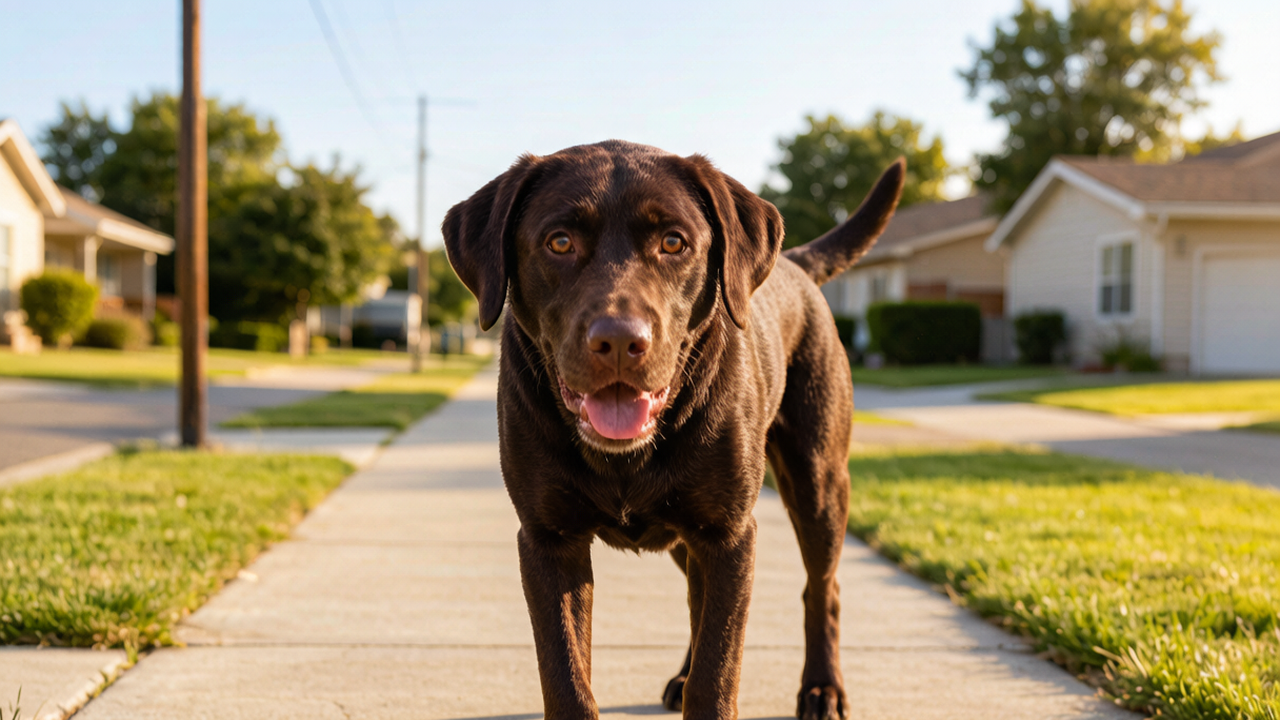
The first thing I noticed was the smell.
Not that wet-dog, just-got-back-from-a-walk smell. Something different. Sharper. Almost like singed hair. I looked down at Cooper, my chocolate Lab, and he was lifting his left front paw off the kitchen tile like the floor was made of lava. Then the right one. Alternating. Doing that little dance dogs do when something's wrong but they're too tough to whine about it.
I flipped his paw over and my stomach dropped. The pads — the tough, leathery pads that have carried him through gravel trails and rocky creek beds — were smooth and shiny. Blistered in two places. One of them had already peeled back, revealing raw pink skin underneath.
It happened on an 87-degree Tuesday in July. I'd walked him to the mailbox. Maybe 30 seconds on the sidewalk, 30 seconds back. That's it.
What I didn't know then — and what I'm going to make sure you know now — is that when the air temperature hits 87°F, asphalt can reach 143°F. At 143°F, it takes less than 60 seconds for a dog's paw pads to sustain second-degree burns. I wasn't being neglectful. I just genuinely had no idea the ground was that hot. My feet were in flip-flops. I couldn't feel it. Cooper couldn't tell me. And by the time I noticed the smell in my kitchen, the damage was done.
The 7-Second Test I Now Do Before Every Single Walk
After that vet visit — $186 for wound cleaning, antibiotic ointment, and a paw wrap that Cooper managed to shred within four hours — I learned the trick that should be on every dog owner's refrigerator.
Press the back of your hand against the pavement for 7 seconds. If you can't comfortably hold it there the full 7 seconds, it's too hot for your dog's paws.
Not 3 seconds. Not "eh, it feels warm." Seven full seconds. Your hand is tougher than a dog's paw pad, by the way — if it hurts you, it's definitely hurting them.
I keep a little infrared thermometer gun in my walking bag now. You can get one for about $15 on Amazon. On an 82-degree day at 2 PM, I measured the asphalt outside my house at 138°F. The concrete sidewalk next to it? 118°F. The patch of grass? 84°F. The difference is wild.
Here's what I've learned about surface temperatures at various air temps:
- Air temp 77°F → Asphalt ~125°F (burn risk after 5+ minutes)
- Air temp 86°F → Asphalt ~135°F (burn risk in under 2 minutes)
- Air temp 87°F → Asphalt ~143°F (burn risk in under 60 seconds)
- Air temp 95°F → Asphalt ~150°F (burn risk almost immediately)
And here's the part nobody tells you: concrete gets hot too. It's cooler than asphalt, sure, but on a 90-degree day concrete can still hit 125°F. "Just walk on the sidewalk" isn't the get-out-of-jail-free card people think it is.
What a Burned Paw Pad Actually Looks Like (So You Don't Miss It Like I Did)
Dogs hide pain. It's what they do. Cooper didn't limp until we were back inside. Outside, he was too excited about the walk to show me anything was wrong.
Here's what to look for when you check your dog's paws after a summer walk:
- The pads look darker, redder, or shinier than usual — the first sign of burn damage
- Blisters or peeling skin — if you see this, it's a second-degree burn and needs a vet
- Licking or chewing at paws more than usual — the dog equivalent of "ow ow ow"
- Limping that appears after you get home, not during the walk
- Refusing to walk on certain surfaces — like tile that feels cold to you but stings their damaged pads
With Cooper, the second-degree burns took about two weeks to heal. Two weeks of indoor-only bathroom breaks on a patch of grass I laid out on the balcony. Two weeks of wrapping and rewrapping his paw (pro tip: use a baby sock over the bandage, secured with medical tape at the top — it stays on way longer). Two weeks of him looking at me with those brown eyes like "why can't we go to the park?"
I felt terrible. And I swore I'd never let it happen again.
What Actually Protects Paw Pads (And What's a Waste of Money)
After the Cooper Incident, I went a little overboard. I bought basically every paw protection product I could find. Here's what actually worked and what didn't:
Paw Wax / Balm — Worth It, But Not a Magic Shield
Products like Musher's Secret and similar paw waxes create a breathable barrier on the pads. They help with minor heat and rough surfaces. I use them on morning walks when the pavement is warm but not scorching. They are NOT a substitute for avoiding hot pavement at peak hours. Think of paw wax like sunscreen for your dog's feet — it helps, but it won't prevent a second-degree burn on 143-degree asphalt.
Dog Booties — The Only Thing That Actually Works on Hot Pavement
I resisted booties for years. They look ridiculous. Cooper gave me a look the first time I put them on that I can only describe as "I will never forgive you for this." He walked like a cartoon horse for the first 10 minutes, picking each foot up dramatically like he was stepping through a minefield.
But here's the thing: dog booties are the only thing that creates a genuine thermal barrier between hot pavement and paw pads. On a 95-degree day when I desperately needed to get him across a parking lot, booties were the difference between a normal walk and another emergency vet visit.
Get the kind with Vibram or rubber soles, not the thin fabric ones meant for indoor traction. Expect to spend $25-50 for a decent set. And yes, your dog will walk funny at first. Mine got used to them after about 20 minutes and now he associates booties with "we're going somewhere fun" rather than "I'm being tortured."
The "Walk on the White Line" Trick — Don't Rely on It
Someone told me "just walk on the painted lines in parking lots, they're cooler." I measured both with my infrared thermometer. On a 90-degree day, the white parking line was 128°F — still plenty hot enough to burn paw pads. Don't count on it.
The Simple Routine That Keeps Cooper Safe Now
I'm not going to tell you to never walk your dog in summer. That's not realistic. Dogs need exercise. We have jobs and schedules. Sometimes the only time you have for a walk is 1 PM on a Saturday.
Here's what I actually do now:
1. The 7-second hand test before every walk. No exceptions. If I can't hold my hand there for 7 seconds, we're not walking on that surface.
2. Walk before 9 AM or after 7 PM in July and August. The pavement has cooled enough by evening and hasn't heated up enough yet in the morning. I set a phone reminder at 7 PM that just says "Cooper walk."
3. Grass routes only when it's borderline. I mapped out a 1.2-mile loop near my house that stays entirely on grass — through two parks, a school field, and a greenway. It takes about 5 extra minutes to get there but it's worth it.
4. Booties in the car at all times during summer. You never know when you'll need to cross a parking lot, stop at a rest area on a road trip, or deal with an unexpected situation. I keep a set of Ruffwear Grip Trex booties in my glove box from June through September.
5. Check paws after every summer walk. I flip each paw over, look at the pads, and feel between the toes for any debris or irritation. It takes 20 seconds. If I'd done this the day of the mailbox walk, I would have caught the burn before it blistered.
What to Do If Your Dog's Paws Get Burned
If you're reading this because it already happened — your dog is limping after a walk and the pads look angry — here's what the vet told me:
First: Get them off the hot surface immediately. Carry them if you have to.
Second: Flush the paws with cool (not ice-cold) water. Do NOT put ice directly on burns — it restricts blood flow and can make tissue damage worse.
Third: For minor burns (slightly red, no blisters), apply an antibiotic ointment (the vet recommended a prescription antibiotic cream, but an over-the-counter ointment works too), wrap loosely with gauze, and keep them off rough surfaces.
Fourth: If you see blisters, peeling skin, or raw tissue — that's a second-degree burn. Go to the vet. Don't try to treat this at home. I waited two days before taking Cooper in and the vet said the delay made the healing process twice as long as it needed to be.
Fifth: Keep the paw clean and dry. This was the hardest part with a 75-pound Lab who thinks mud is a lifestyle. We did a lot of indoor fetch and puzzle toys during the healing period.
The Real Cost of a 30-Second Mistake
Between the vet visit, the ointment, the wound care supplies, the booties I bought afterward, and the cooling mat — my "quick walk to the mailbox" cost me about $350. For perspective, that's roughly what I spend on Cooper's entire annual wellness exam plus flea and tick prevention.
The time cost was worse. Two weeks of modified exercise. Constant monitoring so he wouldn't lick the wound. Waking up at 2 AM when I heard him fussing with the bandage. All because I didn't think to check the pavement temperature before a walk I'd done a hundred times before.
The pavement temperature test takes 7 seconds. The booties take 30 seconds to put on. Walking on grass instead of asphalt adds maybe 2 minutes to a route. Compared to two weeks of a dog in pain and $350 in vet bills? I'll take the 7 seconds every single time.
Cooper's paws healed completely. The pads grew back strong and he's back to his usual self — chasing squirrels, swimming at the lake, and dragging me through the neighborhood on our evening walks. But I still have the infrared thermometer in my walking bag. And I still do the 7-second test. And every July when the sun bakes the pavement outside my front door, I remember that smell in my kitchen and double-check before we step outside.
If you've got a dog and a summer sidewalk, do the hand test before your next walk. It's genuinely the cheapest insurance you'll ever buy.
Has your dog ever burned their paws on hot pavement? What trick did you use to protect them? I'd love to hear what worked — and what didn't — in the comments.
🐾 Enjoyed This Article?
Save it for later, share with a fellow pet parent, or check out more tips on our homepage!