Cat Separation Anxiety: Signs Your Cat Misses You and How to Help
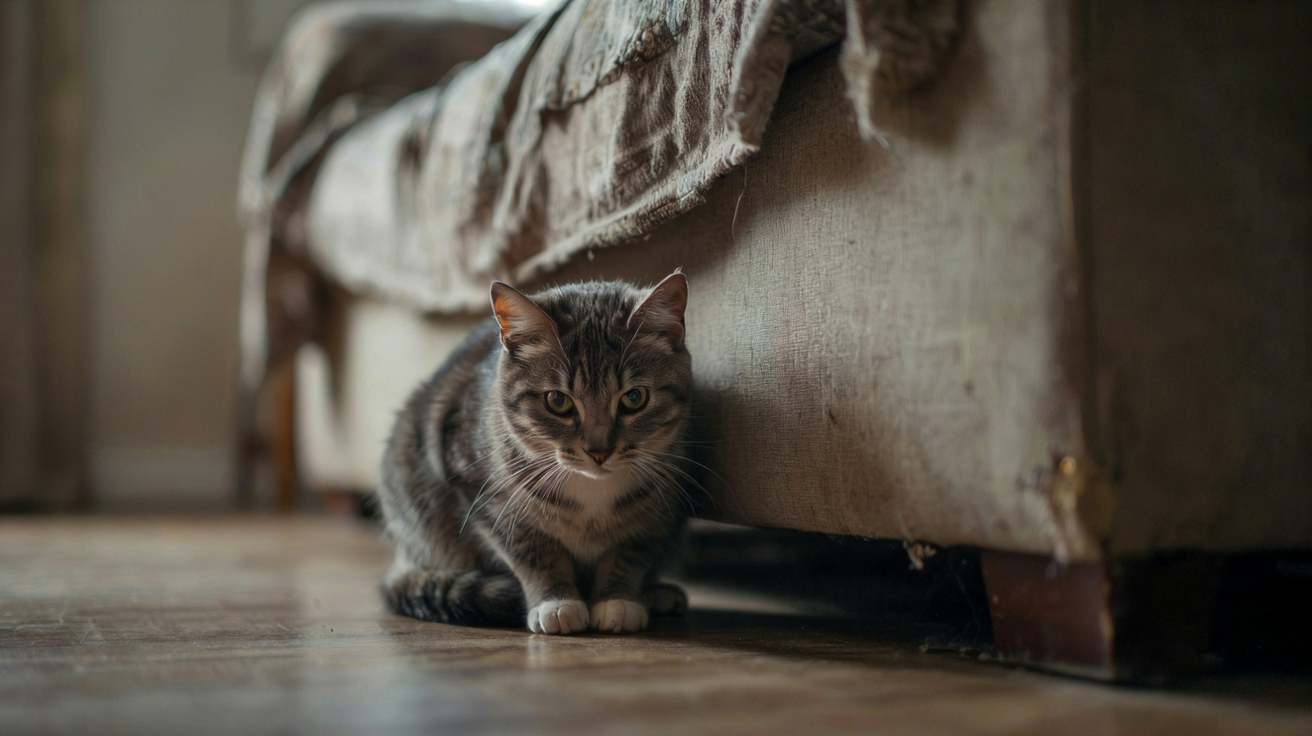
You close the front door and barely make it to the elevator before the yowling starts — a long, loud, unhappy cry that your neighbors have definitely started to notice. Then you come home to a puddle by the door, or a cat who's licked a bald patch into her own side. Cats get labeled independent, but the truth is a lot of them fall apart a little the moment you leave.
Separation anxiety in cats is real, it's more common than most people think, and it's usually mistaken for "acting out" when it's actually genuine distress. Here's how to recognize it, why it happens, and what actually helps your cat feel safe on her own.
Do Cats Even Get Separation Anxiety?
Yes — and this is the part that surprises people. Studies looking at pet cats suggest that roughly one in seven to one in five show at least some behaviors linked to separation distress. Cats may be more solitary than dogs by nature, but the ones who bond deeply with their person can become just as unsettled when that person disappears.
The misunderstanding comes from how differently it shows up. A dog with separation anxiety tends to be loud and destructive in ways you can't miss. A cat's version is quieter — a little meowing, a spot outside the litter box, a bit of fur pulled out — and it's easy to write off as spite or bad habits. It isn't either one. It's stress.
The Signs to Watch For
Cats are subtle, so the signs rarely announce themselves as "anxiety." Instead, you notice a cluster of small changes, mostly tied to your comings and goings:
Vocalizing when you leave. Loud, insistent meowing or yowling that starts the moment you head for the door, or that a pet camera catches while you're gone. It's not asking for food — it's calling for you.
Toileting outside the litter box. This one's telling: a stressed cat often urinates on things that smell like you — the bed, your laundry, the couch where you sit. It's not revenge. It's a cat trying to mix her scent with yours for comfort.
Over-grooming. A cat who licks and licks until she's pulled fur out, leaving bare or red patches, is self-soothing the way a person might bite their nails. It's one of the most common stress signals and one of the easiest to miss until the bald spot shows up.
Refusing food while you're away. Some cats won't touch their bowl until you're home. If you're filling a bowl in the morning and finding it untouched at dinner, that's worth noticing.
Clinging when you're around. The flip side of the distress: a cat who follows you from room to room, can't settle, and needs to be touching you whenever you're home.
Over-the-top greetings. Most cats are glad to see you. A cat with separation anxiety is frantic — loud, weaving, rubbing, following you everywhere for a while before she settles.
Pre-departure distress. A cat who starts pacing, hiding, or meowing the second you pick up your keys or put on your coat has learned those cues mean you're leaving, and the anxiety kicks in before you're even out the door.
If several of these show up together, and they're clearly tied to your absences, separation distress is a strong candidate. The first step, though, is a checkup — several of these signs can also be medical, and ruling that out matters.
Why Some Cats Struggle More Than Others
It's rarely one thing. Certain factors stack up:
- Early weaning or being hand-raised. A kitten separated from her mother and littermates too young can bond so tightly to her person that being apart feels unsafe.
- Single-cat households. When you're your cat's entire social world, your absence leaves a bigger hole.
- A sudden routine change. Going back to the office after months at home, a move, a new job, a new baby — anything that flips a cat's predictable day on its head.
- A history of abandonment or rehoming. Rescue cats who've lost people before can be primed to panic when left alone again.
- Temperament and breed. Some cats are just wired more sensitive. Certain breeds, like Siamese, Burmese, and other people-oriented cats, are reported more often.
What Actually Helps
The goal isn't to make your cat stop loving you — it's to help her feel secure enough that being alone isn't scary. Patience is the whole game; none of this works overnight.
Rule out the medical stuff first. Before you assume it's anxiety, have a professional check for urinary issues, pain, or anything else that might explain litter box accidents or over-grooming. You can't fix a behavior problem that's actually a health problem.
Make departures boring. Cats read your leaving routine as a countdown. So break the association: pick up your keys and then sit back down. Put on your coat and make tea. Do the leaving-ritual movements at random times when you're not actually going anywhere. Over time, the cues stop triggering panic because they stop predicting anything.
Keep exits and returns low-key. Resist the big dramatic goodbye and the huge reunion hug. Come in, stay calm, wait for her to settle, then give affection. You want to teach her that you coming and going is no big deal — not a crisis followed by a celebration.
Give her something to do while you're gone. A bored, lonely cat spirals; a busy cat copes. Puzzle feeders with her meals, a window perch to watch the world, a cat tree to climb, a cardboard box to hide in. Rotate toys so there's always something new. A worn t-shirt with your scent left on her bed can help more than it should.
Tire her out before you leave. Ten or fifteen minutes of real play — a fishing-rod toy, something she can chase — burns off the nervous energy before the door closes. A tired cat is a calmer cat.
Keep a steady routine. Feed, play, and rest at the same times every day. Predictability is comfort for a creature who lives by habit, and it's especially soothing for a cat whose world feels unstable.
Try a calming environment. A pheromone diffuser, a radio or TV left on low, or soft music can soften the stark silence of an empty house for some cats. It's not a cure, but it can take the edge off while the other work takes hold.
Start small if you can. If you know a schedule change is coming — like going back to the office — ease into it. Begin with short absences and stretch them gradually, so the adjustment isn't a cliff.
When to Call In Help
If the distress is severe — she's self-harming, refusing to eat for long stretches, or the behaviors are getting worse despite your efforts — it's time to bring in a professional. A vet or a veterinary behaviorist can dig into what's going on and, in harder cases, discuss whether medication belongs in the picture as a bridge while the training takes hold. There's no shame in it; some cats just need the extra support to get over the hump.
The Bottom Line
A cat who cries when you leave isn't being dramatic — she's telling you she doesn't feel safe on her own yet. The fix isn't to ignore it or to scold it away, and it isn't to never leave the house again. It's to slowly, patiently show her that being alone is okay, and that you always come back. Most cats get there. The ones who struggle hardest are the ones who were never taught that leaving is temporary — and that's exactly what you can teach her.
Does your cat melt down when you leave, or did you find a trick that finally helped her settle? Tell us what worked (or what didn't) in the comments.
This article is for informational purposes only and is not a substitute for professional veterinary advice, diagnosis, or treatment. Always consult a licensed veterinarian if your pet shows signs of illness, injury, or distress. If you believe your pet is experiencing a medical emergency, contact your veterinarian or the nearest emergency animal hospital immediately.
🐾 Enjoyed This Article?
Save it for later, share with a fellow pet parent, or check out more tips on our homepage!
📩 Never Miss a Tip
Get our best pet care hacks delivered straight to your inbox. No spam, unsubscribe anytime.