Why Is My Cat Drinking So Much Water? Causes and When to Worry
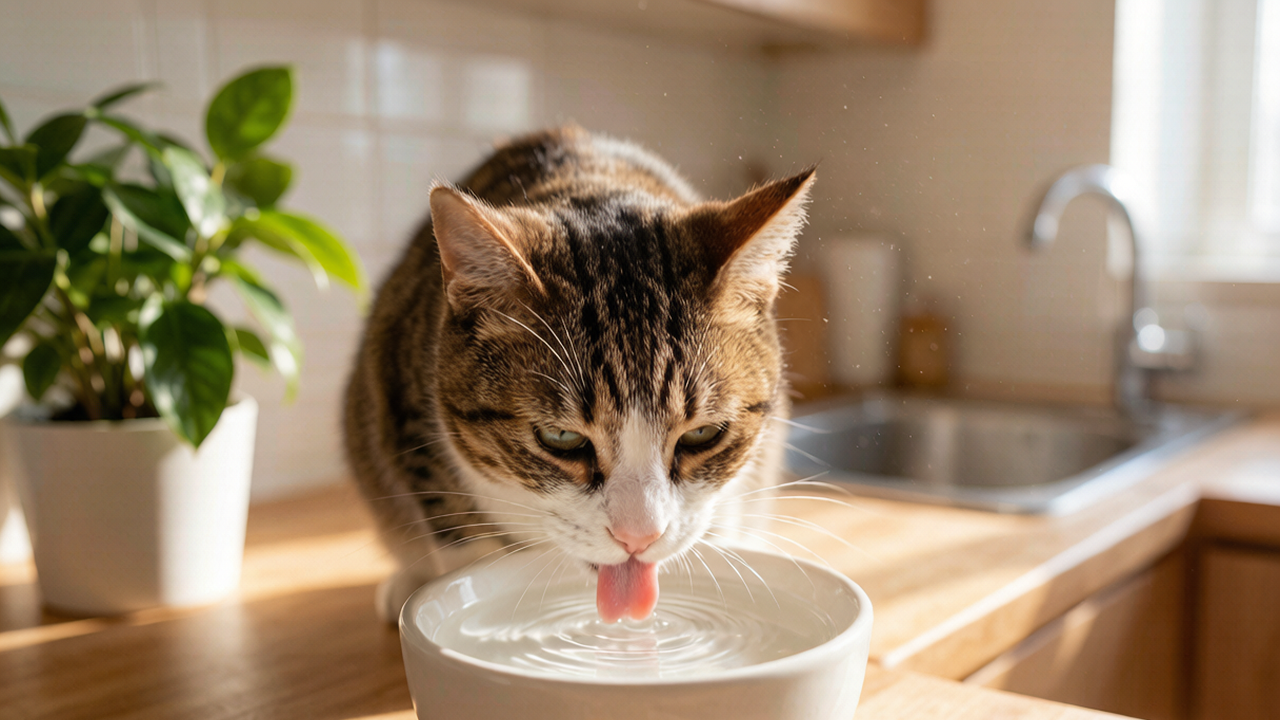
You've been refilling the water bowl more than usual. Or you've noticed the litter box clumps are suddenly twice the size they used to be. Or your cat has started camping out by the faucet, waiting for you to turn it on. It's easy to shrug this off as "he's just thirsty" or "it's hot out" — and sometimes that's all it is. But a cat who's suddenly drinking a lot more than normal is sending a signal, and it's one worth paying attention to.
Cats are famously subtle about being unwell. Increased thirst is one of the few signs they can't fully hide, because it shows up in the bowl and in the litter box. Learning to read it is one of the most useful habits you can build as a cat owner.
What "A Lot" Actually Means
First, a reality check, because this is where people talk themselves out of a vet visit. Cats are built to get a lot of their water from their food. A cat who eats mostly wet food may drink barely anything on his own and be perfectly healthy. A cat on a dry-food-only diet will naturally drink more. Hot weather, a warmer home, and more activity all nudge the number up a little too.
So the question isn't "how much is my cat drinking in absolute terms" — it's "how much is my cat drinking compared to his own normal." A clear, lasting change is the thing to notice.
As a rough ballpark, a healthy cat needs roughly 3.5 to 4.5 ounces of water per 5 pounds of body weight a day, with a meaningful share of that coming from food. But most owners don't measure to the ounce, and you don't need to. What matters is a visible shift: the bowl emptying faster, heavier litter clumps, or a cat seeking out unusual water sources like sinks, tubs, or even plant saucers.
Why It Happens
When a cat drinks a lot more, it usually means his body is either losing more fluid than it should or trying to flush something out. The common causes are conditions that respond far better to early treatment than to waiting:
- Chronic kidney disease. This is the big one in older cats. When kidneys lose the ability to concentrate urine, the cat drinks and urinates more to make up for it. It's very common and very manageable when caught early, often with diet changes and extra fluids.
- Diabetes. High blood sugar spills into the urine and drags water along with it, driving both thirst and appetite. Diabetic cats often drink a lot, urinate a lot, and may lose weight despite eating well.
- Hyperthyroidism. An overactive thyroid speeds up the whole body and can bring increased thirst alongside weight loss, restlessness, and a ravenous appetite.
- Urinary tract issues. An infection or inflammation can make a cat drink more and visit the box more often.
- Diet and environment. Dry food, hot weather, or certain medications can raise water intake in a milder, less concerning way.
The takeaway isn't "it's always something serious" — it's that the same symptom covers both a harmless seasonal bump and a treatable disease, and only a vet can tell you which one you're looking at.
Signs That Should Push You to Call
Increased thirst rarely travels alone. Watch for the company it keeps:
- Weight loss, especially with a normal or bigger appetite
- A change in appetite in either direction
- Vomiting or a dull, unkempt coat
- More frequent or larger clumps in the litter box
- Lethargy or hiding
- Bad breath
Any one of these on its own is worth mentioning to a vet. A lasting increase in thirst plus even one of them is a stronger reason to book a visit sooner rather than later.
One emergency worth knowing cold: a male cat who's straining in the litter box and producing little or no urine — while drinking more — can be developing a life-threatening urinary blockage. That's not a "call tomorrow" situation; that's a "go now" one.
What You Can Do at Home
Before you call, a little tracking turns a vague worry into useful information your vet can act on:
- Measure it. For a day or two, note how much water you put in the bowl and how much is left 24 hours later. It doesn't have to be exact; a rough number is still helpful.
- Note the litter box. How many clumps, and how big? It's the other half of the same picture.
- Collect a sample if you can. A fresh urine sample, ideally caught with non-absorbent litter, can speed up diagnosis. Your vet's office can usually provide a kit.
- Keep fresh water available. This sounds obvious, but never restrict water to "fix" the drinking — the thirst is a symptom, and restricting water can make the underlying problem worse fast.
Small Habits That Make the Bowl More Inviting
If your cat is on the dry side by nature, a few easy daily tweaks can keep water intake steady and give you a more useful baseline to compare against later:
- Offer more than one water source. Most cats prefer not to drink right next to their food or litter box. A second bowl in a quiet, low-traffic room often gets used more than the "main" one.
- Swap in a water fountain. Many cats drink noticeably more from a moving-water source. It also makes a sudden change easier to notice, because you're not refilling the same still bowl twice a day.
- Add water to wet food. A small splash of plain water on top of canned food, or a bit mixed in, is a gentle way to bump up daily fluid without changing the diet.
- Clean the bowl daily. Cats have sensitive noses, and a slimy or stale bowl quietly puts them off drinking. A quick rinse and refill each morning is enough.
None of these are medical fixes, and they don't replace a vet visit if something is off — but they give you a steadier "normal" to compare against, which makes the early signs easier to catch.
What Happens at the Vet
For most cats with increased thirst, the workup is straightforward and fast: bloodwork to check kidney values, blood sugar, and thyroid levels, plus a urine test. Those few tests identify the cause in the large majority of cases. Depending on the results, your vet may add imaging to look more closely at the kidneys and bladder.
The encouraging part is how treatable most of these conditions are. Kidney disease is often managed for years with diet and fluid support. Diabetes is manageable with insulin and feeding changes. Hyperthyroidism responds well to medication or other treatment. In almost every case, catching it early means a longer, more comfortable life for your cat.
The Bottom Line
A cat who's suddenly drinking like he's training for a marathon isn't being dramatic — he's telling you something. Sometimes it's nothing, but "nothing" isn't a diagnosis you can make from the couch. The bowl and the litter box are the two cheapest diagnostic tools you own. If the change is real and it's lasting, let a vet run the tests. Worst case, you get peace of mind. Best case, you catch something early, while it's still small.
This guide is written by experienced pet owners for pet owners and reflects general pet-care guidance, not medical advice. It doesn't replace an exam or bloodwork from a veterinary professional. When in doubt about any change in your cat's drinking, eating, or bathroom habits, get it checked.
Have you ever caught a health issue early just by noticing your cat's water bowl or litter box changed? Tell me what tipped you off — it might help someone else notice sooner.
---
If you found this helpful, you might also like:
- What to do when a cat won't drink water
- Why your cat is vomiting: what the color means
- Cat throwing up after eating too fast
- Water fountains that get cats to drink more
This article is for informational purposes only and is not a substitute for professional veterinary advice, diagnosis, or treatment. Always consult a licensed veterinarian if your pet shows signs of illness, injury, or distress. If you believe your pet is experiencing a medical emergency, contact your veterinarian or the nearest emergency animal hospital immediately.
🐾 Enjoyed This Article?
Save it for later, share with a fellow pet parent, or check out more tips on our homepage!
📩 Never Miss a Tip
Get our best pet care hacks delivered straight to your inbox. No spam, unsubscribe anytime.
Shop cat supplies on Amazon & Chewy
Comparing prices before you buy? Check current deals and read reviews from other pet owners.