Why Does My Dog Stare at Me? What That Long Look Really Means
---
title: "Why Does My Dog Stare at Me? What That Long Look Really Means"
slug: "why-does-my-dog-stare-at-me"
category: "pet-care"
display_category: "Behavior"
tags: ["dog behavior", "dog body language", "dog bonding", "dog staring"]
---
Why Does My Dog Stare at Me? What That Long Look Really Means
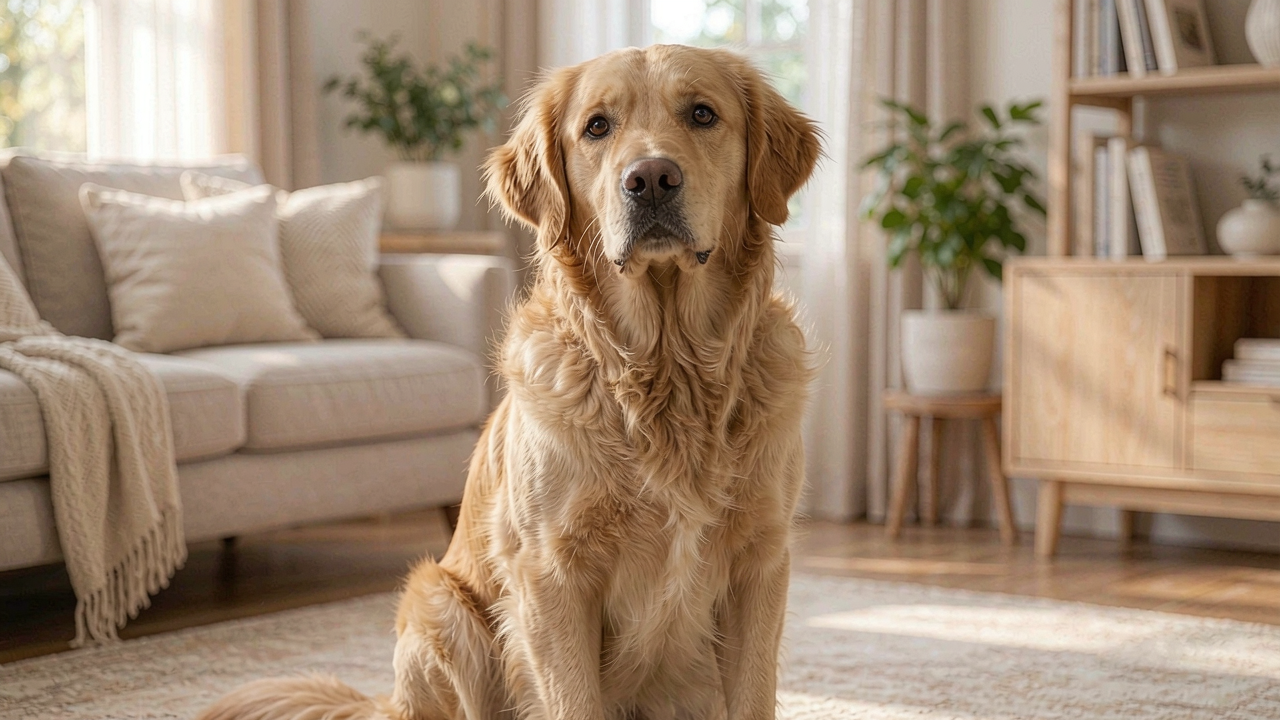
It's late, you're on the couch, and you feel eyes on you. You look up, and there it is — a pair of unblinking eyes fixed on your face. Not a glance, not a quick check, but a full, steady stare that goes on just a little longer than feels comfortable. Most dog owners know this feeling well, and almost all of them have asked the same question at some point: why does my dog stare at me?
The short answer is that a dog's stare almost always means something — and usually something good. Dogs are, by a wide margin, the animal most tuned in to human faces, moods, and body language. When a dog watches you, they're reading you like a book. The trick is learning to tell the difference between "I love you," "I need to go out," and the rarer "back off."
Your dog is reading you — constantly
Dogs don't have words, so they've become experts at watching us. They follow our pointing gestures, track where our eyes look, and memorize our daily routines down to the smallest signals. Pick up the leash, and most dogs are at the door before you even say the word. Open the fridge at a certain hour, and a nose appears at your elbow. None of that is magic — it's a dog reading a pattern and watching for the next cue.
That's the first and most common reason a dog stares: they're waiting to see what happens next. They've learned that certain actions of yours predict things that matter to them — walks, meals, play, or a trip outside. So they watch, quietly, trying to piece together what you're about to do. It's not demanding behavior; most of the time it's simple attention, the same way you might watch the road signs while driving.
What's genuinely remarkable is how much dogs pick up without any training at all. They read the direction we lean, the tone of our voice, and the micro-expressions on our face. Studies going back decades show dogs can follow a human pointing gesture better than almost any other species, including animals far more closely related to us. Some researchers think this is exactly what thousands of years of living alongside people selected for: a creature that pays close attention to us.
Sometimes the stare is a request
Watch the context and the stare usually explains itself. A dog parked next to the back door with a pointed look is probably asking for a bathroom break. A dog watching your dinner with soft, hopeful eyes is asking for a bite — even if the answer should be no. A dog nudging a toy across the floor and then locking eyes is saying "play with me." A dog sitting beside an empty water bowl and staring is telling you something pretty direct.
Here's the thing to keep in mind: dogs learn fast. If a stare has ever earned them a treat, a scratch, or a walk, they'll use it again. A lot of "demand staring" at the table is something we accidentally train into our dogs. You glance up, feel a little guilty, and hand over a scrap — and just like that, the dog has learned that staring pays. It's the canine equivalent of a tap on the shoulder that turns into a habit.
The fix isn't punishment; it's simply deciding what you'll reward and being consistent. If you don't want a dinner-table beggar, ignore the stare. Even better, teach the dog an alternative: settle on a mat during meals and get rewarded there instead, or ring a bell by the door when they need to go out. Once a dog has a clear, rewarded way to ask for what they want, the silent staring usually dials way down.
The hard stare is a different animal
Most staring is soft. The eyes are relaxed, the body loose, the tail maybe wagging. But there's a very different kind of stare worth learning to spot, because it means the opposite thing. A "hard stare" looks frozen — unblinking, body stiff, ears back or pinned, pupils sometimes enlarged. In the canine world, direct, unbroken eye contact with a rigid body is a warning, not affection. It can come with a growl or a lowered head, and it often shows up around a valued resource — a bone, a food bowl, a favorite bed.
This one matters. If your own dog gives you a hard stare over a bone or a toy, that's a form of resource guarding, and it's a signal to back off and get help from a trainer or behaviorist rather than push the issue. It also matters around unfamiliar dogs: never stare down a strange dog or hold one still to look into its eyes. To a dog you don't know, that reads as a challenge. A calm sideways glance and a soft body are far safer, which is why trainers advise keeping your gaze soft and your posture relaxed around a dog you've just met.
The loving gaze is real, and it's backed by science
Then there's the nicest reason of all. When you and your dog gaze into each other's eyes in a relaxed moment, something measurable happens in both of you: levels of a bonding hormone called oxytocin rise. It's the same hormone that spikes between a mother and her baby. In a well-known study from Japan, researchers measured oxytocin in both dogs and their owners before and after they spent time gazing at each other — and found the levels went up in both, in a kind of feedback loop: the dog looks at you, your oxytocin rises, you look back, theirs rises, and the bond tightens a little more each time.
So when people say their dog "loves" them with their eyes, they're not being sentimental. There's actual chemistry behind it, and it's one of the reasons that long, soft look from across the room feels so good.
The flip side is that you shouldn't force it. A relaxed mutual gaze is lovely; holding a dog still and staring them down is not, because most dogs read that as pressure rather than affection. Let the look happen naturally, and return it with a soft expression instead of a locked-on stare.
A few other reasons worth knowing
- While they're doing their business. If your dog stares at you while pooping, that's not weird — it's trust. Dogs feel vulnerable in that moment, and they're checking in with you because they've learned you'll watch their back. It's a leftover instinct: a dog who keeps eyes on you while in a vulnerable position is counting on you to be the lookout.
- Confusion. A dog that tilts their head and stares after you give a cue may simply not understand yet. It's not stubbornness; it's a dog asking for one more hint. Give the cue again with a clearer gesture, or break the task into smaller steps.
- Something's changed. In senior dogs, a sudden blank stare into a wall or corner — especially alongside other signs like pacing, getting lost in familiar rooms, or a change in sleep — can be a sign of cognitive decline. Any abrupt change in how much your dog stares, or where they stare, is worth a check-in with your vet, because a few medical issues (including vision changes, pain, or certain neurological conditions) can show up this way too.
How to respond without making it weird
Most of the time, the answer to a staring dog is simple: just respond to the need. Check the water bowl, offer a walk, or enjoy the moment and give a scratch. If the stare is the demanding kind and you'd rather not reinforce it, redirect — ask for a sit or a down, then reward that instead of the stare.
Reading a dog's stare is really just reading the whole dog. Eyes are one piece of a much bigger picture that includes ears, tail, body posture, and what's happening around you. A wagging tail plus soft eyes means something very different from a frozen body plus a hard, unblinking gaze. Get in the habit of looking at all of it together, and that long look from across the room stops being a mystery and becomes one of the clearest channels of communication you two have.
So next time you catch your dog watching you, take a second to read the whole scene before you respond. Chances are it's one of the simplest messages a dog can send: I'm here, I'm paying attention, and you're the center of my world.
Does your dog have a signature stare? Tell us what it usually means in your house — we'd love to hear how your pup asks for things.
This article is for informational purposes only and is not a substitute for professional veterinary advice, diagnosis, or treatment. Always consult a licensed veterinarian if your pet shows signs of illness, injury, or distress. If you believe your pet is experiencing a medical emergency, contact your veterinarian or the nearest emergency animal hospital immediately.
🐾 Enjoyed This Article?
Save it for later, share with a fellow pet parent, or check out more tips on our homepage!
📩 Never Miss a Tip
Get our best pet care hacks delivered straight to your inbox. No spam, unsubscribe anytime.