Why Does My Dog Eat Grass? (And When It's Actually a Problem)
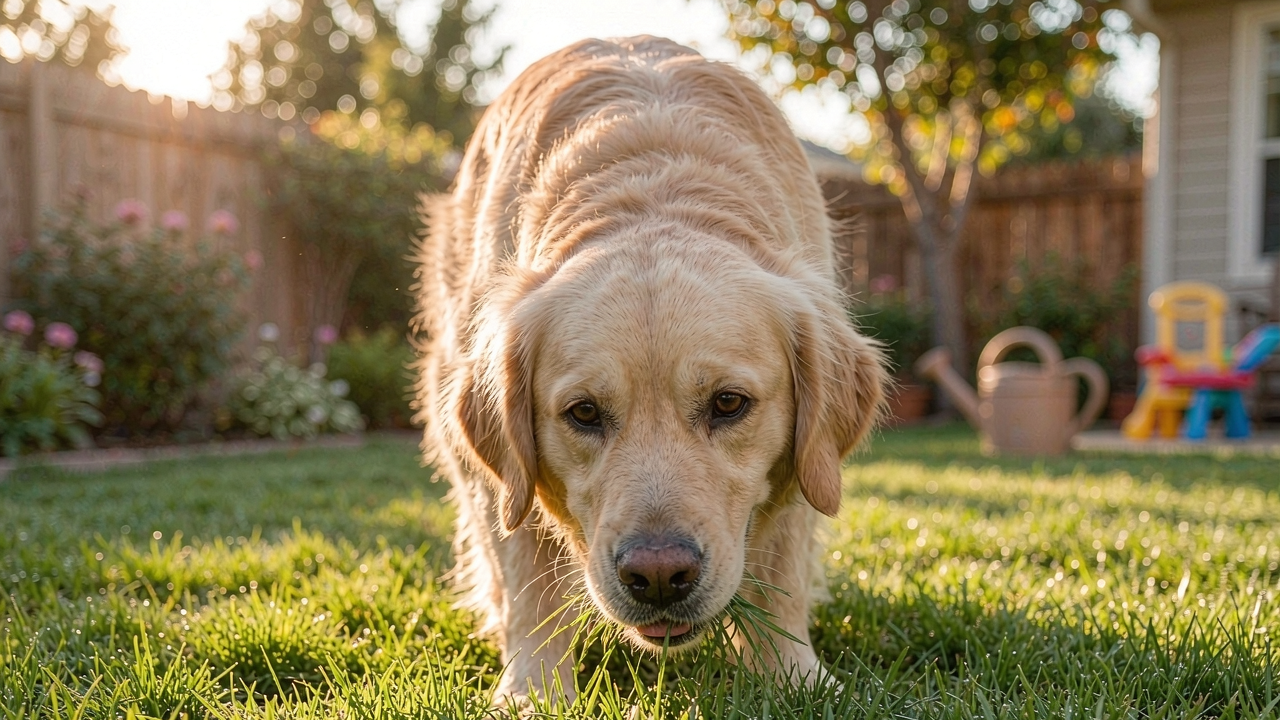
You're out on a walk, the leash goes slack, and suddenly your dog is going at a patch of lawn like it's an all-you-can-eat buffet. Most owners have stood there at least once, holding the leash and trying to decide whether to yank them away or just let them finish. It looks a little weird, and it looks a little worrying. But here's the reassuring part up front: for the vast majority of healthy dogs, eating grass is completely normal.
Why do dogs do it?
There's no single answer, which is exactly why it keeps owners guessing. Dogs eat grass for a handful of reasons, and a lot of the time it's more than one at once.
They like the taste and texture. This sounds too simple, but it's probably the biggest reason. Fresh young grass — especially the tender spring growth — has a texture and a smell that plenty of dogs genuinely enjoy. Think of it like a person craving something crunchy. If your dog seems otherwise fine and just takes a casual nibble here and there, taste is usually the whole story.
It's instinct. Dogs descend from wild canines, and their ancestors didn't eat meat alone. When a wild canine takes down prey, the meal often includes whatever plant matter was sitting in that animal's stomach, so a taste for greenery has been part of the species for a very long time. Grass shows up regularly in the diets of wild dogs, which makes the occasional lawn snack less "weird habit" and more "old wiring."
Boredom or attention-seeking. A dog left in the yard with nothing to do will find something to do, and grazing is an easy one. And if every time they chomp grass you rush over, call their name, or even just scold them, they learn fast that grass equals attention. To a dog, even "knock it off" is still attention — which can accidentally teach them to do it more.
Fiber or a food gap. Some dogs seek out grass because they're after extra fiber, and the roughage helps keep the gut moving. In a smaller number of cases, regular grass-eating that's paired with other odd nibbling — rocks, dirt, fabric — can point to something called pica, a drive to eat non-food items. That's worth a conversation with a vet, especially if it's new or getting obsessive.
An unsettled stomach. This is the reason everyone's heard of: the dog eats grass to make themselves throw up. There's a grain of truth, but it's mostly overstated. A survey of around 1,500 dogs found that fewer than 1 in 10 seemed unwell before they grazed, and only about 1 in 4 actually threw up afterward. So most grass-eaters aren't sick, and most don't vomit. That said, some dogs do seem to reach for grass when their stomach is off. One pattern that comes up a lot: a dog with an empty stomach will gobble grass first thing in the morning and then bring up a little yellow foam. That foam is bile — stomach acid with nothing to digest — and it's irritating. Some dogs seem to use grass as a rough-and-ready way to settle it. If that's your dog, the usual fix is simple: a small meal first thing in the morning, or a light snack right before bed, so the stomach isn't sitting empty all night.
Who does it the most?
A couple of patterns show up consistently. Younger dogs and puppies graze more than seniors — partly curiosity, partly because they explore the world with their mouths. And there's a seasonal tilt: grass-eating tends to pick up in spring and early summer, when the growth is fresh and soft and, presumably, a lot more appetizing than the dry stuff later in the year. None of that is anything to worry about on its own; it just explains why the habit can seem to flare up and then fade.
Is it harmful?
Grass itself is rarely the problem. The real risks are what might be on it or around it.
- Treated lawns. Fertilizers, herbicides, and pesticides can cling to grass and end up in your dog's system. This is the biggest practical concern — avoid letting your dog graze on grass you don't know is untreated, especially in parks or neighbors' yards where chemicals get used.
- Slugs, snails, and parasites. Lungworm, a parasite dogs can pick up, spreads through slugs and snails, and grass they've crawled over can be a carrier. It's not a reason to panic at every nibble, but it's a good reminder to stay current on parasite prevention.
- Toxic plants. A lot of common garden plants are fine, but some are genuinely dangerous, and the grass itself isn't the issue — it's whatever they're grazing alongside.
So the grass is usually harmless. It's the environment that matters.
When should you actually step in?
A casual nibble is no big deal. But a few signals turn "quirky habit" into "worth a vet visit":
- They eat grass but won't touch their normal food.
- They're eating it obsessively or in large amounts.
- They regularly vomit after eating grass.
- They seem off in other ways — low energy, losing weight, or a change in bathroom habits.
Any of those, and it's less about the grass and more about what might be going on underneath. A dog who's suddenly and constantly grazing can be trying to self-manage an upset gut, and that's a conversation to have with a professional rather than something to wait out.
What you can actually do about it
If the habit is driving you nuts, the good news is you almost never need to punish it — and you shouldn't. Shouting or yanking the leash teaches fear, not a better behavior. Instead:
Check for boredom first. More exercise, more mental stimulation, a puzzle feeder, or a longer, more interesting walk will often quiet the behavior on its own. A tired, engaged dog has less reason to graze.
Make sure the diet is solid. If you suspect a fiber gap, talk to a vet before switching foods — a small change can make a difference, but it's worth doing thoughtfully.
Redirect instead of fight. If they're about to munch, call them over, offer a toy or a treat, and reward them for coming to you. A reliable "leave it" and a solid recall give you a clean way to redirect without a power struggle.
Manage the environment. Keep them away from unknown or treated grass on walks, and if they graze in your own yard, keep the lawn chemical-free or steer them toward a designated play spot.
And if none of that fits — if your dog just really likes grass, it's untreated, and they're healthy — it's honestly fine to let them have their salad now and then. Most dogs eat some grass at some point, and the majority are no worse for it.
So the next time you catch your dog mid-graze, the answer is usually: take a breath, check the grass isn't treated, and let it be. It's one of those dog things that looks stranger than it actually is.
Has your dog got a grass habit — and do they throw up after, or is it the "munch-and-carry-on" kind? Drop a comment and tell me what yours does. I'm always curious how these little habits show up so differently from one dog to the next.
This article is for informational purposes only and is not a substitute for professional veterinary advice, diagnosis, or treatment. Always consult a licensed veterinarian if your pet shows signs of illness, injury, or distress. If you believe your pet is experiencing a medical emergency, contact your veterinarian or the nearest emergency animal hospital immediately.
🐾 Enjoyed This Article?
Save it for later, share with a fellow pet parent, or check out more tips on our homepage!
📩 Never Miss a Tip
Get our best pet care hacks delivered straight to your inbox. No spam, unsubscribe anytime.