Why Does My Dog Eat Dirt and Rocks? Causes and How to Stop It
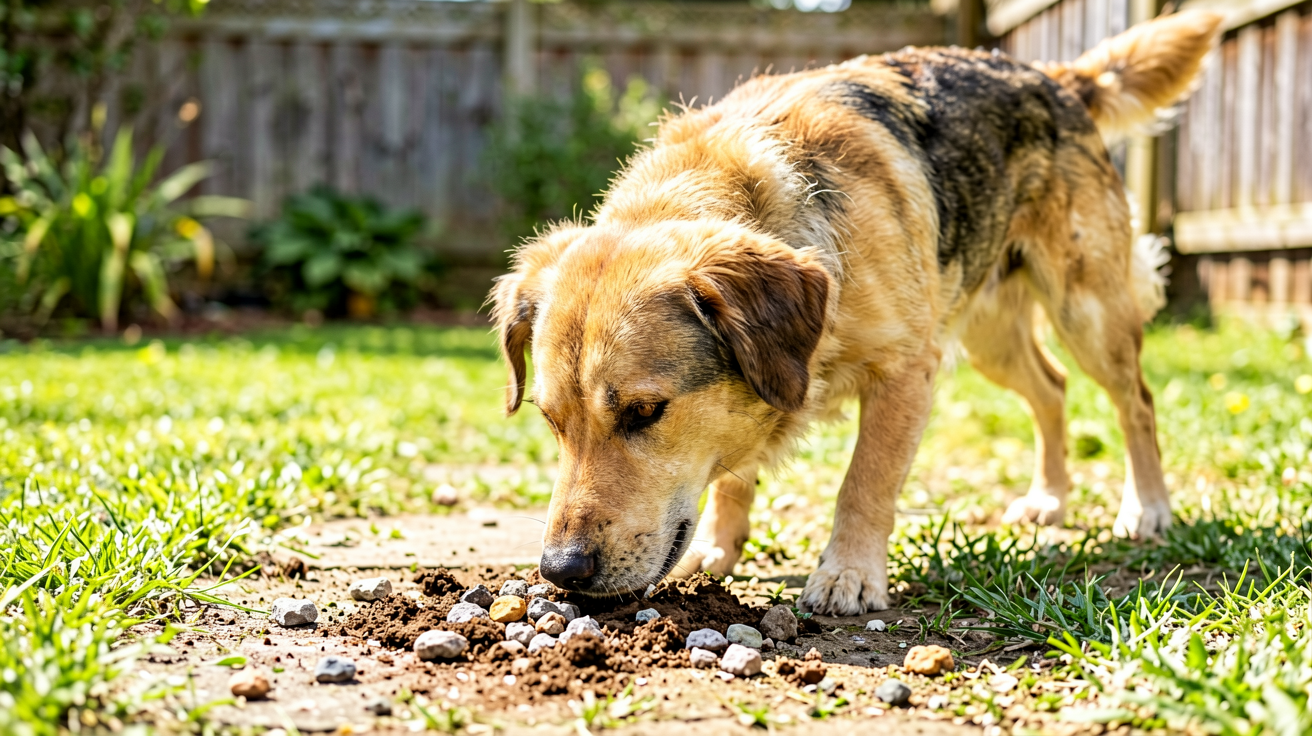
You let your dog out into the yard and ten minutes later they're nose-down in the flower bed, chewing on a mouthful of dirt. Or you catch them crunching on a pebble like it's a snack. It's weird, it's a little alarming, and if you've ever fished a rock out of their mouth, you already know it's a habit you'd rather break.
The short answer is that this behavior has a name — it's a form of pica, the compulsion to eat things that aren't food (eating dirt specifically is called geophagia). And while a curious puppy occasionally tasting the ground is usually harmless, a dog who does it regularly is often trying to tell you something. Figuring out which of the usual causes is behind it is the first step to stopping it.
The Usual Reasons Behind It
1. Nutritional Gaps
This is one of the first things worth considering, because it's so common and so fixable. Dogs who aren't getting enough of certain minerals — iron, calcium, or a few others — will sometimes eat dirt in an attempt to fill the gap. Anemia, or a diet that's home-prepared and not properly balanced, can both sit behind this. If your dog's dirt eating came out of nowhere, or comes with a dull coat, low energy, or pale gums, a nutritional check is a sensible starting point.
2. A Medical Cause
Sometimes the urge has nothing to do with willpower. Gastrointestinal upset, intestinal parasites, diabetes, and certain thyroid or hormone conditions can all trigger unusual eating habits. Parasites are worth a special mention, since they can interfere with how well a dog absorbs nutrients — which can circle right back to that "eating dirt to fill a gap" instinct. If the behavior is new, persistent, or paired with other symptoms, it's worth ruling out a medical cause before treating it as a training problem.
3. Boredom or Not Enough to Do
A lot of dogs eat dirt and chew on rocks simply because they're under-stimulated. A dog left alone in a bare yard with nothing to sniff, chew, or chase will make their own entertainment — and that sometimes means swallowing things they shouldn't. This is especially true for high-energy and working-type breeds, who need real mental work, not just a quick walk around the block.
4. Stress or Anxiety
Dogs don't always show stress by pacing or whining. Some self-soothe with repetitive behaviors, and compulsive eating of non-food items can be one of them. Big changes — a move, a new baby, a change in routine, time alone that stretches too long — can all push a dog toward it.
5. Puppies Explore With Their Mouths
If your dirt-eater is a puppy, there's a decent chance it's mostly just exploration. Puppies experience the world through their mouths, and the occasional mouthful of soil is usually a passing phase they grow out of — as long as it doesn't become a habit or involve swallowing anything dangerous.
6. It Smells Interesting
Dogs have a nose we can't really fathom, and dirt sometimes carries tempting traces — leftover food, animal waste, fertilizer, or a bone buried last week. In these cases the dog isn't lacking nutrients or stressed; they're just following their nose toward something that smells edible, even when it isn't.
Why Rocks Are the Bigger Worry
Eating a little dirt is usually a nuisance. Swallowing rocks is a different story. Rocks can:
- Chip or break teeth
- Pose a choking risk
- Cause an intestinal blockage that requires emergency surgery
- Tear or perforate the digestive tract
A small stone might pass through on its own, but larger or sharp ones can lodge in the gut — and that's a genuine emergency. This is the part of the habit you really don't want to wait out.
Signs That Point to Trouble
If your dog has been eating dirt or rocks and you see any of the following, get help quickly:
- Vomiting or gagging
- Loss of appetite
- Straining to poop, or constipation
- Lethargy or weakness
- A painful or bloated belly
- Whining or guarding the abdomen
These can point to a blockage, and blockages don't get better on their own.
What You Can Actually Do About It
Start With a Vet Check
Before you treat dirt eating as a bad habit, it's worth ruling out the physical stuff — nutritional deficiencies, anemia, parasites, or an underlying condition. A simple check and some baseline tests can tell you whether you're dealing with a medical issue or a behavioral one, and that changes the whole approach. This is the step a lot of owners skip, and it's often the one that reveals the real answer.
Upgrade What's in the Bowl
If the diet is the weak link, fixing it often fixes the behavior. Make sure your dog is on a nutritionally complete, balanced food appropriate for their age and activity level. If you feed home-prepared meals, it's especially important to make sure they're properly balanced — this is something worth walking through with a professional, because gaps here are easy to miss and slow to show.
Give Them More to Do
Boredom is one of the most common drivers, and the fix is usually more stimulation, not more scolding. Longer or more interesting walks, puzzle feeders, chew toys, scent games, and a bit of training each day can go a long way. A tired, mentally satisfied dog is a lot less interested in the flower bed.
Manage the Environment
This one's simple but effective: take away the temptation. Walk your dog on a leash in areas where they tend to snack on dirt, and supervise yard time so you can interrupt the behavior before it starts. Remove loose rocks from the spaces they use most, and consider fencing off garden beds you'd rather they stay out of.
Teach "Leave It"
A solid "leave it" cue is one of the most useful things any dog can learn, and it applies to way more than dirt. Teach it in calm, low-distraction settings first, then build up. When your dog turns away from something they'd normally mouth, reward the choice — that positive feedback does more than any punishment would.
Skip the Punishment
Yelling or scolding tends to backfire with this habit. If the behavior is rooted in anxiety, punishment can make it worse. Calm redirection — offering an appropriate chew, calling them away, or simply removing the temptation — works better in the long run and keeps the trust intact.
When It's Time to Get Help
Reach out to a vet right away if your dog has swallowed a rock and is showing any signs of blockage, or if the dirt eating is new, obsessive, or comes with symptoms like vomiting, weight loss, or lethargy. And if you've ruled out medical causes and the habit still won't budge, a behavior specialist can be worth their weight in gold — compulsive eating can run deep, and there's no shame in getting an expert involved.
At the end of the day, a dog who eats dirt and rocks isn't being "bad." They're usually bored, stressed, or running low on something their body needs. Figure out which one it is, and the habit usually starts to fade on its own — and you'll both be a lot less stressed for it.
Has your dog ever gone through a dirt-eating phase? What did you find was behind it — and what finally got them to knock it off? I'd love to hear what worked at your place.
This article is for informational purposes only and is not a substitute for professional veterinary advice, diagnosis, or treatment. Always consult a licensed veterinarian if your pet shows signs of illness, injury, or distress. If you believe your pet is experiencing a medical emergency, contact your veterinarian or the nearest emergency animal hospital immediately.
🐾 Enjoyed This Article?
Save it for later, share with a fellow pet parent, or check out more tips on our homepage!
📩 Never Miss a Tip
Get our best pet care hacks delivered straight to your inbox. No spam, unsubscribe anytime.