Why Does My Dog Chase Cars and Bikes? How to Stop the Chase Safely
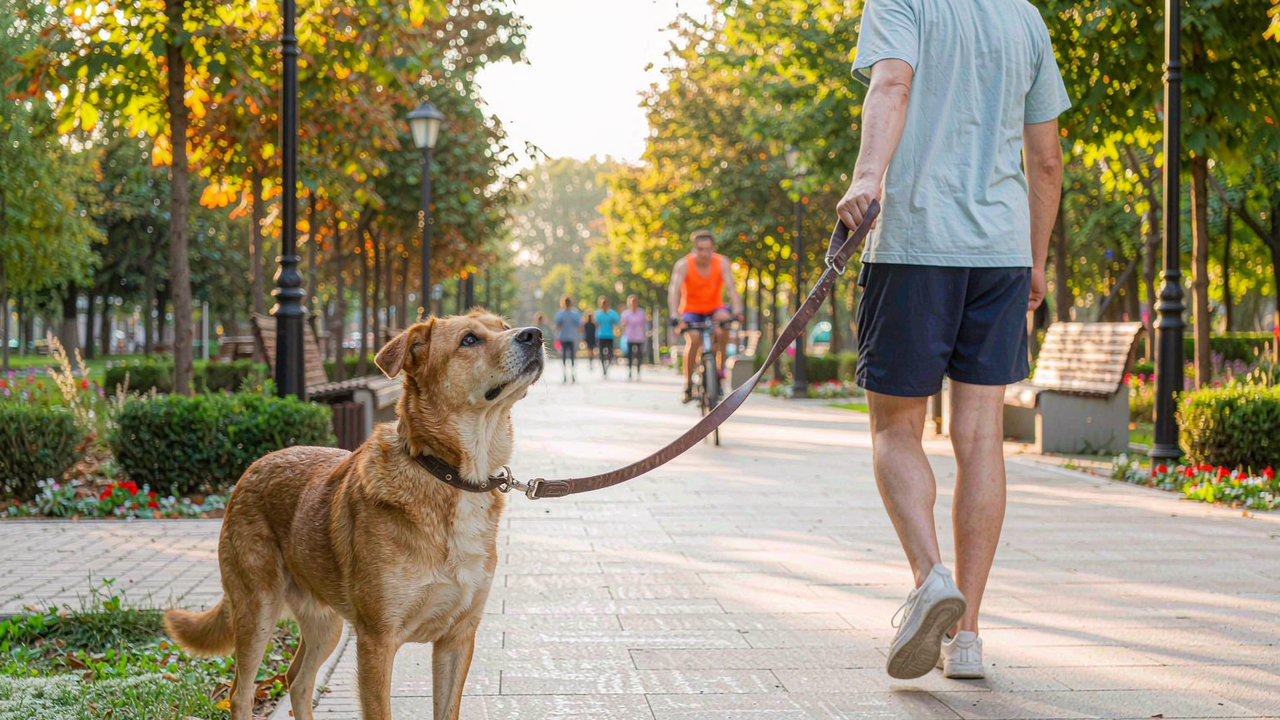
You're on an otherwise pleasant walk when a cyclist glides past, and suddenly your dog is lunging, barking, and pulling like a freight train. Your shoulder takes the hit, the cyclist wobbles, and your heart jumps. If this sounds familiar, you're not a bad owner and your dog isn't "bad" either — but the behavior is one worth taking seriously, because chasing moving things can go from annoying to dangerous fast.
Here's why dogs do it, and a few practical ways to dial the instinct way down without fighting your dog's nature head-on.
Why Dogs Chase: It's Not Disobedience
Chasing is hardwired. Dogs descend from animals that survived by spotting, pursuing, and catching things that moved, so a fast-moving target — a car, a bike, a jogger, a squirrel — flips a switch deep in the canine brain. That switch doesn't care whether the target is a rabbit or a delivery truck. Movement is movement.
Some dogs feel that pull more strongly than others. Sighthounds like greyhounds and whippets were bred for thousands of years to chase down fast prey, so they're practically guaranteed to be interested in anything that darts. Herding breeds, meanwhile, often transfer their instinct to gather livestock onto bicycles, skateboarders, and runners. Even a dog with no working lineage can get excited by speed.
There's a second layer too: chasing is self-rewarding. Every time a dog tears after something and it moves away, the dog gets a little internal "win." That reward makes the habit stickier than most, which is why simply yelling "no" doesn't do much. The dog isn't being stubborn; the behavior literally pays off for him.
Why It's Worth Working On
Beyond the obvious — your arm, the cyclist, the near-miss — there are real stakes. A dog who chases cars can get hit. A dog who chases wildlife or livestock can end up in serious trouble, and in some places the legal and financial consequences fall on the owner. A dog who bolts after a rabbit can get lost, fast.
The good news: you can't fully erase an instinct, but you can absolutely redirect it and teach your dog to look to you instead of the moving thing. The goal isn't a robot. It's a dog who sees a bike and checks in with you.
Mistakes That Quietly Make It Worse
A few well-meaning habits feed the problem without you realizing it.
Punishing after the fact is near the top of the list. By the time you've yelled, the chase is already over and already rewarded, so the dog connects the punishment to you — not to the car. It doesn't stop the chasing; it just makes him wary of you.
Chasing your dog when he bolts is another one. If he takes off and you sprint after him, you've just joined the game. In his mind, bolting now starts a fun pursuit with his favorite person, which is exactly the opposite of what you want.
Repeating a cue he's ignoring is a third. If "come" doesn't work the first time, saying it six more times just teaches him the word is optional. Better to go back to distance, get a success, and rebuild from there.
The thread running through all three: your dog learns from consequences, not from your intentions. So point the consequences in your favor — reward the calm glance, and don't let the chase happen in the first place.
Where to Start: Distance Is Your Best Friend
The single most useful tool here isn't a command — it's distance. Every dog has a "threshold," the point where a trigger is close enough to set off the chase. Before that line, your dog can still think and take treats. Past it, his brain goes offline and no amount of coaxing works.
So start far away. Find a spot where cars or bikes pass but your dog stays calm — maybe a bench a good distance back from a road, or the far side of a park path. The exact distance depends on the dog, and that's fine. The only requirement is that he's not reacting yet.
Keep him on a secure harness and a leash you can control. You're not going to "fix" chasing by testing his willpower up close; you're going to build a new association from a place where he can succeed.
Teach the Default: "Look at Me"
The behavior you're building is simple: when something fast appears, the dog looks at you instead of lunging at it.
Here's the loop, done over many short sessions:
- The moment your dog notices the car, bike, or jogger — before he reacts — mark it and reward. Any calm glance toward you, any look that breaks his stare at the trigger, earns a treat. High-value stuff here, not dry biscuits.
- Add a cue like "watch" or "look" once he's reliably offering the glance.
- Gradually — and I mean gradually, over days or weeks — close the distance. If he starts lunging again, you've moved too fast. Back up and rebuild.
The idea is counter-conditioning: you're teaching his brain that "bike appears" predicts "treats happen," which slowly replaces "bike appears = CHASE." Passing cars stop being a threat or a target and start being a cue to look up at you.
Give the Instinct a Safe Outlet
Trying to squash a chase drive completely is a losing game, so don't. Give it somewhere legal and fun to go instead.
Fetch is the obvious one — a ball or toy is just a "target" your dog is allowed to chase. Tug scratches the same itch, and it doubles as impulse-control practice if you ask for a "drop" mid-game. For dogs with serious drive, sports like lure coursing for sighthounds or herding trials for shepherd types let them use the instinct in a controlled setting. A tired dog who's already chased a ball for twenty minutes is a much calmer dog on the walk home.
Manage the Moments You Can't Train
While you're working on it, set everyone up for success by not letting the behavior get practiced:
- Keep him leashed anywhere there's traffic, wildlife, or bikes — even a fenced yard isn't "safe" if he's rehearsing chasing squirrels out the window.
- Walk quieter routes and quieter times while you're still building the skill.
- If a chase starts anyway, don't run after him shouting. To a dog, being chased by you reads as "we're playing now," and it just prolongs the sprint. Stay calm, use your recall, and get control back with the leash.
What "Better" Looks Like
You'll know it's working when your dog glances at you the instant a bike appears, without you prompting. It doesn't happen in a week, and it might not ever be 100 percent — instinct doesn't have an off switch. But a dog who checks in with you before acting is a dog you can trust around the stuff that used to make you both panic.
The payoff is worth the patience: calmer walks, a working shoulder, and a dog who still gets to be a dog, just with better aim.
What's the thing your dog just can't resist chasing — cars, bikes, squirrels, the mail carrier? And have you found anything that actually worked? Tell me in the comments.
This article is for informational purposes only and is not a substitute for professional veterinary advice, diagnosis, or treatment. Always consult a licensed veterinarian if your pet shows signs of illness, injury, or distress. If you believe your pet is experiencing a medical emergency, contact your veterinarian or the nearest emergency animal hospital immediately.
🐾 Enjoyed This Article?
Save it for later, share with a fellow pet parent, or check out more tips on our homepage!
📩 Never Miss a Tip
Get our best pet care hacks delivered straight to your inbox. No spam, unsubscribe anytime.