Why Is My Dog Limping? Common Causes and When It's Serious
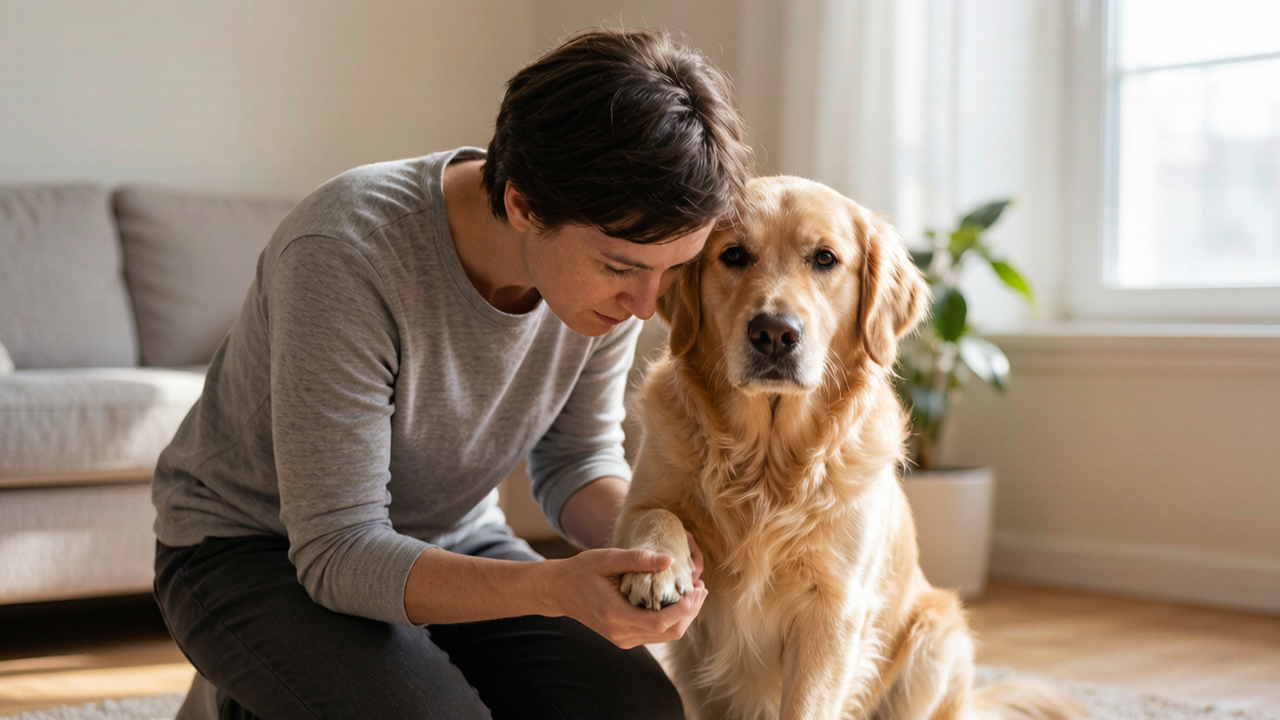
One minute your dog is tearing around the yard like a maniac. The next, they're holding a paw off the ground and looking at you like it's somehow your fault. A limp is one of those things that can be nothing — a pebble, a split second of overexertion — or the first sign of something that needs real attention. The hard part is that dogs can't point to the spot and tell you how much it hurts.
Limping, or lameness, is one of the most common reasons dogs end up at the vet. The good news is that a lot of limps resolve on their own with a bit of rest. The tricky part is knowing which ones can wait until morning and which ones can't. This guide walks through the most common causes, what you can check at home, and the red flags that mean it's time to call a professional.
Sudden vs. Gradual: The First Question That Narrows Everything Down
Before you do anything else, figure out how the limp started. This single detail tells you a lot.
Sudden onset means the limp appeared out of nowhere — during a walk, a game of fetch, or a clumsy landing off the couch. These are usually injuries: a sprain, a torn nail, a cut on the pad, or a strain from overdoing it.
Gradual onset means the limp crept in over days or weeks. Your dog was a little stiff after naps, then started favoring one leg more and more. This pattern usually points to something progressive, like arthritis or a developmental joint problem.
A dog who was fine this morning and is now limping is a different case from a dog who has been slowing down for a month. The sudden limper is more likely to have something acute (and often fixable). The gradual limper is more likely dealing with wear and tear that needs long-term management.
The Most Common Reasons Dogs Limp
Here are the usual suspects, roughly from "check the paw" to "call the vet now."
1. Something Stuck in the Paw
This is the best-case scenario and also one of the most common. A thorn, a pebble, a burr, a sliver of glass, or a broken toenail can make a dog dramatically favor a foot. Dogs will often lick the affected paw obsessively. Check between the toes and under the pad — a lot of "mystery limps" end with you pulling out a tiny stone and the dog walking normally five minutes later.
2. Strains, Sprains, and Soft-Tissue Injuries
Just like a person who overdoes it at the gym, a dog can pull a muscle or strain a ligament. This often shows up after a particularly rowdy session of running, jumping, or rough play. Soft-tissue injuries usually improve with rest over a few days, but if the limp hangs around, it may be more than a simple strain.
3. Torn Ligament (the CCL)
In a dog's knee, the equivalent of our ACL is the cranial cruciate ligament, or CCL. A torn or partially torn CCL is one of the most common orthopedic injuries in dogs. It typically causes a sudden, often severe limp where the dog won't put weight on the back leg. Large, active breeds are at higher risk, and the injury often needs surgery plus rehab to fully resolve.
4. Osteoarthritis
Arthritis is the single most common joint disease in dogs and gets more likely with age. It's a gradual, progressive wearing down of the cartilage that cushions the joints. A dog with arthritis might be stiffest in the morning or after long rest, warm up as they move, and favor a leg more on cold or damp days. There's no cure, but weight management, joint supplements, and low-impact exercise can make a big difference in comfort.
5. Hip or Elbow Dysplasia
Dysplasia means a joint didn't form correctly as the dog grew. Hip dysplasia and elbow dysplasia are common in larger breeds and often show up as a bunny-hopping gait in the back legs, trouble getting up, or a limp that worsens over time. These are developmental, meaning they often first appear in young to middle-aged dogs.
6. Luxating Patella (a Slipping Kneecap)
Small breeds are especially prone to a kneecap that pops out of place — called a luxating patella. The telltale sign is a dog who suddenly skips or holds up a back leg for a few steps, then kicks it back into place and walks normally. It can be intermittent and mild, or severe enough to need surgery.
7. Tick-Borne Disease
If you live in a tick area and your dog suddenly starts limping, especially if the limp seems to move from leg to leg, tick-borne diseases like Lyme are a real possibility. These infections can cause joint inflammation and pain. Worth mentioning to your vet if ticks are common where you live.
8. Broken Bones and Other Trauma
A fall, a car accident, or a bad landing can fracture a bone or dislocate a joint. These are usually obvious — the dog won't bear weight at all, may hold the leg at an odd angle, and is clearly in pain. This is an emergency.
What to Do When You First Notice a Limp
Take a breath and work through a quick check.
First, keep your dog calm and quiet. Restricting activity is the single most useful thing you can do early on, because every extra step can aggravate whatever is wrong. Skip the walk, and carry or leash them for quick bathroom breaks only.
Next, look at the paw. Gently examine the foot, checking between the toes and under the pad for foreign objects, cuts, swelling, or a torn nail. Be slow — a dog in pain may snap even at someone they love, so don't force it if they resist.
Then, feel for heat and swelling. Compare the legs and joints to each other. A leg that's hot, swollen, or painful to the touch is more concerning.
Apply cold, not heat, for a fresh injury. If you suspect a recent sprain or strain, a cold compress wrapped in a towel for short sessions can help reduce swelling in the first day or two.
Never give human pain medication. This one is critical. Common human pain relievers — ibuprofen, acetaminophen, and naproxen — can be seriously toxic to dogs, even in small doses. Nothing from your medicine cabinet goes into your dog without a vet's explicit instruction.
A useful rule of thumb for a suddenly lame dog: keep them still for about 15 minutes and see what happens. Dogs can be dramatic. If they're walking fine after that short rest, it may have been a momentary tweak. If they're still not bearing weight after 15 minutes, that's your cue to get them seen.
Red Flags: When It's Time to See a Vet
Some limps you watch; some you act on. Call your vet or head to an emergency clinic if you see any of these:
- Not bearing any weight on a leg, especially if it lasts more than a few minutes
- A dangling or oddly angled leg, which can signal a dislocation or break
- Severe swelling or a leg that feels hot to the touch
- Visible wounds, bleeding, or a broken nail that's bleeding heavily
- Limping with a fever, lethargy, or loss of appetite
- Whining, yelping, or obvious pain when the leg is touched
- A limp that hasn't improved after 24 to 48 hours of rest
- A limp that keeps coming back or seems to shift between legs
Gradual limps are sneaky. Because they build slowly, it's easy to chalk them up to "just getting older." That's a mistake — catching arthritis or dysplasia early gives you far more options for managing pain and mobility than waiting until your dog is struggling to stand.
A Few Ways to Help Prevent Future Limps
You can't prevent every sprain, but a few habits lower the odds:
- Keep weight in check. Extra pounds put constant stress on joints and make every injury worse.
- Warm up and cool down. Don't launch straight into a full sprint or a hard hike. Build activity gradually.
- Watch the surfaces. Hot pavement burns pads, and icy or slick floors cause slips.
- Keep nails trimmed. Long nails change how a dog's foot hits the ground and can cause strains over time.
- Use year-round tick prevention if ticks are a concern in your area.
The Bottom Line
Most limps are minor and settle down with rest. But "wait and see" has a time limit — 24 to 48 hours of home rest, or 15 minutes of complete non-weight-bearing, and you should be on the phone with your vet. When in doubt, it's always cheaper and kinder to have a limp checked early than to let a small strain turn into a bigger, more expensive problem.
Does your dog limp after exercise or on cold mornings? What turned out to be the cause? Share your experience below — it might help another owner spot the difference between a pulled muscle and something more serious.
---
Related reading: Dog Joint Pain and Arthritis: Early Signs to Watch For · Dog Paw Pad Care: Cracked, Dry, or Burned · Best Joint Supplements for Dogs: A 2026 Mobility Guide
This article is informational and reflects general pet-care knowledge gathered from experienced owners and public veterinary resources. It is not a substitute for an in-person examination. If your dog is in pain or you're unsure, please consult your veterinarian.
This article is for informational purposes only and is not a substitute for professional veterinary advice, diagnosis, or treatment. Always consult a licensed veterinarian if your pet shows signs of illness, injury, or distress. If you believe your pet is experiencing a medical emergency, contact your veterinarian or the nearest emergency animal hospital immediately.
🐾 Enjoyed This Article?
Save it for later, share with a fellow pet parent, or check out more tips on our homepage!
📩 Never Miss a Tip
Get our best pet care hacks delivered straight to your inbox. No spam, unsubscribe anytime.
Shop dog supplies on Amazon & Chewy
Comparing prices before you buy? Check current deals and read reviews from other pet owners.