Why Does My Dog Have Bad Breath? Causes and How to Fix It
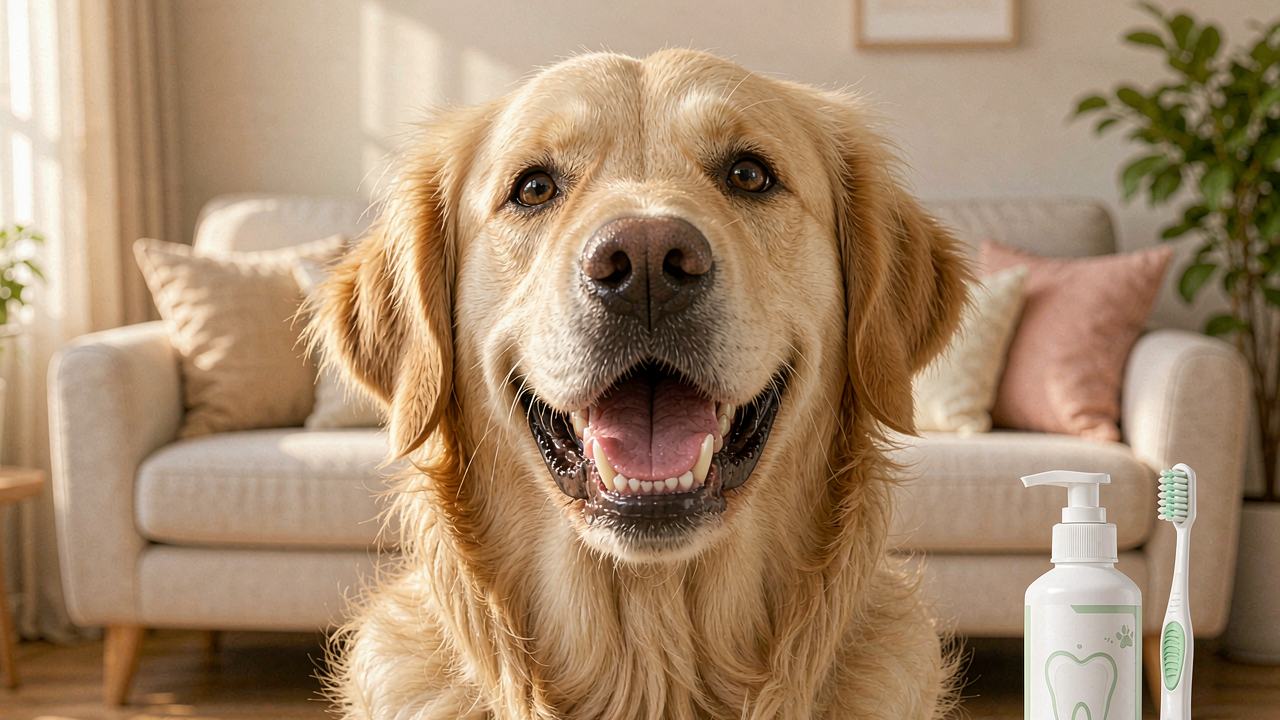
You lean in for a hello, and your dog's breath reaches you a full second before the tail wag does. If your first thought is "whew, that's rank," you're not imagining it — and you're not alone. Studies of dog owners put it plainly: close to half of us report that our dogs have noticeably stinky breath.
Here's the part most people miss: bad breath in dogs isn't usually "just dog breath." A dog's mouth shouldn't smell foul. When it does, something is going on — and most of the time, the cause is something you can actually do something about. Let's walk through what's behind the smell, what it might be trying to tell you, and what actually helps.
"It's just dog breath" is a myth
Humans get taught from childhood that teeth need daily cleaning. We forget that the same rule applies to dogs. A healthy dog mouth doesn't smell bad on its own. Persistent bad breath — the clinical word is halitosis — is a signal, not a personality trait.
The single biggest source of the smell is bacteria. The mouth is warm, wet, and full of food particles, which makes it a perfect home for bacteria. Those bacteria settle into a film over the teeth and gums and, as they break down leftover food, they release the sulfur compounds that make breath stink. Left alone, that film hardens into plaque and then tartar, and the smell gets worse — along with the health of the gums underneath.
The most common cause: teeth and gums
By a wide margin, the number-one reason a dog has bad breath is periodontal disease — the same gum disease humans get. It starts with plaque, moves to tartar, and leads to inflamed, sometimes bleeding gums. As the tissue around the teeth breaks down, the smell gets stronger.
A few things make it worse for dogs specifically:
- Small and flat-faced breeds get hit harder. Toy breeds, brachycephalic (short-nosed) dogs like Pugs and Bulldogs, plus some terriers and sighthounds, are all more prone to gum disease. Smaller mouths crowd the teeth, which traps more debris.
- Beards hold onto trouble. Dogs with long hair around the mouth — Schnauzers are the classic example — collect food and saliva in the fur around their muzzle. That damp, food-filled beard is basically a bacteria hotel, and it can make the whole area smell.
- Age stacks the odds. Almost every older dog has at least some stage of periodontal disease. It's not a failure on your part; it's biology. But it does mean older dogs need more attention, not less.
Other everyday causes that are easy to miss
Not every bad smell comes from the teeth themselves. Some of the most common everyday culprits:
- What they ate. Dogs are opportunists. A dog who snagged something gross — trash, something dead in the yard, or their own or another animal's poop — is going to have breath that reflects it. Poop-eating even has a name: coprophagia. Beyond the smell, it can add bacteria and, in some cases, intestinal parasites to the picture.
- Something stuck. A sliver of stick, a bit of bone, or a chunk of toy wedged between teeth or under the gum will start to rot and smell. You might also notice the dog pawing at their mouth, drooling more, or eating oddly.
- Diet. A food that doesn't agree with a dog's stomach can cause bad breath from the digestive side. And there's a real difference between dry and wet food: crunchy kibble physically scrapes the teeth a bit, while an all-wet diet doesn't, so tartar tends to build faster. Dogs fed mostly dry food generally develop less tartar than those on only wet food.
When the smell itself is a clue
This is the part worth paying attention to, because it's how you separate "needs a teeth brushing" from "needs a vet." The character of the smell can point to something deeper:
- Urine or ammonia. If the breath smells like pee or ammonia, that can point to kidney disease, where waste products the kidneys normally clear out build up in the blood.
- Sweet or fruity. A sweet, almost fruity smell can be a sign of diabetes, which is very manageable when caught early.
- Liver-related odor. Liver problems can produce their own distinctive breath smell.
None of these are things to diagnose at home. The takeaway is simpler: if the smell changes suddenly, is unusually strong, or is accompanied by other changes — drinking more water, urinating more, losing weight, vomiting, or acting off — that's a reason to get a professional look sooner rather than later. A sudden, nasty smell along with blood-tinged saliva or trouble eating can also hint at something like an oral growth, which is rare but worth ruling out.
What actually fixes dog breath
Most stinky-breath problems come down to the same boring-but-true routine you'd follow for your own mouth.
Brush the teeth. This is the single most effective thing you can do, because the scrubbing action physically removes plaque before it hardens. The gold standard is daily, but even three times a week makes a real difference in tartar buildup. Use toothpaste made for dogs — human toothpaste contains fluoride and sometimes xylitol, both of which are unsafe for dogs. Dog toothpaste comes in flavors they actually like, which makes the whole thing easier.
Give them something to chew. Dental chews and certain chew toys work through simple abrasion: the chewing scrapes plaque off the teeth. Look for products that carry the Veterinary Oral Health Council (VOHC) seal, which means they've actually been tested to reduce plaque and tartar — a lot of products out there make the claim without the proof. Chews add calories, so factor them into the daily food, and always keep an eye on a dog with very hard chews, which can occasionally crack a tooth.
Try water additives. VOHC-certified water additives can reduce plaque and tartar and fight odor, and they're about the lowest-effort option there is — you just add them to the water bowl.
Keep them hydrated. A dog who drinks plenty of water has a cleaner mouth. Water helps wash away food particles and bacteria.
Think about the bowl. Some dogs develop irritation from plastic food and water bowls, which can contribute to skin and mouth irritation. Stainless steel or ceramic bowls are an easy swap.
Get an annual dental check. A professional cleaning — done under anesthesia so every tooth, including below the gumline, can be checked — is the gold standard for getting back to a clean slate. Most vets recommend it yearly, and it's the moment when early gum disease gets caught before it turns into something painful and expensive.
How to brush a dog that hates it
If your dog has never had their teeth brushed, don't expect to get it right in a day. The trick is to make it boring and slow:
- Start by just letting them lick a little dog toothpaste off your finger.
- Next, rub your finger along the outside of their teeth, with toothpaste on it.
- Once that's normal, introduce the brush — at first, just letting them accept it in their mouth is enough.
- Build up over a few weeks. Aim to brush each side for about 30 seconds.
Dogs learn this best young, but adult dogs can absolutely get there too — it just takes a little more patience and a lot of praise.
The bottom line
Bad breath in dogs is common, but it's not something you have to live with. Most of the time it's the mouth, and most of the time it responds to brushing, the right chews, and a yearly professional cleaning. When the smell changes suddenly or carries a urine, sweet, or otherwise unusual note, treat it as a heads-up rather than a mystery to solve with treats.
What does your dog's breath usually smell like — and have you ever caught it changing? Drop it in the comments below; a lot of owners are dealing with the exact same thing.
This article is for informational purposes only and is not a substitute for professional veterinary advice, diagnosis, or treatment. Always consult a licensed veterinarian if your pet shows signs of illness, injury, or distress. If you believe your pet is experiencing a medical emergency, contact your veterinarian or the nearest emergency animal hospital immediately.
🐾 Enjoyed This Article?
Save it for later, share with a fellow pet parent, or check out more tips on our homepage!
📩 Never Miss a Tip
Get our best pet care hacks delivered straight to your inbox. No spam, unsubscribe anytime.